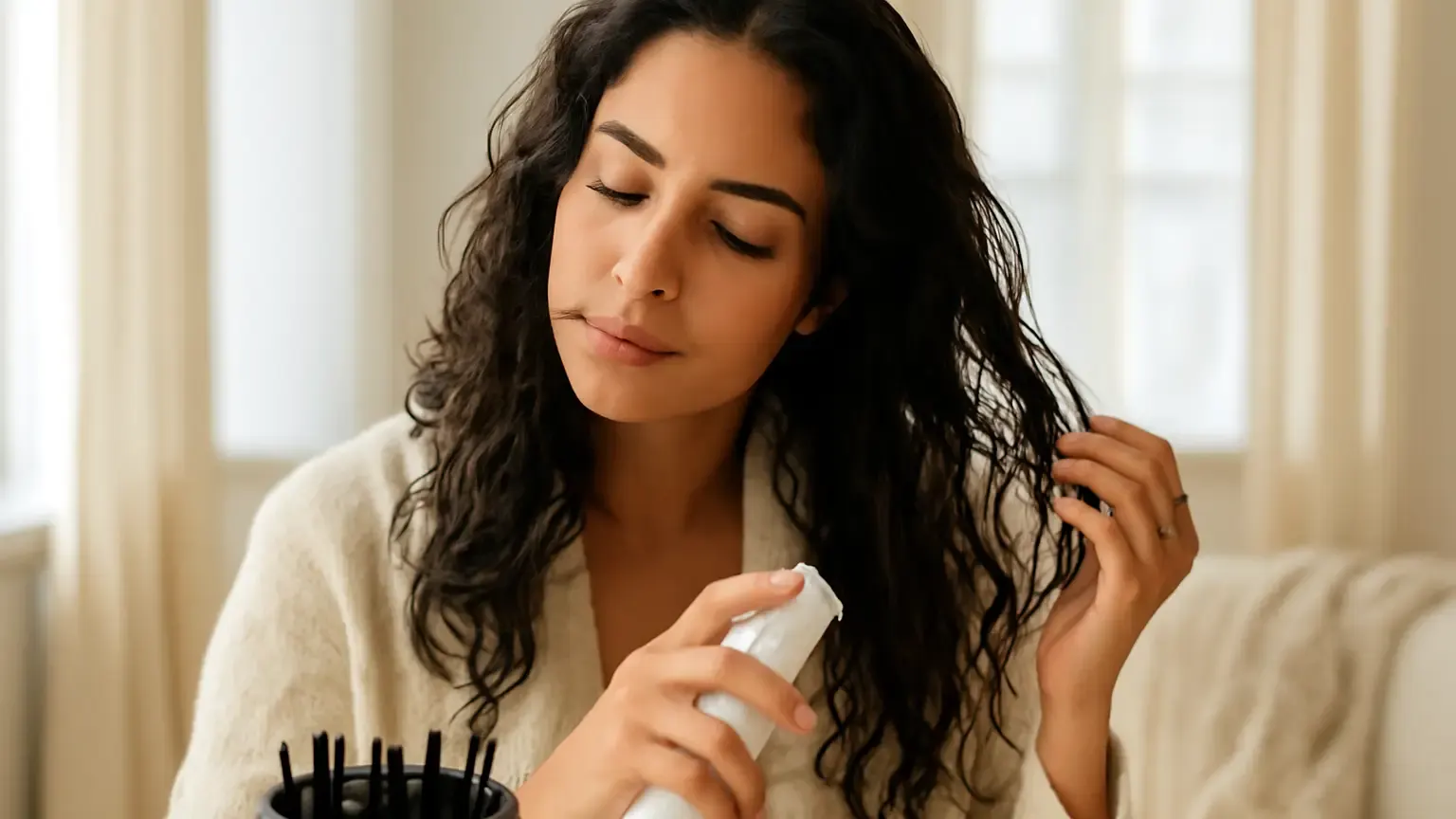
Curly wavy hair in winter needs enough moisture to stay flexible, not so much product that waves collapse. This guide is for loose waves, curls and mixed textures dealing with cooler outdoor air, dry rooms and static. The practical answer is to adjust wash-day hydration, apply styling in light layers, dry gently, and refresh with water before adding more product. That combination helps definition last without leaving hair stiff, greasy or weighed down.
Winter can make textured hair behave differently even when your routine has not changed. Cooler air often feels drier, while fans, heaters and air conditioners reduce moisture indoors. Hair may become rough at the ends, lose its usual clumps, develop static or turn fluffy around the crown. At the same time, applying too much rich cream can flatten loose waves and leave mixed textures uneven.
The aim is not maximum moisture at every step. It is balanced moisture and flexible hold: enough conditioning for slip and softness, plus a styling layer that keeps the pattern together. Your ideal routine will depend on strand thickness, porosity, density, how often you wash and whether your hair is mostly wavy, curly or a combination.
What changes for curly wavy hair in winter?
Cold weather itself does not “damage” every curl, but the repeated change between outdoor air and heated indoor spaces can increase moisture loss from the hair surface. Rough woollen clothing, scarves and frequent brushing can add friction. Hot showers may also leave the scalp and lengths feeling drier.
Loose waves usually need lighter products than dense curls. If your hair is fine or easily flattened, a heavy oil or butter-based cream may reduce volume. If your curls are coarse, porous, coloured or frequently heat-styled, a richer conditioner and occasional deep conditioning treatment may be more useful. Mixed textures often work best when product is distributed in sections rather than applied as one large amount.
Use feel and behaviour as your guide. Hair that feels rough and tangles quickly may need more conditioning. Hair that looks limp, greasy or takes unusually long to dry may need less product or a lighter formula. These signs are more useful than following a fixed winter schedule.
Build a balanced winter wash day
Cleanse without stripping
Start with a comfortable, lukewarm wash rather than very hot water. A hydrating shampoo can be helpful when lengths feel dry, but it should still clean the scalp according to your lifestyle. If you exercise regularly, use styling products often or live in an area with mineral-heavy water, occasional more thorough cleansing may prevent buildup. Avoid scrubbing the lengths aggressively; let the lather travel through them as you rinse.
There is no universal number of wash days. Wash when your scalp feels oily, uncomfortable or coated, rather than extending the interval simply because it is winter. If persistent itching, redness, flaking or soreness is present, seek advice from a dermatologist instead of repeatedly adding oils or heavy treatments.
Condition for slip, not heaviness
Apply conditioner mainly from the mid-lengths to the ends. Detangle with your fingers or a wide-tooth comb while the hair is coated, beginning at the ends and moving upwards. Rinse thoroughly enough that the hair feels smooth but not waxy.
Use a deep conditioning treatment when the hair remains rough after normal conditioning or when ends have become unusually tangled. For fine waves, start with a short treatment and use it less frequently. For thick, dry or porous curls, a longer treatment may be appropriate according to the product directions. Deep conditioning is a support step, not a replacement for regular cleansing or professional care when there is a persistent scalp concern.
Layer styling products for soft, flexible definition
Apply styling products while hair is still very wet. Water helps spread formulas evenly and encourages curl clumps, reducing the temptation to use a large amount. Divide dense or mixed-texture hair into sections so the underside and ends receive enough coverage.
- Start with a leave-in conditioner. Use a small amount on the driest areas, especially the ends. Fine waves may need only a few drops or a diluted application, while thick curls may need more slip.
- Add curl cream selectively. A curl cream can soften and define, but apply it mainly where the pattern looks dry or expands. Avoid coating the roots if volume is important.
- Finish with hold. A lightweight gel or mousse can reduce frizz and preserve shape as the hair dries. Scrunch it in rather than repeatedly raking through the pattern.
Think of the layers as a decision system, not a compulsory stack. If a leave-in already gives enough softness, skip cream. If your hair is soft but loses shape, use less conditioner and more hold. If gel feels stiff, allow it to dry fully and gently squeeze the cast with clean, dry hands. A firm cast is not automatically a problem; it often provides the structure that keeps curls intact until the final scrunch.
Dry gently and reduce winter friction
Blot or scrunch excess water with a microfiber towel or a smooth cotton T-shirt. Do not twist wet curls into a tight towel wrap, since friction and compression can disturb clumps. A smooth fabric also helps reduce the static and roughness that can appear when hair rubs against winter clothing.
Diffuser drying is useful when your hair takes a long time to dry or when air-drying leaves the pattern stretched. Use low or medium heat and low airflow where possible. Hold the diffuser near the hair without aggressively moving it through the curls. You can hover-diffuse first, then cup sections once a light cast has formed. Stop when the hair is fully dry; handling it while damp commonly creates frizz.
If you prefer air-drying, avoid going outside with very wet hair in cold weather. The issue is not that cool air automatically ruins curls, but that wet hair is more vulnerable to friction and takes longer to settle. Let it dry in a comfortable indoor space, away from direct hot air.
Protect against indoor heating and daily friction
Indoor heating hair dryness can make the lengths feel thirsty even when the weather outside is not extremely cold. Keep hair away from direct heater or blower airflow, and avoid turning up shower temperature to compensate for the cold. A comfortable room environment, adequate water intake and regular conditioning can support overall comfort, although no single habit can prevent every change in texture.
Choose loose protective hairstyles such as a low, relaxed braid, loose pineapple or soft bun when travelling or wearing scarves. Avoid tight elastics on already dry ends. A smooth pillowcase or a satin-lined cap may reduce overnight friction; make sure any wrap is comfortable and not tight around the hairline.
When putting on a scarf, gather hair loosely rather than dragging textured lengths repeatedly across rough fibres. If static is a concern, smooth a tiny amount of leave-in over the surface instead of brushing dry curls. Brushing can be appropriate for a detangled styling process, but repeated dry brushing usually separates curl groups and increases puffiness.
Refresh curls the next day without overloading them
For refreshing curls next day, begin with water. Lightly mist the frizzy or flattened areas, then scrunch upward. If the shape returns, stop there. If sections still feel dry, emulsify a very small amount of leave-in conditioner between wet palms and press it over those areas. Add a little gel only where hold has disappeared.
Do not automatically repeat every wash-day product. Layering cream, oil and gel over several days can create buildup and make hair look dull. If the hair feels coated rather than dry, cleanse it at the next suitable wash instead of adding more moisture. For bangs, face-framing pieces or short layers, refresh them separately because they may need less product than the rest of the head.
Common winter mistakes and better choices
- Using the richest product everywhere: apply richer conditioning to dry ends and coarse sections, not automatically to fine roots.
- Adding oil to fix every frizz issue: oil can reduce surface roughness but does not replace water-based conditioning. Try misting and restyling first.
- Leaving hair damp under a tight hat: allow it to dry as much as practical and choose a loose, smooth-lined option to reduce friction.
- Scrubbing with a rough towel: switch to a microfiber towel or soft T-shirt and press rather than rub.
- Changing everything at once: adjust one variable—cleanser, conditioner amount, hold or drying method—so you can tell what helped.
A simple decision guide for your texture
For loose waves: use a light conditioner, a small amount of leave-in and mousse or lightweight gel. Keep products away from the roots and prioritise lift while drying.
For springy curls: use more water during styling, section the hair if needed, and combine conditioning with a reliable hold product. Scrunch after drying to keep softness.
For mixed textures: treat sections individually. Apply extra leave-in or cream to coarse, porous areas and less to straighter sections. Use a small amount of gel around the crown or hairline where frizz appears first.
For fine or low-density hair: choose lighter formulas, clarify when buildup is noticeable and avoid applying several rich layers. Definition often improves when the hair is properly wet and the product quantity is modest.
Takeaway: keep the routine flexible
The most reliable approach to curly wavy hair in winter is a flexible routine: cleanse the scalp comfortably, condition according to how the lengths feel, style on wet hair, dry with low friction and refresh with water before adding more product. Watch for the difference between dryness and buildup. With small adjustments for texture, density and indoor conditions, your hair can stay soft, defined and movable rather than coated or rigid.
Products that may help with this routine
Choose only what fits your skin, hair or personal needs. Use the links below to view current options on Amazon India.
Frequently Asked Questions
How do you care for curly wavy hair in winter?
Use a balanced wash routine, condition the lengths, apply styling products to very wet hair, dry with low friction and protect the hair from scarves, rough towels and direct indoor heat. Refresh with water before adding more product.
What is the best winter routine for curly wavy hair?
Cleanse when the scalp needs it, follow with conditioner, then use a small amount of leave-in conditioner and a flexible-hold gel or mousse. Diffuse on low heat or air-dry indoors, and adjust product amounts according to whether the hair feels dry, flat or coated.
How do I refresh curls the next day in winter?
Mist flattened or frizzy sections with water and scrunch. If they still feel dry, smooth a tiny amount of leave-in conditioner over the area; add a little gel only where the shape needs more hold.
Should you use a diffuser on curly hair in winter?
Yes, a diffuser can shorten drying time and help preserve shape. Use low or medium heat, gentle airflow and minimal handling. Stop when the hair is fully dry and scrunch out any cast with dry hands.
How often should you deep condition curly hair in cold weather?
There is no fixed winter frequency. Try a deep conditioning treatment when normal conditioner no longer gives enough slip or the ends feel persistently rough, then reduce it if the hair becomes limp or coated.
How can you stop curly hair from getting frizzy in winter?
Style with enough water, use a suitable hold product, blot with a smooth fabric, avoid touching hair while it dries and reduce friction from towels, scarves and pillowcases. If frizz persists, check whether buildup or insufficient conditioning is the cause.