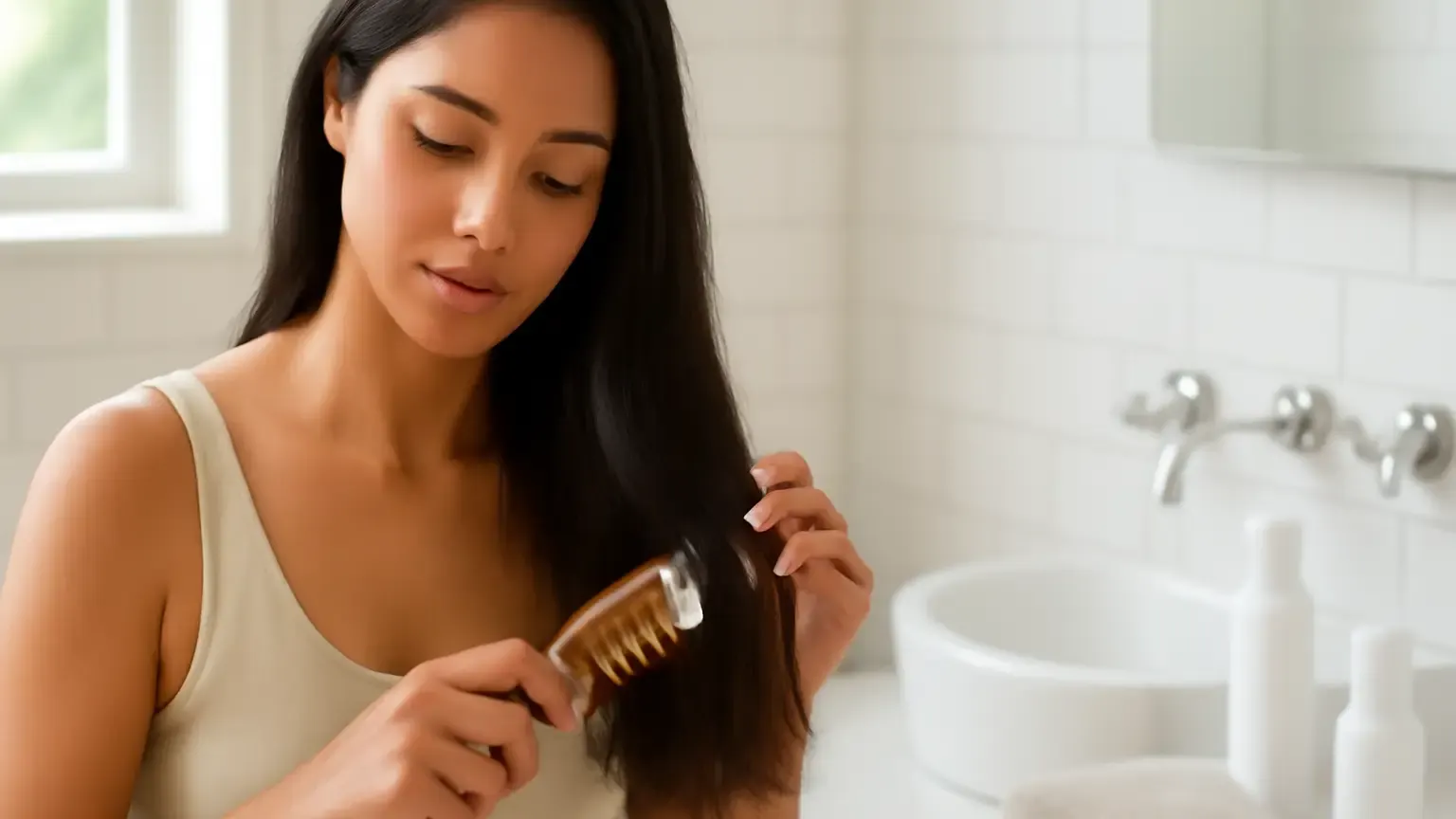
Hair care for dry ends works best when you treat the lengths differently from the scalp: cleanse mainly at the roots, condition from mid-lengths down, detangle gently, trim splits and protect hair from heat and friction. This guide is for anyone with oily, normal or combination roots and rough, frizzy or brittle ends. The key outcome is softer hair without coating the scalp in heavy oils or rich products.
Dry ends and greasy roots often need two different strategies. The scalp produces sebum, while the oldest part of the hair has had more exposure to washing, sun, friction, colouring and heat. Applying a rich product from root to tip may make the ends feel smoother temporarily, but it can also flatten the crown and leave the scalp feeling coated.
Why the ends feel dry while the roots look oily
Hair is a fibre, not living skin, so damaged ends cannot repair themselves in the same way skin can recover. The outer cuticle may become raised or worn, allowing the lengths to lose water and feel rough. Split ends are a visible sign that the fibre has begun to separate; conditioning can improve slip and appearance, but it cannot permanently fuse a split.
This is why a balanced routine uses scalp-friendly cleansing at the top of the head and richer care only where it is needed. Your hair texture, wash frequency, weather and styling habits all matter. Humidity can increase frizz, while frequent hot-water washing and hard-water residue may make lengths feel less smooth.
1. Cleanse the scalp and condition only the lengths
Start with a shampoo routine that focuses on the scalp rather than scrubbing the full length. Massage shampoo gently into the roots with your fingertips, then allow the lather to travel down as you rinse. This removes sweat, sebum and product build-up without repeatedly roughing up the ends.
A sulphate-free shampoo may suit dry or chemically treated hair if stronger cleansing leaves your lengths tight, but “sulphate-free” is not automatically better for everyone. Choose based on how clean your scalp feels and whether your hair becomes dry, weighed down or difficult to manage between washes.
Apply conditioner from around the ears or mid-lengths to the tips. Leave it on for the time stated on the pack, then rinse thoroughly. If you have an oily scalp, avoid massaging conditioner into the roots. This simple placement change is often more useful than switching between many products.
2. Use deep conditioning without overloading the roots
For rough, porous or heat-styled lengths, a weekly deep conditioning session can provide more softness than using a heavy product every day. A hair mask is generally richer than a regular conditioner, so apply a small amount to clean, squeezed-out hair from mid-lengths down. Comb it through with your fingers and rinse well.
How often you need it depends on your hair. Start once a week; very fine hair may need it less often, while thick, curly or frequently coloured hair may prefer a more regular schedule. If your strands become limp, waxy or difficult to style, reduce the amount or frequency rather than adding more cleansing.
Choose moisture or strengthening support thoughtfully
Hair that feels rough and puffy may appreciate moisturising ingredients and better lubrication. Hair that feels unusually stretchy when wet may need a product designed for strengthening support. Avoid assuming that every dry end needs protein or that every softening product should be used daily. Alternate products only when your hair’s feel suggests a need.
3. Detangle with less pulling and friction
Detangling is a major part of dry ends hair care because pulling through knots can create more breakage. Do not aggressively brush soaking-wet hair unless your texture and tool are suited to it. Instead, remove excess water, apply conditioner or a leave-in conditioner, and work in sections.
- Separate the hair into two to four manageable sections.
- Begin at the tips and loosen small knots first.
- Move gradually towards the roots instead of dragging a knot through the entire length.
- Use a wide-tooth comb or a flexible detangling brush that does not force through resistance.
For curly or coily hair, detangling with conditioner in the shower may reduce friction and help preserve the curl pattern. For straight or fine hair, use less product and check that the leave-in does not make the lengths stringy. Detangle before bed if your hair knots overnight, but avoid repeated brushing simply to chase every flyaway.
4. Trim splits instead of trying to condition them away
Regular trims are one of the most reliable ways to keep damaged ends looking neat. Conditioning improves softness, shine and manageability, but it cannot permanently repair split ends. If the tips fork, feel thin and see-through, or catch repeatedly on clothing, a trim may help more than another serum.
There is no universal trimming interval. People who use heat, colour their hair or wear it loose through high-friction conditions may need trims sooner than someone with low-manipulation styling. As a practical starting point, assess the ends every eight to twelve weeks rather than following a rigid calendar. Ask for only the amount needed to remove visibly damaged tips if you are growing your hair.
At home, use clean, sharp hair-cutting scissors if you are making a small maintenance trim. Blunt household scissors can crush the fibre. If the ends are splitting extensively or the hair is breaking close to the scalp, a professional assessment is more sensible.
5. Protect the lengths from heat, sun and friction
Protection makes your routine last longer. Before blow-drying, straightening or curling, use a heat protectant made for the styling method. Follow the product directions, keep the tool moving and choose the lowest temperature that gives a workable result. Heat protectant reduces exposure-related damage; it does not make unlimited high heat safe.
Dry hair also benefits from low-friction habits. Blot gently with a microfiber towel or a soft cotton T-shirt instead of twisting it tightly in a rough towel. Loosely braid long hair for sleep if that prevents tangling, and consider a smooth pillowcase if ordinary fabric creates friction. These small changes can support overnight hair care without applying a thick oil to the scalp.
Where a lightweight hair oil fits
A lightweight hair oil or smoothing serum can be useful on the last few centimetres of hair, especially before going outside in dry or humid weather. Use one or two drops, warm them between your palms and press them into the tips. Keep the product away from the scalp if roots become oily quickly. Start with less; adding more is easier than removing an excess.
A simple hair care routine for dry ends
Use this as a flexible starting point and adjust it to your hair’s response:
- Wash day: Cleanse the scalp, condition the mid-lengths and ends, then rinse completely.
- After washing: Blot instead of rubbing, apply a small amount of leave-in conditioner if needed, and detangle from the tips upwards.
- Styling: Apply heat protectant before hot tools. Air-dry partially before blow-drying when possible.
- Once a week: Use a hair mask or deep conditioning treatment on the lengths, not the roots.
- Between washes: Smooth only the ends with a tiny amount of oil or serum if they feel rough.
- Every few weeks: Check for splits, excessive tangling and changes in texture, then decide whether a trim or product adjustment is needed.
This approach also supports frizz control because it improves slip and reduces mechanical stress, rather than simply coating the hair heavily.
Common mistakes that make dry ends worse
- Oiling the whole head by default: Scalp oiling can be part of some routines, but it is not necessary for every hair type and may make oily roots harder to manage.
- Applying shampoo to the tips: Direct scrubbing can increase roughness, especially when the ends are already porous.
- Brushing from roots to ends: This pushes knots together and increases pulling. Start at the tips.
- Using too much dry shampoo: It may absorb oil temporarily, but it does not replace cleansing and can leave build-up if used repeatedly.
- Chasing instant smoothness with high heat: A sleek finish can hide worsening dryness. Use a protectant and limit temperature and frequency.
Takeaway: keep the scalp light and the ends supported
Effective hair care for dry ends is about targeted care, not coating every strand from root to tip. Cleanse where oil accumulates, condition and detangle the lengths gently, trim splits when needed, and protect the hair from heat and friction. If persistent itching, marked scaling, sudden hair loss or severe breakage concerns you, consult a dermatologist rather than relying only on cosmetic products.
Products that may help with this routine
Choose only what fits your skin, hair or personal needs. Use the links below to view current options on Amazon India.
Frequently Asked Questions
What is the best hair care routine for dry ends without greasy roots?
Cleanse mainly at the scalp, apply conditioner and a weekly mask from mid-lengths to tips, detangle gently, and use only a small amount of leave-in product or oil on the ends. Avoid rich products on the roots.
How can I soften dry hair ends naturally?
Reduce heat and friction, condition the lengths after washing, detangle from the tips upwards and trim split ends. You can smooth the final centimetres with a very small amount of lightweight oil, but natural oils cannot permanently repair splits.
How often should I trim dry ends?
There is no fixed schedule, but checking the ends every eight to twelve weeks is a useful starting point. Trim sooner if the tips fork, catch, feel thin or continue splitting despite gentle care.
Can I use hair oil on dry ends every day?
You can use a tiny amount on the tips if your hair remains light and clean, but daily use is not essential. Start with one or two drops, avoid the scalp and reduce the frequency if the lengths look greasy or limp.
What is the best conditioner for dry ends and an oily scalp?
Look for a conditioner that provides slip without feeling heavy, and apply it only from the mid-lengths to the tips. The best choice depends on your hair texture, density and how quickly your roots become oily.
How do I detangle dry hair without breakage?
Work in sections, apply conditioner or a suitable leave-in for slip, start at the tips and move towards the roots with a wide-tooth comb or flexible brush. Do not force a tool through a resistant knot.