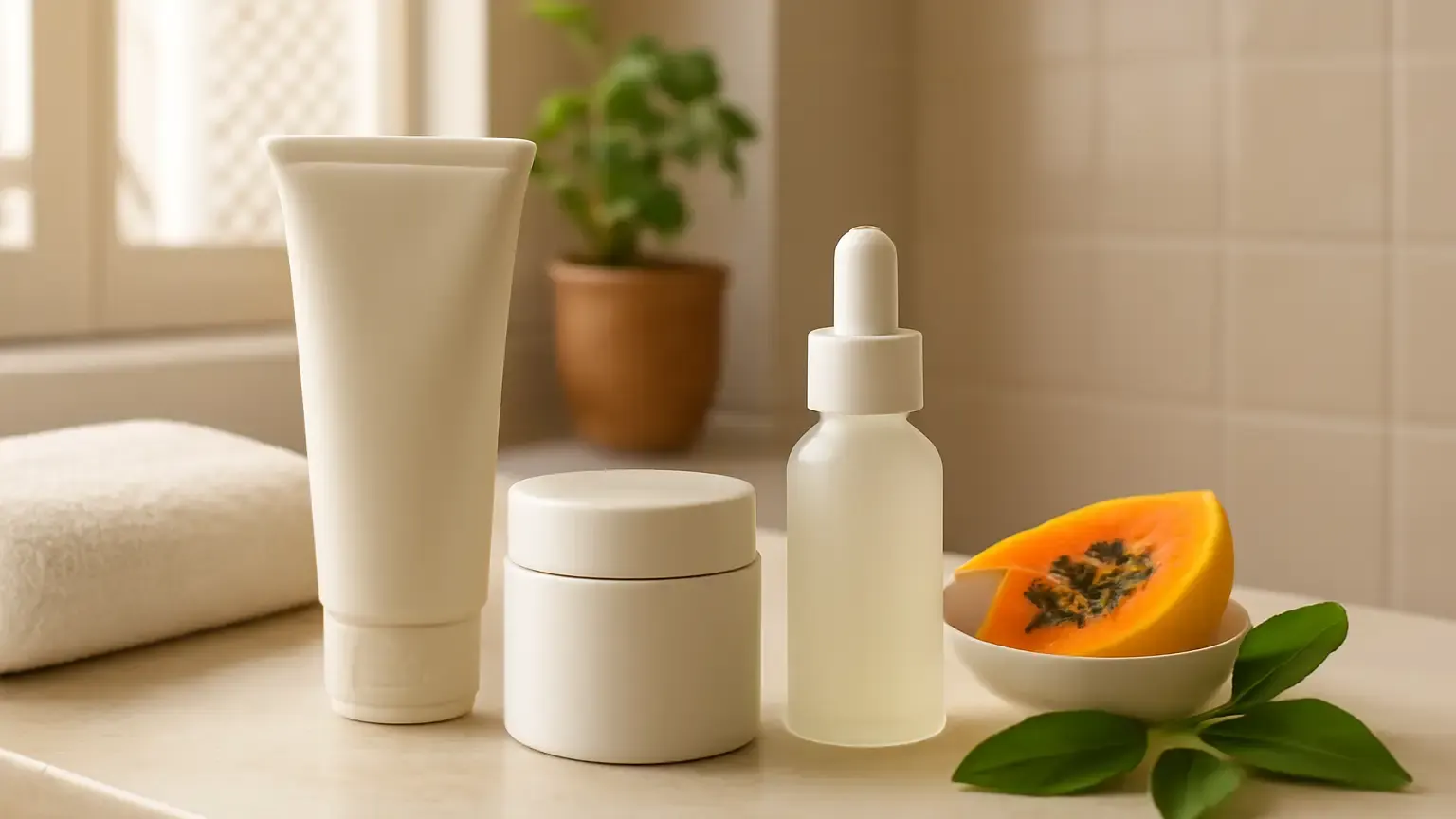
Glowing skin and exfoliation are connected, but the best choice depends on your skin’s tolerance, texture and routine. Scrubs lift surface flakes through friction, enzymes loosen them gently, and acids dissolve the bonds holding them in place. For most beginners, a mild enzyme or lactic-acid formula used occasionally is easier to manage than an aggressive scrub. Anyone with sensitive, dry or easily darkening skin should prioritise barrier support, patch testing and daily sunscreen over stronger, faster-feeling exfoliation.
Exfoliation removes or loosens excess dead skin cells from the outermost layer of the skin. Used thoughtfully, it can make skin feel smoother, help makeup sit more evenly and improve the look of dullness. Used too often or too forcefully, it may leave skin tight, stinging, flaky or more reactive.
There are three broad approaches: physical exfoliation, which uses touch and friction; enzyme exfoliation, which uses fruit-derived enzymes to break down surface proteins; and chemical exfoliation, which uses acids to loosen the bonds between dead cells. None is automatically “best”. The right option is the one your skin can tolerate consistently without damaging its moisture barrier.
How each exfoliation method works
Physical exfoliation: immediate smoothness through friction
Scrubs use particles such as jojoba beads, rice powder or other textured materials to buff the skin’s surface. A well-formulated scrub with rounded, fine particles can provide an immediate soft feel. However, pressing hard, using a rough product or scrubbing too frequently can create unnecessary friction.
Physical exfoliation may suit people who enjoy a tactile rinse-off product and have resilient, non-reactive skin. It is less suitable when the skin is already dry, peeling, sun-exposed, irritated or prone to redness. Avoid using household ingredients such as sugar, salt or crushed nut shells on the face; their irregular edges can be unnecessarily abrasive.
Enzyme exfoliators: a gentler-feeling middle option
An enzyme exfoliator commonly contains papain from papaya or bromelain from pineapple. These enzymes help loosen proteins on the surface of the skin, so the product can feel smoother than a scrub without requiring vigorous rubbing.
Enzymes can be a useful option for someone new to exfoliation or looking for a short-contact rinse-off treatment. “Gentle” does not mean risk-free, though. Fragrance, botanical extracts or the formula’s acidity may still irritate sensitive skin. Follow the product’s contact time rather than leaving it on longer for a stronger effect.
Chemical exfoliation: acids with targeted characteristics
Acids are not all interchangeable. An AHA exfoliant, such as lactic or glycolic acid, works mainly at the skin surface and is often chosen for dullness, roughness and uneven skin texture. Lactic acid is generally considered a more moisturising-feeling AHA, while glycolic acid has a smaller molecule and may feel more intense for some users.
A BHA exfoliant, usually salicylic acid, is oil-soluble and can travel into the pore lining. It may be preferred by people concerned about oiliness or congestion. Those with dry or easily irritated skin should still introduce it cautiously. Acid strength, pH, supporting ingredients and contact time all affect how a product feels, so the label alone does not tell the full story.
Acids, enzymes or scrubs: which is better for you?
| Option | Best suited to | Texture and feel | Main caution |
|---|---|---|---|
| Scrub | Resilient skin that enjoys rinse-off exfoliation | Immediate, tactile smoothness | Friction and over-scrubbing |
| Enzyme formula | Beginners or those wanting a gentler-feeling treatment | Softening, often short-contact | Botanical ingredients can still irritate |
| AHA | Dullness, surface roughness and uneven texture | May tingle or feel warm | Overuse and increased sensitivity to sunlight |
| BHA | Oilier skin or visible pore congestion | Usually a leave-on liquid, gel or serum | Dryness when layered too often |
For very dry or sensitive skin, start with a mild enzyme formula or a low-strength lactic-acid product once a week. For combination or oily skin, a BHA may be more relevant, particularly on areas that become congested, but it need not be applied everywhere. For normal, resilient skin, any category can work if the routine is modest and the skin remains comfortable.
If your priority is rough texture and a brighter-looking surface, an AHA may be the more logical choice. If your priority is oil-related congestion, a BHA may be more useful. If you want a rinse-off introduction with less emphasis on leave-on acids, an enzyme product may feel more approachable. A scrub is optional, not a required step for glow.
How often should you exfoliate for glowing skin?
There is no universal number because concentration, formulation, climate and skin tolerance vary. A sensible starting point is once weekly. If the skin remains comfortable for several weeks, some people can increase to twice weekly. More frequent use is not automatically more effective.
- Beginner: Choose one exfoliant and use it once a week, following the label.
- Dry or sensitive skin: Keep the frequency low and choose a gentle, fragrance-free formula where possible.
- Combination or oily skin: Consider targeted BHA use rather than applying acid to the entire face by default.
- Resilient skin: You may tolerate up to two weekly sessions, but only if there is no persistent tightness, burning or peeling.
Do not combine a scrub, enzyme mask and acid serum in the same routine. Also avoid treating frequency as a competition. If skin feels sore, unusually shiny, tight or persistently flaky, pause exfoliation and focus on gentle cleansing and moisturising until it settles.
A practical exfoliation routine
Before exfoliating
- Cleanse with a mild, non-scrubbing cleanser and pat dry.
- Read the product instructions, including contact time and frequency.
- Patch test a new formula on a small area, especially if your skin reacts easily.
- Use only one exfoliating active in that session.
After exfoliating
- Rinse thoroughly if it is a wash-off formula; do not add extra rubbing.
- Apply a simple moisturiser containing supportive ingredients such as glycerin, ceramides or panthenol.
- Skip potentially irritating additions that evening, including retinoids, strong vitamin C formulas, benzoyl peroxide or another exfoliating acid unless a qualified professional has advised a specific routine.
- Apply broad-spectrum sunscreen the next morning and reapply when appropriate for outdoor exposure.
This post-exfoliation skincare approach matters because exfoliation can temporarily make the skin feel more exposed. Moisturiser helps reduce dryness, while daily sunscreen helps protect against UV-related darkening and visible damage. In India, strong sunlight can be relevant even on hazy days or during routine commuting, so sunscreen should not be treated as an optional finishing touch.
Common mistakes that reduce the glow
- Choosing strength over consistency: A high-strength acid used sporadically and irritatively is not better than a mild product used correctly.
- Scrubbing acne-prone or irritated areas: Friction can make discomfort and visible redness worse.
- Layering too many actives: Combining exfoliating acids with retinoids or other strong products can make the routine harder to tolerate.
- Ignoring the barrier: When the moisture barrier is compromised, add hydration and reduce active steps rather than exfoliating through flakes.
- Skipping sunscreen: Exfoliation without daytime UV protection can undermine a more even-looking complexion.
- Applying to damp skin without checking instructions: Some acid products may feel more intense when spread over damp skin.
What to choose for specific skin goals
For dull skin care, begin with a gentle AHA or enzyme product and assess the skin over several weeks. For uneven texture, an AHA may be useful, but texture can also reflect dryness, so moisturising remains important. For oily areas or recurring congestion, a BHA may be the better-targeted option.
If you are prone to dark marks after irritation, be especially conservative. Aggressive scrubbing and frequent acids can create irritation that makes the overall tone appear less even. If the skin is inflamed, cracked, persistently itchy or unusually sensitive, pause experimentation and seek advice from a dermatologist or doctor rather than adding stronger exfoliants.
Takeaway: glowing skin and exfoliation need balance
Glowing skin and exfoliation work best as a balanced routine, not as a daily polishing project. Choose a scrub for occasional tactile smoothing if your skin tolerates friction, an enzyme formula for a gentler-feeling introduction, an AHA for surface dullness and texture, or a BHA for oil-related congestion. Start once weekly, introduce only one exfoliant at a time, support the skin barrier and wear sunscreen consistently. Comfortable, steady use is more valuable than aggressive intensity.
Products that may help with this routine
Choose only what fits your skin, hair or personal needs. Use the links below to view current options on Amazon India.
Frequently Asked Questions
Which is better for glowing skin, acids or scrubs?
Acids are often more predictable for surface dullness and uneven texture, while scrubs provide immediate tactile smoothness. Choose acids if you prefer targeted leave-on care and scrubs only if your skin tolerates friction without redness, tightness or peeling.
How often should you exfoliate for glowing skin?
Start once a week. If your skin remains comfortable for several weeks, you may increase to twice weekly, depending on the product and your skin type. Persistent stinging, tightness or flaking means you should reduce frequency or pause.
Is enzyme exfoliation good for sensitive skin?
An enzyme formula can be a gentler-feeling option for sensitive skin because it usually needs less rubbing, but it can still irritate. Patch test first, follow the contact time and choose a simple, fragrance-free formula where possible.
What should I apply after exfoliating my face?
After exfoliating, use a gentle moisturiser with hydrating and barrier-supportive ingredients such as glycerin, ceramides or panthenol. Use sunscreen the next morning and avoid stacking several strong active products in the same routine.
Can I use an AHA and a scrub together?
It is better not to use an AHA and a scrub together, especially when you are new to exfoliation. Combining chemical and physical exfoliation can increase friction and irritation. Use one exfoliant at a time and assess tolerance.