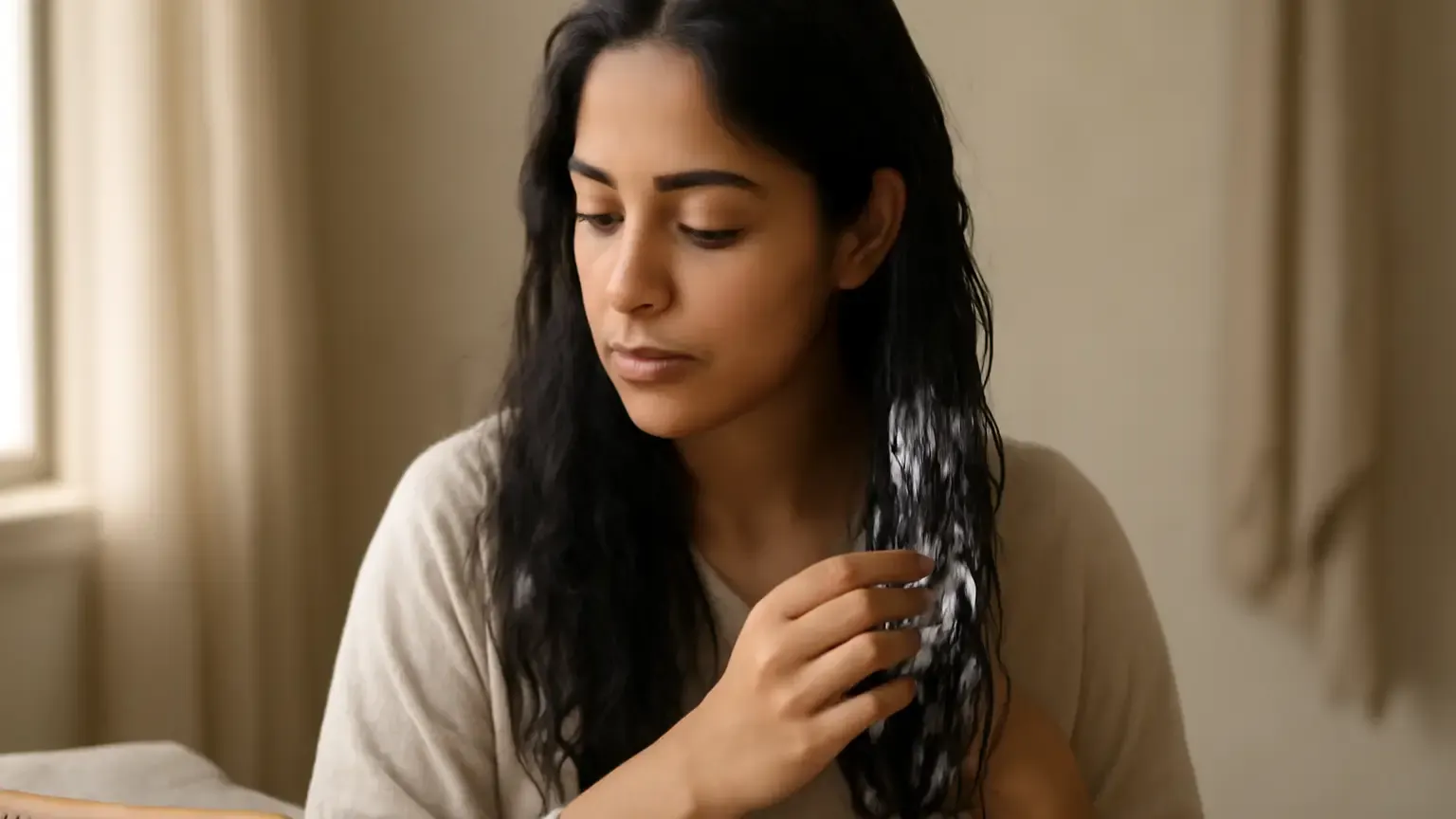
Seasonal Hair Care for Dry Scalp is mainly about reducing moisture loss, not adding more products. If cooler, drier air leaves your scalp tight or flaky, adjust four things: cleanse less aggressively, use lukewarm rather than hot water, keep conditioner on the lengths, and choose low-tension styles. This approach suits people in India dealing with changing humidity, cooler mornings, fans or indoor heating, and helps maintain a more comfortable scalp without weighing down the roots.
As the weather cools, your scalp may feel different even when your products have not changed. Lower outdoor humidity, cooler air, frequent fans or indoor heating, and hotter showers can all increase moisture loss. The result may be tightness, mild flaking, rougher lengths or hair that seems harder to manage.
A useful seasonal routine does not need a complete shelf reset. It needs small changes that match the weather. The four adjustments below focus on the scalp barrier, the hair shaft and the amount of friction or tension your hair experiences between washes.
1. Make scalp cleansing gentler and more deliberate
When the scalp feels dry, many people either wash too often or avoid cleansing for too long. Both approaches can be uncomfortable. Sweat, styling residue, pollution and natural oil still need to be removed, but vigorous scrubbing and harsh cleansing can leave the scalp feeling stripped.
How to adjust your wash routine
- Choose a gentle shampoo suited to your hair and scalp rather than automatically selecting the richest or strongest formula.
- Apply shampoo mainly to the scalp, using the pads of your fingers. Avoid scratching with your nails.
- Let the lather run through the lengths during rinsing instead of rubbing the ends together.
- Wash when your scalp is sweaty, visibly oily or has product build-up; do not follow a rigid schedule if your needs change.
For many people, washing every few days works better in cooler weather than daily washing, but frequency depends on exercise, oil production, hair texture and local climate. Someone in a humid coastal city may still need frequent cleansing, while a person in a dry inland climate may prefer a longer interval.
If you use dry shampoo, strong hold products or heavy oils, occasional thorough cleansing may be more comfortable than repeatedly layering products. A dry scalp is not automatically a dirty scalp, and flakes should not be aggressively picked away.
2. Replace hot water with lukewarm water
Hot showers can feel comforting in winter, but high water temperatures may remove surface oils and increase the sensation of dryness. This is one of the simplest changes in winter hair care and it costs nothing.
The best water temperature for dry scalp hair is usually lukewarm: warm enough to rinse shampoo effectively, but not so hot that the scalp feels tight, stings or turns noticeably red after washing. You do not need cold-water rinses. Comfortably warm water is a practical middle ground.
A simple temperature check
- Wet the scalp with comfortably warm water.
- Cleanse without extending the shower unnecessarily.
- Rinse thoroughly with lukewarm water.
- Finish by gently pressing out excess water with a soft towel.
Do not rub wet hair briskly. Wet strands are more vulnerable to friction, and rough towel drying can make the lengths feel drier even when the scalp routine is sensible. A cotton T-shirt or smooth, absorbent towel can be useful if it reduces pulling and rubbing.
3. Move conditioning to the lengths, not the scalp
Conditioning helps reduce friction and improve manageability, but applying a rich product directly to a dry or easily congested scalp is not always the answer. Conditioner is generally most useful from the mid-lengths to the ends, where the hair is older and more exposed to weather, brushing and heat.
After shampooing, squeeze out excess water and apply conditioner to the lengths. Leave it on for the time stated on the label, then rinse well. If your ends feel rough, a weekly deep conditioning session may help with softness. It should complement—not replace—a comfortable scalp-cleansing routine.
When to consider a leave-in product
A small amount of leave-in conditioner can help people with curly, wavy, coarse or frequently tangled hair retain slip between washes. Apply it sparingly to damp lengths and ends. Fine hair may need only a lightweight formula, while thicker hair may tolerate a richer one. Keep the product away from the scalp if it makes the roots greasy, coated or itchy.
Conditioner placement is also a useful decision factor for anyone asking, “where to apply conditioner for dry scalp?” The answer is usually the hair rather than the scalp, unless a product is specifically formulated and labelled for scalp use. More product is not automatically more moisture.
4. Reduce tension, friction and heat while styling
Weather-related dryness can make hair feel less flexible. Tight ponytails, sleek buns, repeated parting in one place and rough detangling can then add unnecessary stress at the roots and along the hairline. A low-tension approach is especially sensible when the scalp feels tender or the hair is breaking around the edges.
- Choose loose braids, relaxed low ponytails or soft clips instead of tightly pulled styles.
- Use fabric-covered ties and remove them gently rather than yanking them from the hair.
- Detangle from the ends upwards with a wide-tooth comb or suitable brush.
- Allow hair to dry partially before tying it, and avoid sleeping with a tight wet style.
- Keep blow-dryer and straightener heat moderate, with the tool moving rather than held in one spot.
The best low-tension hairstyles for dry scalp are the ones that feel comfortable, do not pull at the hairline and can be undone without snagging. A style is not protective if it causes soreness, headaches or increased breakage.
How to build a seasonal scalp care routine
Use the following framework when the weather changes rather than copying someone else’s wash calendar:
| What you notice | Useful adjustment | What to avoid |
|---|---|---|
| Tightness after washing | Use a gentler cleanser and lukewarm water | Hot, prolonged showers and vigorous scrubbing |
| Dry or rough ends | Condition lengths and add a small amount of leave-in product | Applying heavy products to the roots by default |
| Hairline soreness | Choose loose styles and vary your part | Daily tight ponytails, buns or braids |
| Build-up or greasy roots | Cleanse according to oil and product accumulation | Using oil to mask a scalp that needs cleansing |
Hair oiling can be part of a personal routine if your hair tolerates it, but oil is not a guaranteed solution for scalp dryness. Use a small amount on the lengths or before washing, cleanse it out thoroughly, and stop if it causes irritation or persistent build-up. Avoid vigorous massage when the scalp is sore.
Common mistakes in dry scalp winter hair care India
A few habits can work against an otherwise good routine:
- Over-washing: cleansing more frequently than your scalp needs may increase tightness, especially with a strong shampoo.
- Under-washing: avoiding shampoo completely can allow sweat, oil and styling residue to accumulate.
- Over-oiling: a thick layer does not automatically repair the scalp barrier and may be difficult to remove.
- Putting conditioner on the roots: this can make fine hair limp or leave the scalp feeling coated.
- Ignoring indoor air: fans, heaters and closed rooms can contribute to dry indoor air even when outdoor temperatures are not extreme.
Changes in humidity do not affect everyone equally. Hair texture, water quality, bathing habits, colour treatments and existing sensitivity all matter. Adjust one variable at a time so you can identify what actually improves comfort.
When to seek professional advice
Occasional dryness or a few loose flakes can often be managed with gentler care. However, persistent or severe itching, thick or widespread scaling, pain, oozing, bleeding, marked redness, sudden hair loss or symptoms that do not improve should be assessed by a dermatologist. A scalp concern can have several possible causes, so avoid repeatedly adding oils or active products when the problem is ongoing. Continue any prescribed care as directed and ask your doctor before changing it.
Takeaway: keep the routine simple as temperatures fall
Effective Seasonal Hair Care for Dry Scalp is less about buying more and more about responding to the conditions around you. Cleanse with less friction, use lukewarm water, condition the lengths, and choose low-tension styling. Reassess your routine when humidity changes, indoor air becomes drier or your scalp’s comfort shifts. These small decisions can support softer hair and a calmer-feeling scalp without turning wash day into a complicated project.
Products that may help with this routine
Choose only what fits your skin, hair or personal needs. Use the links below to view current options on Amazon India.
Frequently Asked Questions
How do you care for a dry scalp in winter in India?
Use a gentle shampoo, wash according to sweat and build-up rather than a fixed rule, rinse with lukewarm water, condition the lengths and avoid tight hairstyles. Consider local humidity, fans and indoor heating when adjusting frequency.
What is the best water temperature for dry scalp hair?
Lukewarm water is generally the most practical choice. It can rinse products effectively without the stripping, tight feeling that very hot water may cause. Cold-water rinses are not necessary.
How often should you wash a dry scalp in winter?
There is no universal number. Wash when the scalp is sweaty, oily or has build-up, while avoiding unnecessary daily cleansing if it increases tightness. Climate, exercise, hair texture and product use all affect frequency.
Where should you apply conditioner if your scalp feels dry?
Usually apply conditioner from the mid-lengths to the ends, not directly to the scalp. Use a product labelled for scalp use only according to its directions, particularly if your roots become greasy or coated easily.
Can seasonal weather cause a dry scalp?
Cooler outdoor air, lower humidity, hot showers, fans and indoor heating can increase moisture loss and make the scalp feel dry or tight. Persistent, severe or inflamed symptoms should be checked by a dermatologist.