Saree styling for wedding guests becomes easier when you match fabric, drape and accessories to the function—not just the invitation dress code. These seven formulas help women attending daytime pheras, mehendi celebrations, cocktail evenings and receptions create a complete look, from blouse coordination and jewellery to bags and footwear. Choose a lighter pastel or breathable weave for sunlit ceremonies, then shift to richer colour, shine and stronger accessories for an evening function without sacrificing comfort.
A successful wedding guest saree outfit balances three things: formality, movement and the setting. A heavily embroidered saree can look beautiful at a reception but feel cumbersome at an outdoor afternoon ceremony, while an ultra-casual cotton drape may look underdressed beside evening festivities. Start by identifying the event, venue and likely hours of wear, then build the look around the saree rather than adding accessories at random.
How to choose the right saree for the wedding function
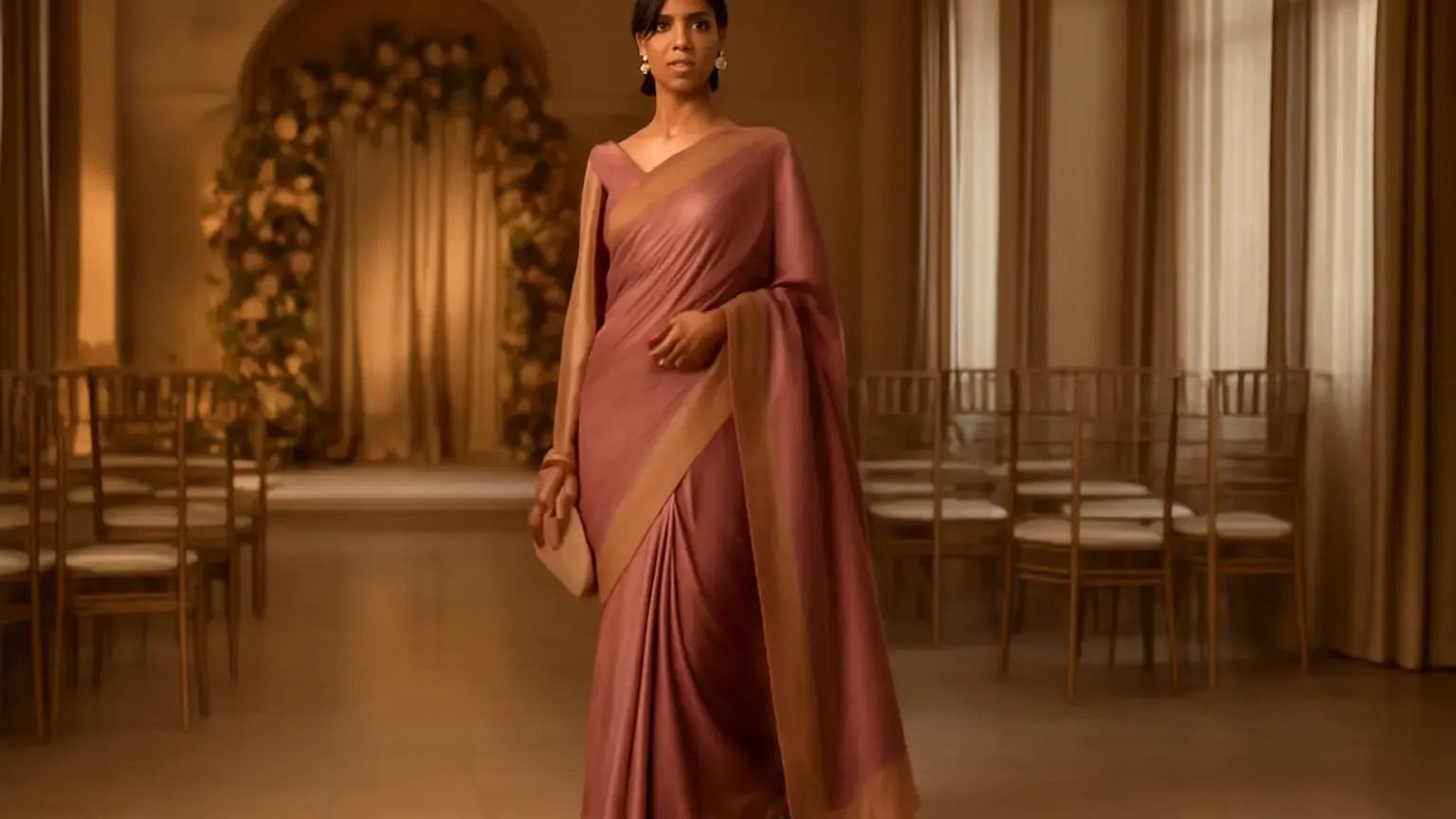
For a daytime wedding, prioritise breathable textiles and a clear, fresh colour story. Chiffon, georgette, soft silk, linen blends and lightweight organza can all work, provided the saree is easy to manage. Powder blue, blush, pistachio, butter yellow, ivory with a coloured border and muted coral are polished choices. If the ceremony is outdoors, avoid very dense embellishment and fabrics that trap heat.
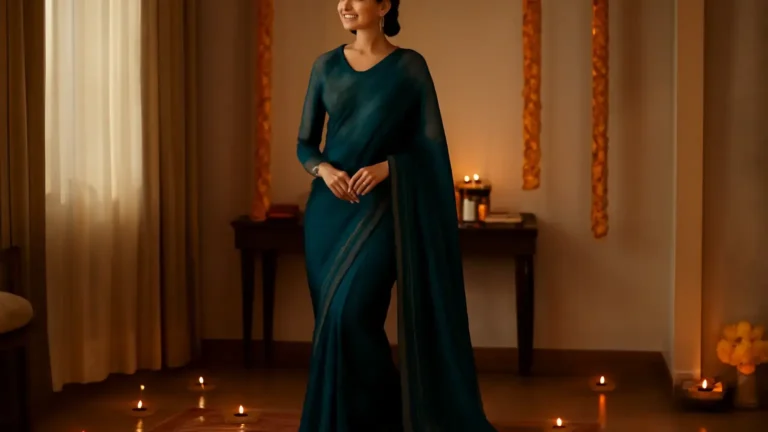
An evening wedding allows more visual depth. Jewel tones, metallic borders, satin finishes, sequins and richer silk textures photograph well under warm lighting. Navy, emerald, wine, plum, charcoal, copper and deep rose can form an elegant evening wedding saree look. The key decision is proportion: if the saree is ornate, keep the blouse and accessories edited; if the saree is plain, let the blouse or jewellery provide the focal point.
Saree styling for wedding guests: seven complete formulas
1. Pastel organza saree for daytime pheras
Pair a pastel organza saree with a structured blouse in a related shade, such as a powder-blue saree with a slightly deeper blue blouse or a blush saree with a rose-beige blouse. A modest square, boat or softly draped neckline keeps the outfit refined for a family ceremony. Set narrow pleats firmly and pin the pallu at the shoulder so the translucent fabric does not shift while walking.
Choose pearl drops, small kundan studs or delicate gold earrings rather than a full necklace. A compact pearl or metallic clutch adds polish, while nude block heels or embellished flats provide stability on grass, marble or uneven outdoor paths. This formula suits guests who want a light, graceful look that will not compete with the bride.
2. Soft silk saree for a traditional morning wedding
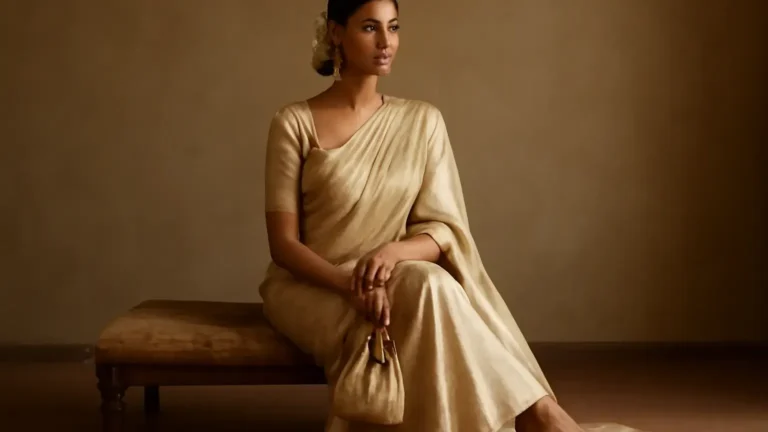
A soft silk saree with a contrasting border creates a classic wedding saree outfit without requiring heavy styling. Try a cream saree with a tomato-red border, a teal saree with antique-gold detailing or a muted pink saree with a green blouse. The blouse can echo the border, but it need not match the saree exactly; a related contrast often looks more intentional.
Use a traditional front pleat and a neatly secured pallu for a temple, hall or family wedding. Small jhumkas, a slim bangle stack and one delicate chain are enough. Select a potli bag or small box clutch in the border colour. Cushioned wedges or low block heels are more practical than thin stilettos if the ceremony involves standing, greeting relatives or moving between venues.
3. Printed georgette saree for a mehendi function
For a colourful mehendi, choose a printed georgette saree with one dominant shade and a blouse that picks up a secondary print colour. Floral, abstract and small geometric prints all work, but avoid combining a busy print with a heavily embellished blouse. A sleeveless, short-sleeved or lightly gathered blouse can make the outfit feel festive while keeping it easy to move in.
A relaxed shoulder drape or a pre-stitched finish is useful when you expect dancing and photographs. Add colourful enamel earrings, a slim stack of bangles and a small embroidered potli bag. Juttis, decorated flats or low wedges give this look a cheerful finish and are a better choice than delicate sandals if the function is on a lawn. This is one of the most adaptable wedding guest saree ideas for a daytime celebration.
4. Belted chiffon saree for a cocktail evening
For a cocktail-style function, combine a fluid chiffon saree with a clean blouse in satin, velvet or a subtly sequinned finish. A black saree with a bronze blouse, a wine saree with a matching tonal blouse or a slate saree with silver detailing can look contemporary without becoming overly dramatic. A narrow belt at the waist can define the silhouette, but it should sit comfortably over the pleats rather than compress them.
Keep the jewellery focused: choose long earrings or a single statement cuff, not both with a large necklace. A hard-shell clutch or slim metallic saree clutch bag complements the sharper styling. Pointed-toe heels or minimal heeled sandals work well, but test the straps and heel height before the event. This formula suits guests who prefer modern saree draping styles and a streamlined evening finish.
5. Sequin saree for a wedding reception
A sequin saree naturally brings evening glamour, so coordinate it with a plain or lightly embellished blouse. A full-sleeved blouse gives more coverage in air-conditioned venues, while a sleeveless or one-shoulder shape can feel dressier for a cocktail reception. Match the blouse to the base colour instead of introducing another strong shade unless the saree has a clear contrasting border.
Wear sculptural earrings, a cocktail ring and, if needed, one slim bracelet. Avoid a large necklace that competes with the sparkle around the neckline. A satin clutch in black, silver, champagne or the saree’s darkest tone is practical and elegant. For saree footwear, choose a stable block heel with a secure strap; loose sandals can catch on sequins or the hem. A reception look benefits from a final mirror check under artificial lighting before leaving home.
6. Pre-stitched saree for a long multi-event day
When the schedule includes a ceremony, lunch and evening photographs, a pre-stitched saree can reduce repeated adjustments. Select one in crepe, satin, georgette or a light shimmer fabric with a blouse that has enough support for extended wear. A tonal blouse keeps the look sophisticated, while a contrast blouse can make a simpler saree feel more occasion-ready.
Use minimal layered jewellery, such as medium hoops with a fine chain, so the outfit remains comfortable through several hours. Carry a medium structured bag if you need essentials beyond a phone and lipstick; otherwise choose a crossbody-compatible clutch with a detachable chain. Comfortable wedding footwear matters most here: low block heels, dressy wedges or embellished flats are sensible choices. Add a light stole only if the evening venue is cool, and keep it in a colour already present in the saree.
7. Monochrome silk or satin saree for an elegant night event
For a formal reception or sangeet evening, build a monochrome look around one strong shade. A deep emerald saree with a tonal blouse, a cobalt silk saree with a slightly matte blouse or a copper satin saree with warm metallic detailing creates impact without multiple competing colours. A high-neck, sleeved or sculpted blouse works particularly well when the saree itself is clean and uninterrupted.
Choose one hero accessory: chandelier earrings, a broad cuff or an ornate ring. A small metallic clutch and matching sandals complete the look, but keep the metal family consistent—gold with warm copper and champagne, silver with cool blue and charcoal. This formula suits guests searching for how to style a saree for a wedding when the dress code is formal but not black tie.
Blouse, drape and accessory decisions that improve the outfit
Coordinate the blouse by colour and proportion
The safest approach is to repeat one detail from the saree in the blouse: its border, print accent or metallic thread. A high-contrast blouse is effective when the saree is plain, but it can make a printed or sequinned saree look visually crowded. Balance neckline and sleeve volume too. A dramatic blouse neckline usually works best with a simpler pallu and lighter jewellery.
Choose the saree draping style for movement
Use a firmly pleated traditional drape for ceremonies, a softer shoulder drape for daytime social functions and a belt or pre-stitched drape for cocktail events. Secure the pallu at the shoulder and, where appropriate, discreetly pin the inner pleats. Do not rely on pins alone: wear-test the complete look at home by sitting, climbing stairs and walking for ten minutes.
Edit jewellery, bags and footwear as one group
Wedding guest jewellery should support the neckline and the saree’s finish. Pearls and delicate gold flatter light daytime fabrics; kundan, polki-inspired pieces and sculptural metals suit richer evening textures. Your saree accessories should serve a purpose: a potli adds traditional charm, while a structured clutch looks sharper with contemporary drapes.
Match the bag and footwear loosely rather than forcing an exact set. Repeat a metal, neutral or border shade instead. Always carry fashion tape, two safety pins, a small blister patch and a compact lipstick in your bag. These practical additions are especially useful when the saree is worn for several hours.
Common wedding guest saree mistakes to avoid
- Ignoring the venue: Thin stilettos are difficult on grass, and trailing hems are inconvenient on crowded floors.
- Overmatching every element: Identical blouse, bag, shoes and jewellery can flatten the look. Repeat one or two details instead.
- Choosing sparkle for daylight without balance: A small metallic border is usually easier to wear in the afternoon than head-to-toe sequins.
- Skipping a movement test: Sit, walk and lift your arms before the event to check the blouse, pleats and pallu.
- Forgetting comfort under the blouse: Use supportive, well-fitting undergarments and avoid any style that needs constant adjustment.
Quick takeaway
The best saree styling for wedding guests begins with the function and ends with a coordinated, wearable finish. Choose breathable lightness for day events, richer texture for evening celebrations, then balance the blouse, drape, jewellery, bag and footwear as a single outfit. If you can sit, walk, greet people and enjoy the ceremony comfortably, your look is doing its job.
Products that may help with this routine
Choose only what fits your skin, hair or personal needs. Use the links below to view current options on Amazon India.
Frequently Asked Questions
What saree should I wear to a daytime wedding?
Choose a lightweight organza, georgette, soft silk or linen-blend saree in a pastel, muted bright or fresh neutral shade. Pair it with delicate jewellery, a compact bag and stable flats, wedges or low block heels.
How should I style a saree for a wedding guest?
Match the fabric and colour depth to the function, coordinate the blouse with a border or print accent, secure the drape for movement, then add edited jewellery, a practical clutch and comfortable footwear.
What is the best saree draping style for a wedding?
A neat traditional pleat-and-pallu drape suits ceremonies, a relaxed shoulder drape works for daytime social events, and a belt or pre-stitched drape is useful for cocktail and reception looks.
What jewellery goes with a wedding guest saree?
Use pearls, delicate gold or small jhumkas with light daytime sarees. Richer silk, satin and sequin sarees can take statement earrings, a cuff or a cocktail ring, but usually not all three together.
How can I make a saree comfortable for a long wedding?
Wear-test the full outfit, secure the pleats and pallu, choose a supportive blouse, use low block heels or dressy flats, and carry safety pins, fashion tape and a blister patch.