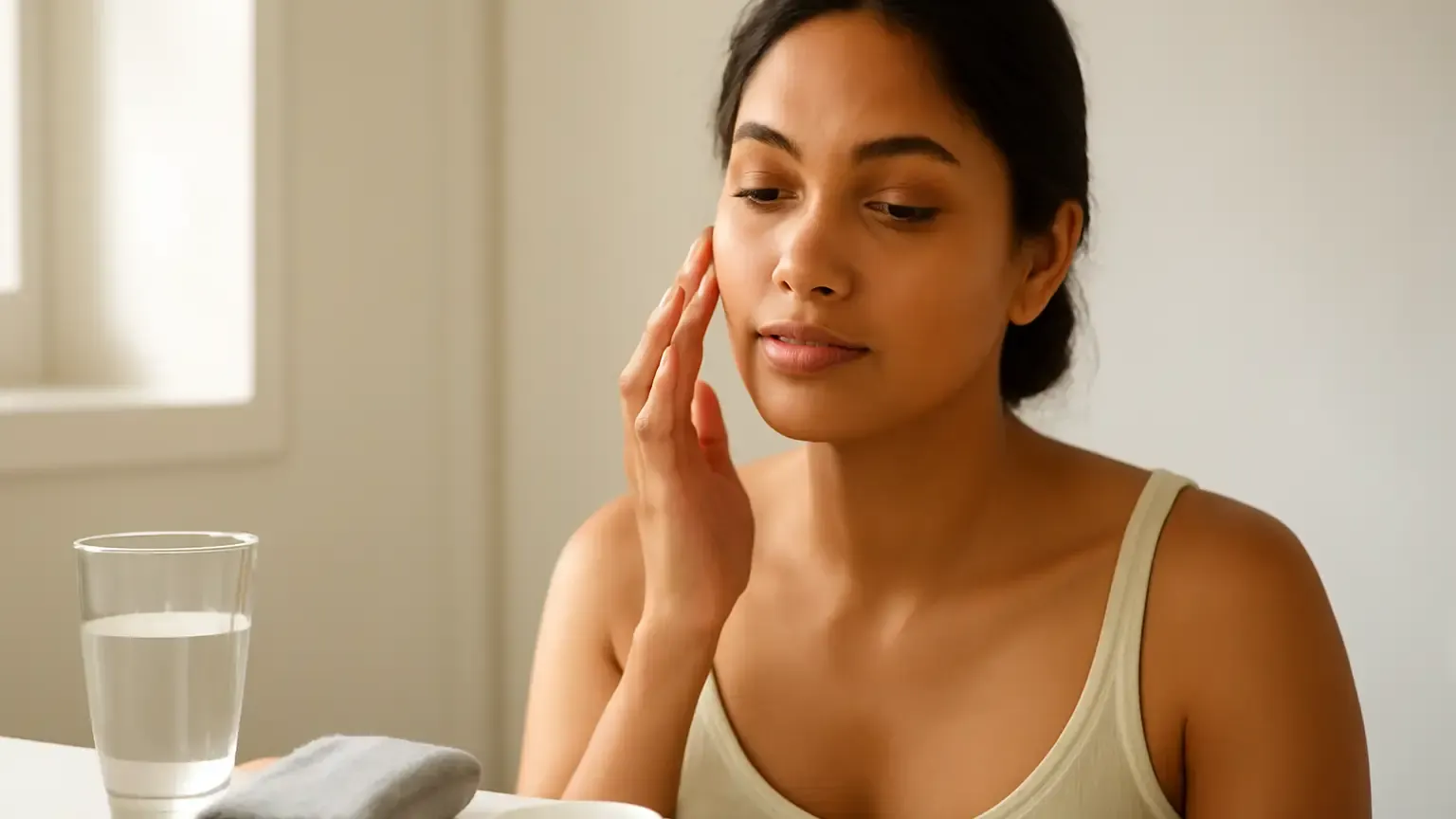
If you want glowing skin after a late night, keep the morning simple: drink water, cleanse without stripping, apply a comfortable moisturiser, use broad-spectrum sunscreen and add sheer complexion makeup only if needed. This routine suits adults with temporarily dull, tight or puffy-looking skin after a short night, and the goal is a more even, rested appearance—not a dramatic overnight repair or a substitute for proper sleep.
Why skin can look tired after a late night
A short night may leave the face looking dull, dry, puffy or uneven. Long hours, indoor air-conditioning, salty food, alcohol, travel and missed skincare can all make temporary dehydration and facial puffiness more noticeable. The under-eye area may also appear darker simply because shadows and swelling are more visible when you are tired.
That does not mean your skin needs an aggressive reset. A late-night morning routine should support comfort and appearance while protecting the skin barrier. Gentle layers are usually a better choice than scrubs, strong acids or several new products at once.
1. Start with water and a calm reset
Begin with a glass of water and give yourself a few unhurried minutes before applying products. Water will not instantly erase signs of fatigue, but replacing fluids can support overall comfort when you wake up feeling dry or depleted. Have a normal breakfast if you can, especially after a late evening when meals were irregular.
For visible under-eye puffiness, place a clean, cool—not icy—cloth over closed eyes for a few minutes. Use light pressure and do not rub. A cool compress may temporarily make the area feel less swollen, but it is not a treatment for persistent puffiness or dark circles.
What to avoid at this stage
- Very hot water, which can leave already uncomfortable skin feeling drier.
- Rubbing the eye area or using an ice cube directly on the skin.
- Trying multiple caffeine, brightening or tightening products together for the first time.
2. Cleanse gently, or rinse if your skin feels dry
Use a mild gentle cleanser to remove overnight sweat, excess oil and any leftover product. Massage it over damp skin with clean fingertips, rinse thoroughly and pat dry with a soft towel. If your skin feels tight, sensitive or unusually dry, a lukewarm water rinse may be enough in the morning, particularly if you cleansed well before bed.
Choose the option based on how your skin feels rather than how exhausted you look. Oily or combination skin may prefer a low-foam cleanser, while dry or sensitive skin may be more comfortable with a cream or lotion texture. The right cleanser should leave the face clean but not squeaky, stretched or hot.
Skip a rough face scrub, cleansing brush and strong astringent. These can make temporary redness or dehydration more obvious and may disturb the barrier when the skin is already feeling fragile.
3. Add hydration with a moisturiser that feels comfortable
After cleansing, apply a hydrating moisturiser while the skin is still slightly damp. Look for a texture that suits the weather and your skin type. Lightweight gel-creams can feel pleasant in hot, humid Indian weather, while a lotion or cream may be more comfortable in dry air or after travel.
Ingredients such as glycerin, hyaluronic acid, panthenol and aloe can provide a hydrated feel. Emollient ingredients help soften rough-feeling areas, while a small amount of an occlusive ingredient can help reduce moisture loss. You do not need every category in one product; a simple formula that does not sting is often the most practical choice.
A simple layering decision
- Skin feels tight: use a richer moisturiser, especially around the cheeks and mouth.
- Skin feels oily but looks dull: choose a lightweight lotion or gel rather than skipping moisturiser completely.
- Skin feels itchy or stings: keep the routine minimal and avoid adding active ingredients.
Wait a minute or two before the next step so the moisturiser settles. This can also help prevent complexion products from catching on dry patches.
4. Protect the finish with broad-spectrum sunscreen
Apply a broad-spectrum sunscreen as the final skincare step, even when the morning looks cloudy or you plan to stay mostly indoors near windows. Choose at least SPF 30, apply a generous, even layer to the face, ears and exposed neck, and reapply when you spend extended time outdoors, sweat or wipe your face.
Sunscreen is especially useful on a morning when your complexion already looks uneven because UV exposure can add to the appearance of discolouration over time. If you dislike a heavy finish, try a fluid, gel or non-greasy lotion. Allow it to set before applying makeup.
Do not mix sunscreen into foundation or rely on a small amount of tinted product to provide the protection stated on its label. A dedicated sunscreen layer gives you a more dependable base.
5. Use complexion products to even the look, not cover everything
If you need to look polished for work, college or an event, choose light, flexible coverage. A tinted moisturiser, skin tint or sheer foundation can soften the contrast between dull areas and the rest of the face without making the skin look heavily layered. Apply a small amount from the centre of the face outward, then add a little more only where redness or uneven tone is most noticeable.
For makeup for tired skin, a creamy concealer used sparingly under the inner corners of the eyes and around the nose can look more natural than a thick layer across the whole face. A touch of cream blush can restore colour, while a soft lip tint can make the overall face appear more awake. Keep powder mainly to areas that become shiny, because too much powder can emphasise dehydration lines and texture.
How to choose between skin tint and foundation
Pick a skin tint or tinted moisturiser when your main goal is an even, breathable finish and your skin is comfortable. Choose light-to-medium foundation when you need more coverage for visible redness or an event, but apply it in thin layers. For humid conditions, look for a non-comedogenic makeup formula if that suits your skin and remove it thoroughly at night.
A practical five-minute late night glow routine
- Drink water and use a cool compress briefly if the eye area looks puffy.
- Cleanse with a gentle cleanser, or rinse with lukewarm water if your skin feels dry.
- Apply moisturiser to slightly damp skin and let it settle.
- Use broad-spectrum sunscreen generously on exposed skin.
- Add sheer complexion makeup only where you want a more even appearance.
This order keeps skincare underneath makeup and reduces unnecessary rubbing. If you are in a rush, the non-negotiable steps are comfortable cleansing or rinsing, moisturiser if needed and sunscreen. Makeup is optional.
Common mistakes after a late night
Do not exfoliate aggressively. Scrubs, high-strength acids and retinoid products are not required for a quick fresh-looking finish and may cause stinging or visible dryness, particularly if they are new to you.
Do not pile on several hydrating layers. More products do not always mean more glow; heavy layering can pill under sunscreen or makeup. Use one or two familiar products that your skin already tolerates.
Do not chase a temporary glow with harsh home remedies. Lemon juice, baking soda, toothpaste and undiluted essential oils can irritate facial skin. Stick to tested cosmetic products and clean application tools.
Do not forget the evening reset. Remove makeup before bed, cleanse as appropriate and apply a comfortable moisturiser. The most useful recovery step after a late night remains regular sleep when you have the opportunity.
Who this routine suits—and when to get advice
These steps suit generally healthy skin that looks temporarily dull, tight or puffy after a late night. They are not designed to diagnose or treat a new rash, swelling, infection or severe irritation. If redness, burning, swelling, pain or a sudden change persists, worsens or concerns you, speak with a dermatologist or doctor. Follow any prescribed skincare or medical advice rather than replacing it with a beauty routine.
Takeaway
For glowing skin after a late night, choose gentle hydration and visual evening rather than an aggressive recovery routine. Water, a mild cleanse, moisturiser, sunscreen and carefully applied complexion products can help tired-looking skin appear more comfortable and balanced while you wait for proper rest to do the deeper work.
Products that may help with this routine
Choose only what fits your skin, hair or personal needs. Use the links below to view current options on Amazon India.
Frequently Asked Questions
What to do for glowing skin after a late night?
Drink water, use a gentle cleanser or lukewarm rinse, apply a comfortable moisturiser, finish with broad-spectrum sunscreen and use sheer makeup only where you want to even the appearance. Avoid harsh exfoliation.
What is the best morning skincare routine after no sleep?
Keep it short: cleanse gently, moisturise, apply sunscreen and optionally use a skin tint or a small amount of concealer. A cool compress may temporarily soothe under-eye puffiness.
How can I make tired skin look fresh naturally?
Use a cool compress, avoid rubbing, hydrate your skin with moisturiser and keep complexion makeup light. These steps can improve the temporary appearance of dullness without promising to erase fatigue.
Should you exfoliate after a late night?
Usually, no. Scrubs and strong acids can make dehydrated or sensitive-looking skin feel worse. Return to your usual exfoliation schedule only when your skin feels comfortable and the product is already familiar to you.
How can I reduce under-eye puffiness in the morning?
A clean cool compress for a few minutes and gentle handling may temporarily reduce the look of puffiness. Avoid ice directly on the skin and seek medical advice for persistent, painful or one-sided swelling.
What sunscreen is best for tired skin?
Choose a broad-spectrum SPF 30 or higher with a texture you can apply generously and comfortably. A fluid or gel may suit humid weather, while a lotion can feel better on dry skin; fragrance-free options may be preferable if your skin is easily irritated.