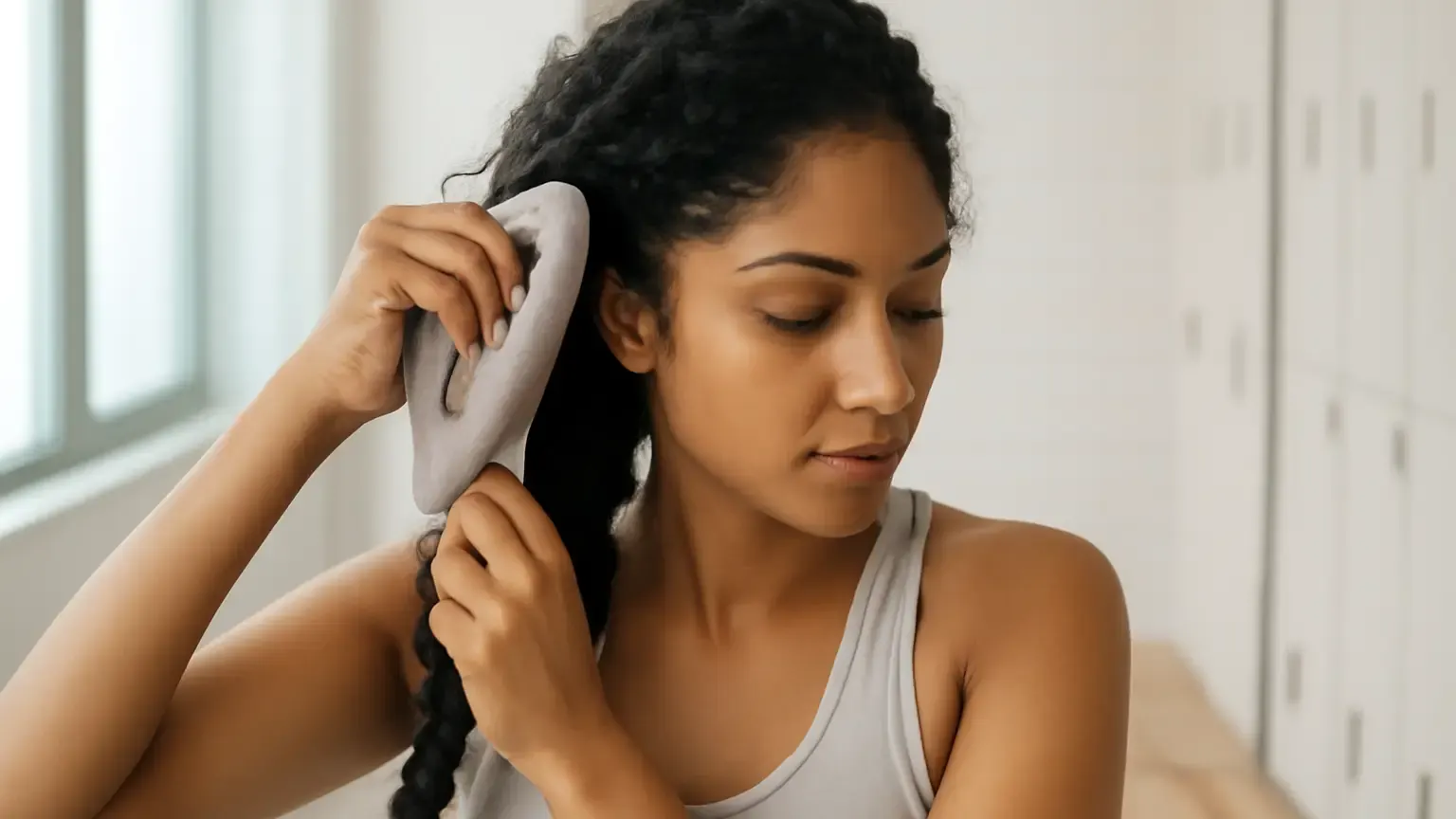
A useful hair care routine for gym days does not mean shampooing after every session. It means matching your response to sweat, scalp oil, hair texture, hairstyle and your next planned wash. Light sweat may need only drying and a loose restyle; heavy sweat usually calls for a scalp rinse or wash. This guide is for regular gym-goers in India who want fresher roots, less frizz and fewer problems caused by overwashing, tight styles or trapped dampness.
Workout sweat is not automatically harmful to hair, but leaving a damp, salty scalp covered for hours can feel uncomfortable and contribute to odour, residue and frizz. At the same time, shampooing aggressively after every short workout may strip the scalp and leave lengths rough. The most practical approach is a flexible routine rather than one fixed rule.
Start with a sweat-level decision
Before choosing products, assess three things: how wet your scalp became, how your hair feels now and when your next proper wash is due. The same session can need different care for straight, fine hair and dense, curly hair.
| Sweat level | Signs | Best response |
|---|---|---|
| Light | Slightly warm scalp, little moisture, no odour | Open the hair, air-dry the roots and restyle loosely. |
| Moderate | Damp roots, mild saltiness or a little frizz | Blot, cool-dry the scalp and consider a water rinse or targeted cleansing. |
| Heavy | Wet roots, visible sweat, odour or an itchy-feeling buildup | Rinse or shampoo the scalp soon, then condition the lengths. |
If your scalp is still damp several hours later, do not seal it under a cap, scarf or tight bun. A dry scalp surface is usually more comfortable than one kept warm and wet.
Before workout: prepare hair without creating buildup
A good pre workout hair care plan reduces tangling and breakage while keeping sweat manageable. It should be quick enough to use consistently.
Choose a low-tension hairstyle
Try a loose braid, low ponytail secured with a soft scrunchie, or a relaxed bun placed where it will not pull repeatedly. These protective hairstyles for workouts are not meant to be tight or protective in the technical salon sense; their purpose is to reduce rubbing, knots and repeated tension. Avoid tying wet or heavily oiled hair tightly, because damp strands are more vulnerable to stretching and breakage.
Adjust for texture
- Fine or straight hair: Brush gently before tying it and keep heavy oils away from the roots, where they can make post-workout hair look flat.
- Wavy or curly hair: Use a light leave-in product on the lengths if friction causes frizz. Preserve the pattern with a loose braid or pineapple-style tie rather than brushing dry curls.
- Long or thick hair: Divide the hair into a loose braid or low sections so sweat does not remain trapped at the nape.
- Colour-treated or dry hair: Focus on protecting the lengths from friction; the scalp still needs appropriate cleansing when it becomes sweaty.
If you already know you will wash after training, you generally do not need a pre-workout oil treatment. Sweat, oil and a heavy product layer can make cleansing feel more difficult. For a dry-length concern, use a small amount of lightweight leave-in conditioner rather than coating the scalp.
Hair care routine for gym days after light or moderate sweat
When the roots are only slightly damp, begin with the least aggressive option. Remove the tie, separate the hair at the scalp and blot moisture with a clean towel. A microfiber towel for hair or soft cotton T-shirt is gentler than vigorous rubbing, which can increase frizz and tangling.
- Let the scalp ventilate for a few minutes.
- Use a cool or low-warm dryer setting at the roots if air-drying is not practical.
- Once dry, smooth the lengths with clean hands or refresh curls with a little water and leave-in product.
- Replace a sweaty scrunchie or headband rather than putting the same damp accessory back on.
This approach suits a short, low-sweat session when your next wash is due soon. It does not mean ignoring persistent odour, discomfort or visible residue. Those signs call for more cleansing, even if it is not your usual wash day.
What to do after a heavy-sweat workout
For a high-intensity session, outdoor run or humid studio class, a proper scalp cleansing routine is often more comfortable than trying to disguise sweat. Separate the hair into sections and cleanse the scalp rather than scrubbing the full length repeatedly. Use fingertips, not nails, and rinse thoroughly.
A gentle shampoo may be enough for regular sweaty sessions. If your hair feels dry, apply conditioner from mid-length to ends and keep it away from the scalp unless the product is specifically designed for scalp use. A clarifying shampoo can have a place when there is noticeable product or mineral residue, but using it too frequently may make dry or textured hair feel rough. Follow the instructions on the product and consider your hair’s response rather than using it automatically.
For people who train daily, hair wash frequency can vary from several times a week to daily scalp cleansing. Frequency is not a competition or a fixed health rule. If daily washing is comfortable and your hair remains conditioned, it may be reasonable. If the lengths are becoming dry, try targeted scalp cleansing, a water rinse between shampoo days, or a gentler formula while keeping an eye on odour and scalp comfort.
How to manage sweat without overwashing
The aim is to clean the scalp enough for comfort without repeatedly stripping the lengths. These options can help you plan around your schedule:
If your next wash is tomorrow
After light sweat, dry the roots and leave the hair open or loosely tied. After moderate sweat, rinse the scalp with plain water and dry it fully. Avoid adding several styling products to cover odour, as layering can create more residue.
If your next wash is two or more days away
Heavy sweat is a reason to bring the wash forward rather than endure a coated scalp. For light sweat, a small amount of dry shampoo for gym may help absorb oil once the roots are completely dry, but it does not remove sweat or replace cleansing. Apply sparingly, leave it for the stated time if directed, and wash when the scalp feels coated.
If you have curly or textured hair
Co-washing for curly hair can work for some people between shampoo days, especially when the main need is refreshing the lengths and pattern. However, a conditioner cleanser still needs to be rinsed well, and it may not remove heavy sweat, oils or styling buildup for everyone. Alternate with a suitable shampoo when the scalp feels coated or uncomfortable.
Common gym-day hair mistakes
- Keeping a sweaty ponytail on all day: Release it soon after training and let the roots dry.
- Scrubbing the lengths: Cleanse the scalp and let the lather run through the lengths during rinsing.
- Using dry shampoo on wet hair: It can clump and create more residue; dry the roots first.
- Brushing wet curls or rough towel-drying: Both can disrupt the pattern and worsen frizz.
- Washing with very hot water: Lukewarm water is generally more comfortable for routine cleansing.
- Ignoring accessories: Wash headbands, caps and scrunchies regularly, particularly in hair care in humid weather when dampness lingers.
When to change the routine
Your routine needs adjusting if your scalp feels persistently tight, your lengths become unusually brittle, or product residue remains after washing. Reduce unnecessary styling layers, use a gentler approach and condition the lengths. Conversely, if there is ongoing intense itch, marked redness, painful bumps, heavy scaling or persistent odour despite reasonable cleansing, seek advice from a dermatologist or doctor. Beauty routines should not replace assessment of concerning or lasting symptoms.
Quick takeaway
The best hair care routine for gym days is based on sweat level, texture and timing. Air-dry and loosen the hair after a light session, rinse or target-cleanse moderate sweat, and wash the scalp after heavy sweat. Protect the lengths with gentle handling, avoid tight hairstyles and use dry shampoo only as an occasional oil-management aid—not as a substitute for cleaning.
Products that may help with this routine
Choose only what fits your skin, hair or personal needs. Use the links below to view current options on Amazon India.
Frequently Asked Questions
How do I care for hair after gym without washing?
For light sweat, remove the hairstyle, blot the roots, let the scalp ventilate and dry it on a cool or low-warm setting. Refresh the lengths with a little water or leave-in conditioner if needed. If there is heavy sweat, odour or residue, rinse or cleanse instead of postponing washing.
What should I do with sweaty hair after a workout?
Release tight hair ties, blot rather than rub, dry the scalp fully and choose a loose restyle. Moderate sweat may suit a water rinse, while wet roots, odour or a coated feeling usually call for scalp cleansing.
How often should I wash my hair if I work out daily?
There is no universal schedule. You may cleanse daily if your scalp becomes sweaty and your hair remains comfortable, or use rinses and targeted cleansing between shampoo days if the lengths are dry. Let scalp comfort, residue and odour guide the frequency.
Can I use dry shampoo after a workout?
Yes, occasionally, after the roots have dried, particularly for light sweat and excess oil. Dry shampoo absorbs some oil but does not remove sweat or buildup, so it should not replace regular scalp cleansing.
Should I wash my hair after every workout?
Not necessarily. A light workout may need only drying and a loose restyle. Rinse or wash after heavier sessions when the scalp is wet, uncomfortable, odorous or coated.
How can I prevent frizz after sweating at the gym?
Use a loose, low-tension style, minimise friction with a soft scrunchie and blot with a microfiber towel or cotton T-shirt. After drying, refresh curls with water and a small amount of suitable leave-in product rather than brushing textured hair dry.