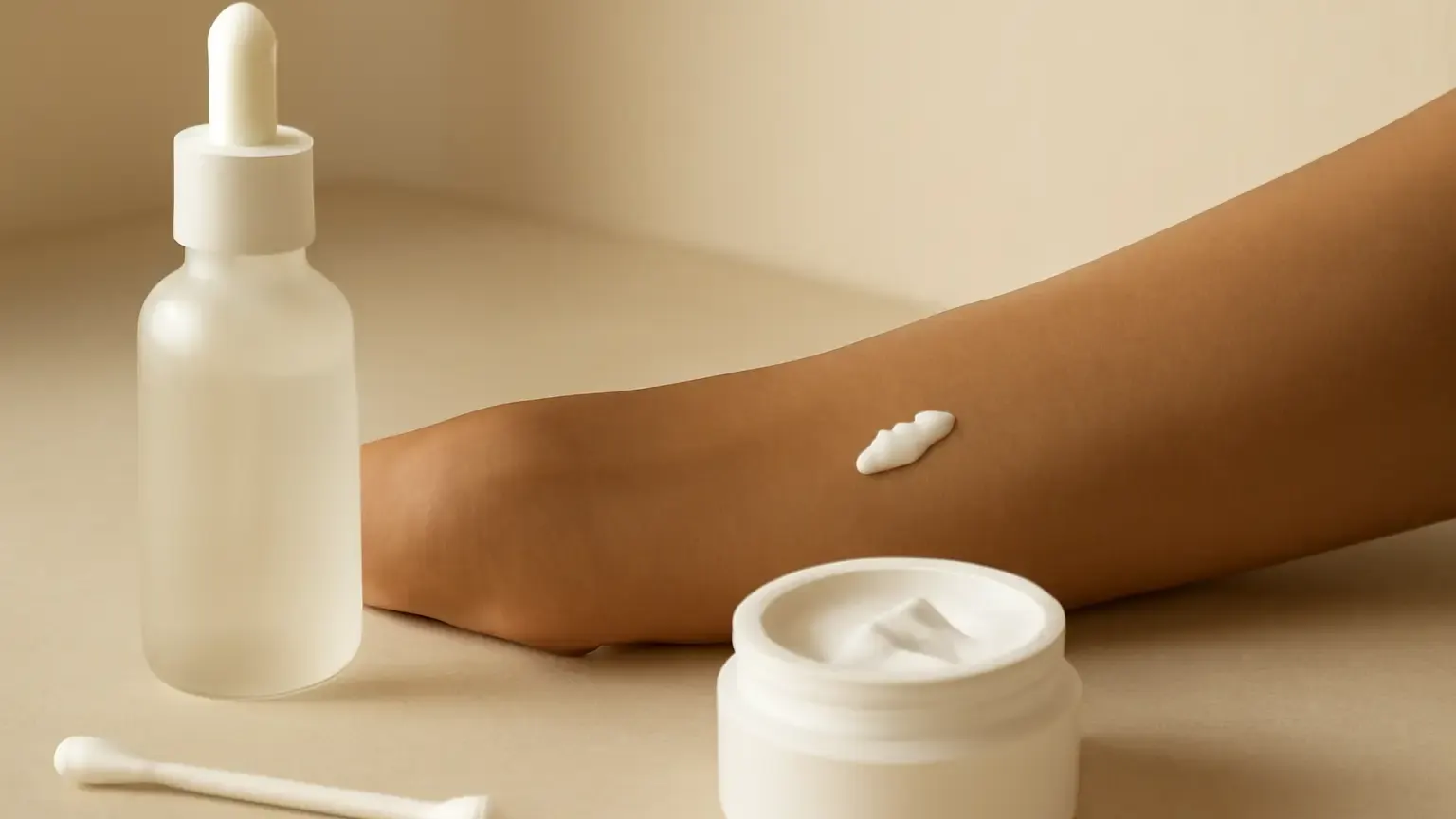
These skin care tips for patch testing are for anyone introducing a serum, moisturiser, sunscreen or active—especially people with sensitive skin. Apply a small amount to a discreet area, follow the product’s normal use instructions, observe for several days, and do not add another new product while you wait. Stop immediately for swelling, hives, blistering, intense burning or spreading redness; persistent or severe symptoms deserve medical advice.
Patch testing is a cautious way to check how your skin may respond to a new skincare product before applying it more widely. It can help you notice irritation or a possible sensitivity early, but it is not a guarantee that your face will tolerate the product. Facial skin can react differently because it is thinner, more exposed to sunlight, and often in contact with several products.
What a skincare patch test can—and cannot—tell you
A patch test involves applying a small amount of one product to a limited area and monitoring the skin. It is most useful for leave-on products such as moisturisers, serums, facial oils, exfoliating acids and sunscreen. It can also be helpful when trying a new skincare product containing fragrance, preservatives or several active ingredients.
A clear test area does not rule out a later reaction. Some reactions take time, and the face may be more sensitive than the arm. A patch test also cannot prove that a product will not cause clogged pores, breakouts or eye irritation. Think of it as a risk-reduction step, not a safety certificate.
Where to patch test a new skincare product
Choose a discreet, undisturbed area
The inner forearm patch test is a practical choice because it is easy to see and usually receives less sun exposure than the face. Apply the product to a small area, roughly the size of a pea or a small coin, rather than spreading it over a large section of skin.
A behind the ear patch test is another option for some leave-on products. The skin there is discreet, but it can be exposed to hair products, perfume, sweat and friction from masks or spectacles. Keep the test area away from cuts, eczema-prone patches, sunburn, shaving irritation and existing rashes.
Do not begin by testing directly beside the eyes, on the lips, or across the whole face. Those areas are more delicate and can make a reaction harder to manage.
How to patch test skin care products: a simple routine
- Read the label first. Check whether the product is intended to be rinsed off, left on, used daily or introduced less frequently. Follow any stated usage instructions.
- Test only one new product. If you apply a new cleanser, toner, serum and sunscreen together, you will not know which one caused a response.
- Clean and dry the area. Use your usual gentle cleanser and allow the skin to dry. Do not scrub or apply an exfoliant beforehand.
- Use a small amount. Apply a thin layer to the selected area. For a leave-on product, leave it on as directed. For rinse-off products, rinse after the recommended contact time.
- Keep the rest of the routine familiar. Continue only with products your skin already tolerates. Avoid adding a new active ingredient during the observation period.
- Record what happens. Note the product, time, test site and any redness, itching, warmth, bumps, tightness or burning. A quick photograph in the same lighting can make subtle changes easier to compare.
How long to patch test skincare
For many products, observe the area for at least 24 to 48 hours, provided the skin remains comfortable. Some people prefer to continue for several days, particularly when testing a product with multiple active ingredients or when they have a history of sensitive skin. Always follow the product label if it gives a different application schedule.
Rinse-off products have shorter contact with the skin, so their test should reflect normal use rather than leaving them on for hours. Leave-on products need a more realistic test: apply the same small amount you would normally use and observe the area between applications. Do not repeatedly reapply simply to speed up the answer.
If the area remains calm, introduce the product to the face gradually. Start with a small amount and avoid layering it with another unfamiliar product. A successful patch test means “reasonable to try carefully”, not “use as much as possible”.
What changes should you monitor?
Pay attention to both the timing and the type of change. Mild temporary tingling may occur with some formulations, but persistent discomfort should not be treated as proof that a product is working.
- Possible irritation: stinging, burning, tightness, dryness, roughness or diffuse redness. This is more likely when the formula is strong, the skin barrier is already stressed, or several active ingredients are combined.
- Possible allergic reaction: itching, raised bumps, hives, swelling or a rash that extends beyond the exact application area. Cosmetic allergy can appear after repeated exposure, so a previously tolerated product is not automatically harmless forever.
- Unexpected worsening: cracking, oozing, blistering, marked heat or rapidly spreading redness. These signs are not a normal adjustment period.
People often ask about irritation vs purging. “Purging” is a limited, temporary breakout pattern sometimes associated with products that increase cell turnover, such as certain retinoids or exfoliating acids. It does not explain hives, swelling, intense itching or burning. If you cannot confidently distinguish the response, pause the new product rather than adding another treatment to counter it.
When to stop rather than push through
Stop the test and gently rinse the area if you feel intense or persistent burning, significant itching, swelling, blistering, hives, severe redness or a rash that is spreading. Do not scrub the skin, apply more of the product to “check again”, or cover the reaction with another unfamiliar formula.
Use only products you already know your skin tolerates while the area settles. If symptoms are severe, involve the eyes or lips, affect breathing, or do not improve, seek prompt medical care. A dermatologist or doctor is appropriate for repeated reactions, significant swelling, persistent rashes or uncertainty about a possible contact dermatitis response. Do not stop prescribed treatment without speaking with the prescribing clinician.
How to patch test skincare products for sensitive skin
Sensitive skin benefits from a slower, simpler process. Choose a fragrance-free, uncomplicated routine while testing and avoid starting during a flare, after facial waxing, or immediately following strong exfoliation. Test moisturiser and sunscreen separately, even if both feel gentle. In humid Indian weather, sweat, heat, pollution and frequent sunscreen reapplication can add irritation, so test when you can observe the skin without changing several environmental or routine factors at once.
For active ingredients, begin with the lowest practical frequency stated on the label rather than applying a full routine every day. Do not combine a new retinoid, acid or strong vitamin C formula with another new active at the same time. This makes it easier to identify a trigger and gives the skin barrier a better chance to remain comfortable.
Common patch-testing mistakes
- Testing too many products together: one new formula at a time gives a useful answer.
- Testing on damaged skin: a compromised barrier can make almost anything sting and can produce a misleading result.
- Using an excessive amount: a thick layer is not the product’s normal use and may overexpose the test site.
- Ignoring the label: a rinse-off cleanser and a leave-on serum should not be tested in the same way.
- Stopping observation too soon: a skin reaction can be delayed, so do not judge a product after only a few minutes.
- Continuing despite warning signs: redness, swelling or intense burning is a reason to stop, not an instruction to build tolerance.
- Changing the entire routine: new detergent, makeup, hair products and skincare at the same time make the cause difficult to identify.
A practical decision guide before full-face use
Green light: the test area remains comfortable, with no unusual redness, itching, bumps or burning after the observation period. Introduce the product gradually and keep the rest of the routine stable.
Amber light: there is mild, short-lived tightness or tingling, or you are unsure whether a change is meaningful. Do not apply it more widely yet. Recheck the label, simplify the routine and consider professional advice if the response repeats.
Red light: there is swelling, hives, blistering, intense burning, marked itching or spreading redness. Stop using the product and seek medical guidance when symptoms are severe, persistent or concerning.
Takeaway: patch-test first, then introduce slowly
The most useful skin care tips for patch testing are simple: test one product on a small, healthy area; use it as directed; observe for at least 24 to 48 hours or as the label advises; and stop for significant irritation or allergy-like changes. A calm patch-test result supports a cautious introduction, not unlimited use. If the skin reacts, pause instead of adding more products to solve the problem.
Products that may help with this routine
Choose only what fits your skin, hair or personal needs. Use the links below to view current options on Amazon India.
Frequently Asked Questions
How do I patch test skin care products?
Apply a small amount of one new product to clean, dry skin on the inner forearm or behind the ear. Use it as directed, keep the rest of your routine unchanged, and monitor the area for at least 24 to 48 hours or according to the label.
Where should I patch test a new skincare product?
The inner forearm and the area behind the ear are common discreet sites. Avoid broken, sunburned, freshly shaved or already irritated skin, and do not begin near the eyes or lips.
How long should I patch test skincare?
Observe the test area for at least 24 to 48 hours when the product instructions do not specify another schedule. Some delayed reactions may take longer, so introduce the product gradually and continue monitoring after facial use.
How should I patch test skincare products for sensitive skin?
Use one new product at a time on calm, intact skin. Choose a simple routine, avoid testing during a flare, follow the normal contact time, and do not combine the test with new acids, retinoids or other active ingredients.
When should I stop using a skincare product after patch testing?
Stop and rinse gently for intense or persistent burning, significant itching, swelling, hives, blistering, severe redness or a spreading rash. Seek medical advice for severe, persistent or concerning symptoms.
Can you patch test sunscreen on your face?
A small test on the inner forearm or behind the ear is a safer starting point than applying a new sunscreen across the face. If the area stays comfortable, introduce it gradually, while remembering that facial skin may still respond differently.



