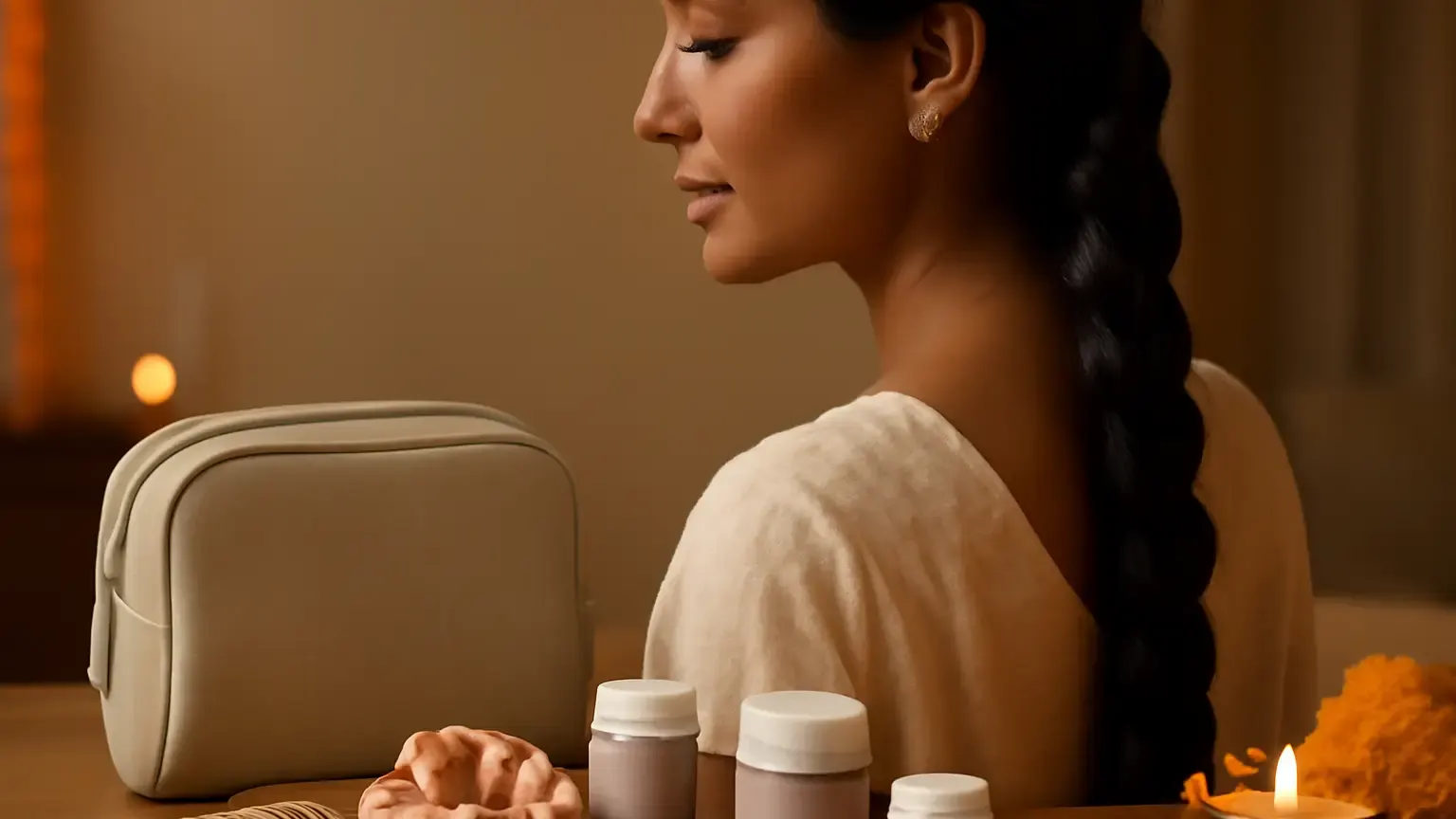
Seasonal hair care for Diwali travel is easiest when you pack for your actual itinerary, not every possible hair problem. This guide is for anyone visiting family, attending festive events or moving between humid Indian cities, and it focuses on one outcome: a small kit that keeps hair clean, comfortable and presentable. Use a travel-size cleanser, conditioner, one leave-in, a protective style and a compact touch-up tool instead of a full bathroom shelf.
Diwali trips often combine long journeys, changing weather, crowded gatherings, late nights and frequent styling. Hair may face humidity in one city, dry air or pollution in another, plus friction from travel pillows and repeated brushing. A practical routine should therefore be flexible rather than product-heavy.
The aim is not to wash, straighten or restyle your hair every day. It is to maintain a comfortable scalp, reduce unnecessary friction and reserve heat or elaborate styling for the occasions that matter. These seven ways help you create a compact travel hair kit without sacrificing useful care.
1. Pack a three-part travel hair kit
Start with the smallest routine that covers cleansing, conditioning and protection. For most travellers, that means:
- A travel-size shampoo or cleanser suited to your usual scalp needs.
- A lightweight conditioner, preferably in a leak-proof container.
- One leave-in conditioner, serum or cream that you already know works for your hair.
- A wide-tooth comb, two soft hair ties and a few sectioning clips.
- A compact microfiber hair towel or a clean, soft cotton T-shirt.
Choose familiar products rather than testing a new mask, oil or styling cream immediately before travel. New formulas can feel heavy, increase buildup or make the hair behave unpredictably during a busy festive schedule. If you use hair oil, carry only a small amount and treat it as an optional pre-wash step, not an everyday requirement.
2. Adjust your scalp cleansing routine to the itinerary
There is no universal number of days between washes. The right interval depends on sweat, scalp oil, dust, product buildup, exercise and your hair texture. Someone travelling in a hot, humid city or attending several outdoor events may need to cleanse more often than someone staying indoors in a cooler, dry location.
When to wash
Wash when the scalp feels sweaty, uncomfortable, visibly oily or coated with styling products. If the scalp feels fine and the lengths are dry, you may be able to extend the interval with a gentle refresh and a loose style. Avoid washing solely because a calendar says it is “wash day”.
For a short trip, decant enough cleanser for the expected washes plus a small margin. A rinse with plain water can remove some surface sweat, but it is not a substitute for shampoo when there is oil, pollution or styling buildup. If your hair is colour-treated, chemically treated or particularly dry, keep the cleanser gentle and focus shampoo mainly on the scalp.
3. Build humidity protection for hair without making it greasy
Humidity can make hair swell, lose definition and appear frizzy, especially after brushing or heat styling. The solution is not to layer several anti-frizz products. Use one compatible leave-in or anti-frizz hair product on damp lengths, concentrating on the mid-lengths and ends rather than the scalp.
Let the hair dry as fully as possible before tying it up or sleeping. A loose braid, low bun or soft ponytail can reduce movement and rubbing while keeping the style manageable. In very humid conditions, avoid repeatedly combing dry hair; use your fingers or a wide-tooth comb to reshape it gently. Curly and wavy hair often benefits from scrunching a small amount of leave-in into damp lengths instead of brushing after drying.
Humidity control is also about realistic expectations. A few flyaways are normal in a warm, damp environment. Aim for softness, definition and comfort rather than a perfectly smooth finish that requires constant heat.
4. Choose protective hairstyles for travel days
Protective hairstyles for travel should be comfortable, not tight. A loose braid, low plait, low bun secured with a soft scrunchie or a relaxed claw-clip twist can limit tangling during a train, flight or road journey. These options are especially useful when you expect to rest against a headrest or carry a backpack that may catch loose hair.
Do not tie wet hair tightly. Damp strands are more vulnerable to stretching, and a tight elastic can create tension at the same points for several hours. Vary the placement of the tie, remove it during a break and use snag-free accessories. If you have a sensitive scalp, a loose braid is generally more comfortable than a firm high ponytail.
5. Reduce pillow friction and travel-day breakage
Hair can rub against hotel pillowcases, car headrests and rough travel bedding. That friction may increase tangles and make the ends feel rough. A silk pillowcase for hair can be useful if you already own one, but it is not essential. A clean satin scarf or a soft, smooth pillow cover can serve a similar practical purpose.
Before sleeping, detangle from the ends upwards and secure longer hair loosely. Never pull a brush through a knot from the roots down. A microfiber towel is also helpful after washing because it absorbs water with less rough handling than vigorous rubbing with a thick bath towel. Press and squeeze the hair gently, then let it air-dry or use a dryer on a moderate setting.
These small habits support hair breakage prevention, but they cannot eliminate breakage caused by repeated chemical processing, tight styling or rough detangling. If hair feels fragile, shorten the routine and avoid unnecessary manipulation during the trip.
6. Limit heat tools and plan heat styling protection
Festive occasions may call for a blow-dry, straightener or curling tool. Pack one heat tool only if you know you will use it, and check whether your accommodation provides one. Apply heat styling protection according to the product directions, use completely dry hair where required and choose the lowest effective temperature.
Do not repeatedly pass a straightener over the same section to correct minor humidity changes. Instead, smooth the surface with a small amount of leave-in or serum, pin the front sections neatly, or switch to a braid or bun. Avoid heat styling hair that is still damp unless the tool is specifically designed for that purpose.
If your itinerary includes several celebrations, alternate heat-styled looks with air-dried or protective styles. This keeps the event routine more manageable and reduces cumulative stress on the lengths.
7. Pack an event-day hair touch-up mini-kit
A small touch-up kit is more useful than carrying full-size bottles. Place these items in a transparent pouch:
- A mini comb or folding brush for gentle surface smoothing.
- Two spare soft elastics and a few bobby pins.
- A small amount of your familiar leave-in, serum or cream.
- Blotting tissue or a clean handkerchief for the hairline if you sweat.
- A compact dry cleanser only if you already know it suits your scalp.
Dry shampoo for travel can temporarily absorb oil at the roots, but it does not clean the scalp or remove dust and styling residue. Use a small amount at the roots, allow it to sit briefly if the instructions suggest this, then massage or brush gently. Skip it if your scalp feels irritated or if you already have considerable product buildup.
For an event, refresh the hairline and visible parting first, then reshape the ends. A low bun, side braid or pinned half-up style can look intentional even when the hair is not freshly washed. Carrying a few well-chosen accessories—such as a plain clip, scarf or festive pin—can change the look without another round of heat.
What to leave out of a lightweight Diwali hair kit
Skip duplicate shampoos, several styling creams, full-size oil bottles, multiple brushes and products bought at the last minute. More products create more chances for leaks, buildup and incompatible layering. If travelling by air, follow current airline liquid restrictions and keep decanted products labelled when possible.
Also avoid copying someone else’s festive routine exactly. Hair density, texture, scalp oiliness and chemical treatment history affect how often cleansing and styling are appropriate. A routine that suits thick, curly hair may weigh down fine hair, while a fine-hair routine may leave coarse or dry lengths under-conditioned.
A simple Diwali travel schedule
Before leaving: Wash if the scalp needs it, condition the lengths, dry thoroughly and detangle gently. Pack the three-part kit, accessories and one touch-up product.
During the journey: Keep hair loose or in a low, comfortable protective style. Avoid sleeping with tight elastics or wet hair. Refresh only where needed rather than brushing repeatedly.
After arrival: Check the scalp and lengths before applying more product. If there is sweat, dust or buildup, cleanse; if the hair is simply dry, use a small amount of leave-in on the ends.
On the event day: Style clean, fully dry hair when possible. Use heat sparingly, secure the look with soft accessories and save the mini-kit for the hairline and ends.
Takeaway
Good seasonal hair care for Diwali travel is less about carrying every product and more about making sensible decisions at each stage: cleanse when the scalp needs it, protect the lengths from friction and humidity, limit heat, and keep one familiar touch-up option nearby. A compact kit works best when it matches your hair texture, destination and actual event schedule.
If you develop persistent itching, pain, marked shedding, sores or a sudden change in scalp condition, seek advice from a dermatologist or other qualified healthcare professional rather than adding more cosmetic products.
Products that may help with this routine
Choose only what fits your skin, hair or personal needs. Use the links below to view current options on Amazon India.
Frequently Asked Questions
How should I pack hair care products for Diwali travel?
Pack travel-size cleanser, conditioner, one leave-in or serum, a wide-tooth comb, soft hair ties, a microfiber towel and a few pins. Carry only products you already know suit your hair, and follow airline liquid rules if flying.
What is the best hair routine for travelling during Diwali?
Cleanse according to scalp sweat and buildup, condition the lengths, dry hair fully before tying it, use a loose protective style for the journey and reserve heat styling for important events. Refresh the hairline and ends instead of restyling everything.
How often should I wash my hair while travelling?
Wash when the scalp feels sweaty, oily, uncomfortable or coated with dust or styling products. The interval may be shorter in humid or polluted locations and longer when the scalp remains comfortable and the lengths are dry.
How can I protect my hair from humidity while travelling?
Apply one familiar leave-in or anti-frizz product to damp lengths, dry the hair fully, avoid repeated brushing and use a loose braid or bun. Do not layer several heavy products, as that can create greasiness and buildup.
What are easy hairstyles for Diwali travel?
A loose braid, low plait, relaxed low bun, soft ponytail or claw-clip twist can reduce tangling and remain comfortable during travel. Avoid tight styles, especially on damp hair.
What should I carry for an event-day hair touch-up?
Carry a mini comb, spare soft elastics, bobby pins, a small amount of your usual leave-in or serum and, if it suits your scalp, a small dry cleanser. A scarf or festive clip can change the look without additional heat.