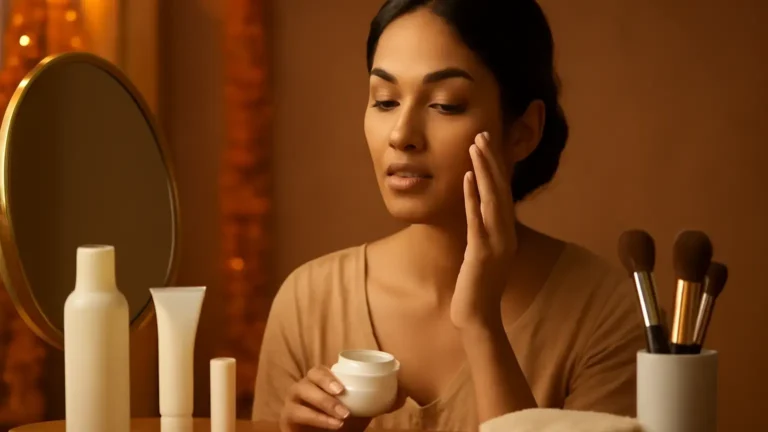
Learning how to patch test skincare products can help adults and teenagers make a safer decision before adding a cleanser, serum, moisturiser or sunscreen to a routine. Apply a small amount to an inconspicuous area—usually the inner forearm or behind the ear—then observe it for up to 48 hours, following the product directions. Stop at burning, swelling, hives or worsening redness. A patch test lowers uncertainty, but it cannot predict every reaction on facial skin.
What a skincare patch test can—and cannot—tell you
A patch test is a cautious trial of a cosmetic product on a small area before applying it more widely. It may reveal an early sign of irritation or a reaction to an ingredient, especially with leave-on products such as serums, moisturisers, sunscreen and exfoliating treatments.
However, this is not the same as a medical allergy test. Facial skin can respond differently from the skin on your arm because it may be thinner, more exposed, recently exfoliated or affected by shaving, heat and pollution. A small test also cannot predict every possible new product reaction, particularly one that appears only after repeated use or sun exposure.
Think of patch testing as a risk-reduction step, not a guarantee. It is especially sensible when you have sensitive skin care concerns, a history of cosmetic reactions, or are introducing products with fragrance, preservatives or active ingredients.
Where to patch test skincare products
The best test site is easy to monitor, normally covered by clothing and away from the eyes, lips and broken skin. Choose one of these options:
- Inner forearm: This is a practical choice because you can see the area easily and apply enough product without touching your face.
- Behind the ear: A behind-the-ear patch test is discreet and useful for products intended for the face or hairline. Avoid this area if it is already irritated by masks, jewellery or hair products.
- Along the jawline: This is closer to facial skin, but it is more visible and may be exposed to other products. Use it only when the skin is calm and intact.
Do not test over cuts, rashes, sunburn, freshly waxed skin, active spots that are sore, or areas with a damaged skin barrier. For a product intended for the eye area, ask a qualified professional for guidance rather than applying it close to the eye during a home test.
How to patch test skincare products: a simple routine
1. Read the label first
Check whether the product is meant to be rinsed off or left on, and follow any manufacturer instructions. Note potentially sensitising components, such as fragrance, essential oils, exfoliating acids, retinoids or high-strength vitamin C. If you are already using several active ingredients, do not introduce multiple new products at once.
2. Prepare clean, calm skin
Wash the selected area gently and let it dry. Do not apply a toner, body lotion, oil or occlusive balm underneath the test product, as this can change how it contacts the skin. Use a clean cotton bud or a freshly washed fingertip.
3. Apply a small amount
Use an amount similar to what you would normally apply, but keep the test patch small—roughly the size of a pea or a coin, depending on the product. With a cleanser or other rinse-off product, leave it on only for the label-recommended time before rinsing. Do not cover the area with plastic or a tight bandage unless a healthcare professional has told you to do so.
4. Record the time and ingredients
Write down the product name, date and test location. This is helpful if redness or itching develops later and you need to compare it with another product. Keep the packaging or ingredient list until you know the product suits you.
5. Observe without disturbing the patch
Avoid rubbing, scratching, heavy exercise, hot showers and other new products on the test site. Check the area after about 15 minutes, again after a few hours and at the 24-hour mark. For a leave-on product, continue to observe for up to 48 hours if the skin remains comfortable and the label does not give different instructions.
How long should a skincare patch test last?
For many leave-on products, 24 to 48 hours gives a useful initial observation window. A reaction can be immediate, delayed or appear after repeated applications, so a clear patch test is not permission to use a strong active every day straight away.
Rinse-off products have shorter contact with skin and should be tested according to their directions. Even so, watch the area after rinsing because irritation may not appear instantly. If the product is an exfoliant, retinoid or other potent treatment, introduce it gradually on the face—such as on alternate nights—rather than combining it with several new actives.
There is no single home-test duration that proves a product is safe for everyone. If you have previously had a significant reaction, a dermatologist can advise whether supervised testing is more appropriate.
What changes should you watch for?
Compare the tested skin with the surrounding area in natural light. Mild temporary tingling can occur with some formulas, but persistent or escalating discomfort is a reason to be cautious. Watch for:
- increasing redness, warmth or burning;
- itching, tightness, dryness or scaling;
- small bumps, blisters or a rough texture;
- swelling, hives or a spreading rash; and
- pain, oozing or marked tenderness.
It can be difficult to distinguish irritation versus allergy at home. Irritant reactions often feel like burning, stinging, dryness or rawness soon after application. An allergic response may involve intense itching, hives, swelling or a delayed rash, but appearances overlap. Do not try to identify the cause by repeatedly reapplying the product.
When to stop a patch test or seek advice
Stop using the product on the test area at the first sign of a clearly worsening reaction. Gently rinse a leave-on product with lukewarm water and avoid scrubbing, exfoliating or applying more active ingredients to the area. Do not continue “to see if the skin adjusts” when there is burning, swelling, blistering or a spreading rash.
Seek prompt medical advice for significant swelling, widespread hives, severe pain, blistering, oozing or symptoms that continue to worsen. Breathing difficulty, throat tightness, dizziness or swelling of the lips, tongue or face requires urgent medical attention. A dermatologist or doctor can assess possible contact dermatitis and advise on next steps without guessing from photographs alone.
If a mild reaction settles but you remain unsure, wait until the skin is fully calm before trying anything new. Keep a record of the product and its ingredients. Do not stop prescribed care without speaking to the clinician who recommended it.
Common patch-testing mistakes to avoid
- Testing on the wrist and assuming it represents the face: The skin may differ in sensitivity and exposure.
- Trying several products together: If a reaction occurs, you will not know which formula caused it.
- Testing on already irritated skin: A damaged barrier can make almost any product sting.
- Using too little or covering the patch: These choices may not reflect normal use.
- Checking only after five minutes: Delayed redness and itching can develop later.
- Continuing because the product is expensive or popular: Cost and reputation do not override your skin’s response.
- Applying a new active after exfoliation: Test on a calm day and keep the rest of the routine simple.
Who should take extra care?
Patch testing is useful for anyone introducing a new cosmetic, but take extra care if you have a history of eczema, recurring rashes, known ingredient sensitivities, very reactive skin or a previous reaction to hair dye or fragrance. People using prescription skin products should check with their clinician before adding strong acids, retinoids or other active ingredients.
For children, pregnancy-related skincare questions, or a history of severe allergy, personalised medical advice is more appropriate than relying only on a home test. Choose gentle, fragrance-free skincare when your routine is easily irritated, but remember that “natural” does not automatically mean non-reactive.
A practical decision checklist
Before applying a new product to your face, ask:
- Is the test area clean, intact and free from another product?
- Have I tested only one new formula?
- Have I followed the product’s rinse-off or leave-on directions?
- Can I observe the area for at least 24 hours?
- Do I know which signs mean I should rinse, stop and seek help?
If the answer is yes and the skin remains comfortable, introduce the product slowly. Use it less often than the label’s maximum at first if it contains active ingredients, and avoid changing the rest of your facial skincare routine in the same week.
Takeaway
Learning how to patch test skincare products means applying a small amount to calm inner-forearm, behind-the-ear or jawline skin, observing it for up to 48 hours when appropriate, and stopping at worsening discomfort or visible inflammation. It is a sensible safety check, not a promise that facial skin will never react. When symptoms are severe, widespread, persistent or worrying, seek advice from a dermatologist or doctor.
Products that may help with this routine
Choose products based on your skin, hair or personal needs rather than buying every item in a routine.
- Gentle Cotton Buds For Skincare Amazon India
(paid link) See relevant options on Amazon - Fragrance Free Moisturiser Sensitive Skin Amazon India
(paid link) See relevant options on Amazon - Disposable Cosmetic Spatula Amazon India
(paid link) See relevant options on Amazon
Frequently Asked Questions
How do I patch test a new skincare product?
Apply a small amount to clean, intact skin on the inner forearm, behind the ear or along the jawline. Follow the product directions, observe the area for 24 to 48 hours when suitable, and stop if you notice worsening redness, burning, itching, swelling, bumps or a rash.
Where should I patch test skincare products?
The inner forearm and behind the ear are convenient sites because they are easy to monitor and usually covered. A calm area along the jawline is another option, but avoid broken, sunburned, freshly waxed or already irritated skin.
How long should a skincare patch test last?
For many leave-on products, observe the test area for 24 to 48 hours. Rinse-off products should follow their label directions, but the skin should still be checked after rinsing because irritation can be delayed.
Can patch testing prevent an allergic reaction?
No. Patch testing may lower the chance of an unexpected reaction, but it cannot predict every response. Facial skin can react differently, and some sensitivity develops only after repeated exposure. A medical allergy evaluation is different from a home skincare test.
What should I do if a skincare patch test burns?
Stop the test and gently rinse off a leave-on product with lukewarm water. Do not scrub or apply more active ingredients. Seek medical advice if burning is severe, persistent or accompanied by swelling, blistering, widespread hives or breathing symptoms.
How should I patch test active ingredients?
Test one active product at a time on calm skin, follow its label instructions and observe the area carefully. If there is no reaction, introduce it to the face gradually rather than using it with several new acids, retinoids or exfoliants at once.