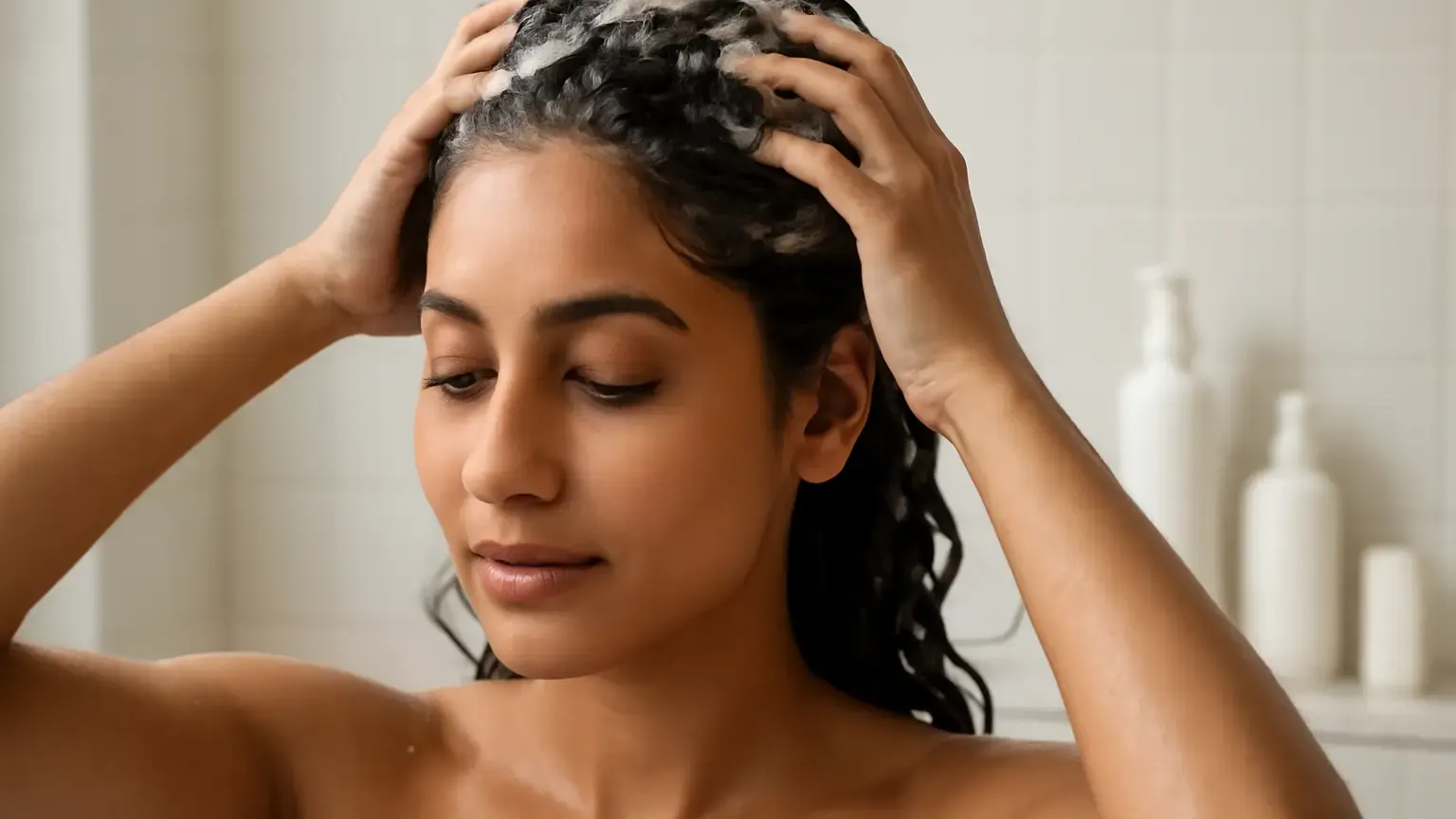
These hair care tips for dandruff flakes are for anyone who sees white or yellowish flakes on the scalp or shoulders after wash day. Start by cleansing the scalp consistently, applying shampoo to the roots rather than the lengths, rinsing until the water runs clear, and avoiding scratching. The key decision is whether simple routine changes are enough or whether persistent itching, redness, soreness or heavy scaling needs a dermatologist’s opinion.
Flakes are not always caused by one wash-day mistake. They can become more noticeable when oil, sweat, styling products, dead skin cells and shampoo residue collect around the roots. A rushed wash may leave the scalp uncomfortable, while an aggressive one can increase irritation. The goal is a clean, calm scalp—not a harshly scrubbed scalp.
This guide focuses on six habits worth reconsidering. It is suitable for mild, occasional flaking and everyday hair care. It does not replace medical advice for a persistent or painful scalp concern.
1. Washing too rarely—or assuming every scalp needs the same schedule
Washing frequency should match your scalp, not a fixed rule. An oily scalp, humid weather, regular workouts and frequent use of gels or dry shampoo may call for more regular cleansing. A dry-feeling or sensitive scalp may prefer a gentler schedule and less aggressive washing. Skipping washes for too long can allow oil and product buildup to make flakes more visible.
As a starting point, notice how your scalp feels between washes. If it becomes greasy, itchy or coated, shorten the gap gradually. If cleansing leaves it tight, burning or unusually dry, use a milder formula, lukewarm water and a less vigorous technique. Washing more often is not automatically better; consistent, comfortable cleansing is the useful goal.
A practical washing-frequency check
- Wash after heavy sweating when the scalp feels oily or uncomfortable.
- Adjust around humid Indian weather, helmets and workouts.
- Do not use visible flakes alone as a reason to scrub harder.
- Give a new routine a little time, while monitoring irritation rather than chasing instant results.
2. Treating the hair length instead of cleaning the scalp
Shampoo is designed to clean the scalp and roots, where oil and residue usually collect. Applying a large amount through the full length can leave textured, curly or chemically treated hair feeling dry without improving the scalp. A better hair wash technique is to wet the hair thoroughly, place a small amount of shampoo on the fingertips, and work it across several areas of the scalp.
Use the pads of your fingers for a gentle scalp massage. Move in small, light motions rather than dragging nails over the skin. Let the lather travel down the lengths as you rinse; this is often enough for everyday cleansing. If the scalp is especially oily or coated, a second small wash may be more useful than one large, forceful application.
3. Scratching flakes off before or during washing
Scalp scratching can feel satisfying because it lifts loose scale quickly, but fingernails may create tiny abrasions and increase irritation. Scratching can also make dandruff flakes worse by disturbing the scalp surface and encouraging more visible shedding. It is particularly unhelpful when the scalp is sore, inflamed or sensitive.
Instead, soften the area with water and allow the shampoo to sit briefly according to the product directions. Use fingertips, not nails, to loosen what lifts easily. Avoid combing aggressively through attached flakes. If itching is strong, repeated or interfering with sleep, consider professional input rather than escalating scrubbing.
4. Ignoring product buildup
Oils, leave-in conditioners, waxes, dry shampoo, styling creams and hair sprays can collect near the roots. This product buildup may look like flakes or hold loose flakes against the scalp. It can also make a normal wash feel ineffective. The answer is not to use a harsh household cleanser or repeatedly strip the scalp.
To remove product buildup from the scalp, first pause unnecessary root-applied styling products for a few washes. Divide the hair into sections so water and shampoo reach the skin. Use a suitable clarifying product occasionally only if your scalp tolerates it and the label supports that use. Follow with a conditioner on the mid-lengths and ends, not a heavy layer directly on a flaky scalp.
If flakes remain despite reducing buildup, do not assume the issue is only cosmetic residue. Persistent scaling may need a more informed assessment.
5. Rinsing too quickly and leaving residue behind
Residue can cause the scalp to feel coated, itchy or tight after washing. This is especially easy to miss with thick hair, dense curls or a rich shampoo. Residue-free rinsing does not mean using very hot water; it means taking enough time to separate the hair and direct water over the scalp from different angles.
For a cleaner rinse, tilt the head forward and back, lift sections with your fingers and keep rinsing until the water feels clear and the roots no longer feel slippery with product. Pay attention behind the ears, at the crown and along the hairline. If a shampoo consistently leaves a film even after careful rinsing, its texture or formula may not suit your routine.
What is a good rinse technique?
- Use lukewarm water to fully saturate the roots.
- Move the hair gently so water reaches the scalp.
- Rinse for longer than you think necessary, especially after a second cleanse.
- Keep rich conditioner away from areas that become oily or flaky.
- Pat dry rather than rubbing the scalp vigorously with a towel.
6. Choosing products without checking the scalp’s needs
A dandruff shampoo is not automatically suitable for every person or every wash. Read the label and follow its directions, including how often it should be used and whether it needs brief contact with the scalp. Anti-dandruff ingredients vary, and a product that feels too drying, stinging or irritating should not be forced into the routine.
For everyday washes, a gentle cleanser may be more comfortable between targeted washes. Keep conditioner and scalp moisturiser decisions separate: a moisturiser designed for the scalp may be appropriate for some dry-feeling scalps, but rich oils or creams can make an oily, buildup-prone scalp feel heavier. Avoid adding several new products at once, because you will not know which one caused irritation or improvement.
A simple flaky scalp routine for wash day
- Before washing: Remove clips, loosen the hair gently and identify whether the scalp feels oily, coated, dry or sore.
- During cleansing: Saturate the scalp, apply shampoo at the roots and use a gentle scalp massage with fingertips.
- For targeted products: Follow the label’s directions for contact time and frequency rather than improvising.
- During rinsing: Separate thick sections and use a thorough, residue-free rinse.
- After washing: Pat dry, keep styling products mainly on the lengths and avoid picking at loose scale.
- When tracking: Note changes in flaking, itch, redness, soreness and product use over several washes.
This routine can be adapted for straight, wavy, curly and coily hair. Hair texture may change how you section, rinse and condition, but the scalp still needs comfortable cleansing. Protective hairstyles, tight head coverings and prolonged dampness can also affect how easily the scalp is cleaned, so make room for a routine that suits your lifestyle.
When to seek professional input
Home hair care is reasonable for mild, occasional flakes with no significant discomfort. Arrange a dermatologist consultation if flaking persists despite a careful routine, repeatedly returns, or comes with intense itching, marked redness, swelling, soreness, oozing, thick adherent scale or noticeable hair loss. Seek prompt medical guidance for sudden, severe symptoms or signs of infection.
A dermatologist can assess the scalp and recommend an appropriate approach without relying on guesswork. Do not stop prescribed treatment or replace it with cosmetic products without speaking to the prescribing professional.
Quick takeaway
The most useful hair care tips for dandruff flakes are consistent scalp cleansing, a fingertip-only massage, careful control of product buildup, thorough rinsing and restraint around scratching. Adjust washing frequency to oil, sweat and product use, and treat persistent or concerning symptoms as a reason to seek professional advice rather than scrub harder.
Products that may help with this routine
Choose only what fits your skin, hair or personal needs. Use the links below to view current options on Amazon India.
Frequently Asked Questions
How often should I wash hair with dandruff flakes?
Wash according to how oily, sweaty or coated your scalp becomes rather than following a universal schedule. More regular cleansing may suit an oily scalp or humid, workout-heavy routine, while a sensitive scalp may need a gentler approach. Adjust gradually and watch for irritation.
What is the best way to rinse shampoo from a flaky scalp?
Use lukewarm water, lift or separate the hair in sections, and direct water over the scalp from several angles. Continue until the roots no longer feel coated or slippery. Rinse especially carefully at the crown, hairline and behind the ears.
Can scratching make dandruff flakes worse?
Yes. Scratching with fingernails can irritate or damage the scalp surface and may make flaking and discomfort more noticeable. Use fingertips gently during washing and seek advice if itching is persistent or severe.
How can I remove product buildup from my scalp?
Reduce heavy products applied near the roots, section the hair during washing and use a suitable cleanser according to its label. An occasional clarifying product may help some people, but avoid harsh scrubbing and stop if the scalp stings or becomes very dry.
When should I see a dermatologist for dandruff?
Consider a dermatologist consultation when flaking persists despite a careful routine, keeps returning, or is accompanied by intense itching, redness, swelling, soreness, oozing, thick scale or noticeable hair loss. Sudden or severe symptoms also deserve prompt professional guidance.
What hair care routine helps visible scalp flakes?
Use a scalp-focused wash, massage gently with fingertips, rinse thoroughly, keep conditioner and styling products mainly away from the roots, and avoid picking at flakes. Match the routine to your scalp’s oil, sweat and sensitivity levels.