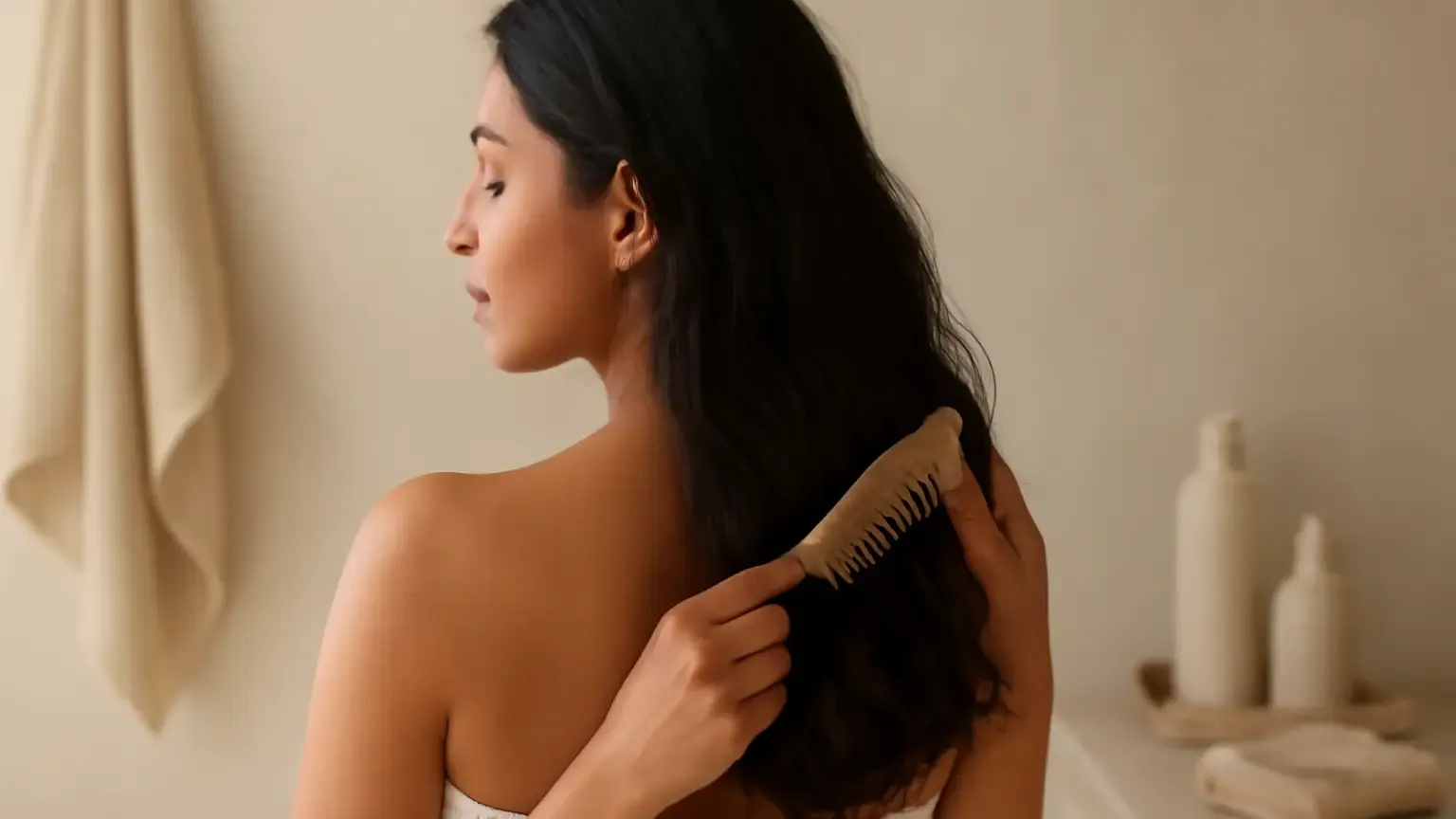
Hair care for frizzy ends works best when you treat the tips differently from the scalp: trim damaged sections, condition from mid-lengths down, use a small amount of leave-in, and dry without rough rubbing. This guide is for anyone whose ends feel coarse, puffy or tangled—especially in humid Indian weather—and wants smoother tips while keeping lift at the roots, natural movement and a fresh-looking shape.
Frizz at the ends is usually a surface and maintenance problem rather than a reason to coat the entire head in heavy products. The oldest part of your hair has experienced more washing, sun, brushing, colour, heat and friction than the hair near the scalp. Its cuticle can become raised, porous or uneven, so the tips absorb humidity and look rough even when the roots are relatively smooth.
The aim of a good routine is not to make every strand perfectly flat. It is to reduce friction, soften the cuticle, remove genuinely damaged length and add just enough slip to the ends. The five steps below work for straight, wavy and curly hair, but the amount of product and drying method should match your density, texture and tendency towards oiliness.
1. Trim damage before trying to style it smooth
A product can temporarily seal the look of a split end, but it cannot fuse a split strand back together. If the last few centimetres feel thin, snag during detangling or show obvious white dots and forks, begin with a small trim. Removing only the visibly worn section can improve the shape without sacrificing much length.
A practical hair trimming schedule is every 8–12 weeks for hair that is regularly heat-styled, coloured or prone to tangling. People growing their hair out may wait longer, but should watch the condition of the ends rather than follow a rigid calendar. If the ends remain neat, soft and easy to comb, there is no need to trim simply because a date has arrived.
How to decide whether you need a trim
- Book a trim: when ends fork, knot repeatedly, feel crunchy or make the haircut look uneven.
- Try conditioning first: when the hair is only slightly dry but still has a full, even shape.
- Ask for dusting: if you want to preserve length and only need the most fragile tips removed.
Do not keep cutting higher and higher to chase every flyaway. A blunt or softly layered shape, chosen according to your density, can make rough tips appear fuller while preserving movement.
2. Place conditioner where the dryness is
Conditioner belongs mainly on the mid-lengths and ends, not the scalp. This placement gives dry hair tips softness and slip without unnecessarily weighing down the root area. Apply it after squeezing out excess water, because a product diluted by dripping water may slide away before it coats the hair.
For a normal wash, spread a small amount between your palms, then smooth it from around ear level downwards. Use your fingers or a wide-tooth comb to detangle from the ends upwards. Leave it on for the time stated on the label and rinse thoroughly. In humid weather, a rich formula can be useful on coarse or curly lengths, while fine hair may need a lighter conditioner used in a smaller quantity.
When to use a deep conditioning treatment
A deep conditioning treatment once every one or two weeks may help hair that feels persistently rough after washing, especially after colouring or frequent heat styling. It is not automatically better than a regular conditioner: too much rich product can make fine hair limp, sticky or harder to style. Alternate it with your ordinary conditioner and reassess how the hair feels after drying.
For a curly hair routine, avoid brushing the hair dry if that expands the cuticle and disrupts the curl pattern. Detangle while conditioner is present, then rinse according to the level of moisture and definition you prefer.
3. Use leave-in product sparingly and only on the tips
A lightweight leave-in conditioner is useful after washing when the ends tangle, puff up or feel unprotected. The key is quantity. Start with a pea-sized amount for short or fine hair and about a coin-sized amount for longer or denser hair. Warm it between your hands and press or rake it through the bottom third of the hair, concentrating on the last few centimetres.
Still unsure how much leave-in conditioner should you use on dry ends? Begin with less than you think you need. Add one small drop only if the tips still feel rough after the hair is nearly dry. Applying a large amount at once can create coated, stringy ends and make the roots look flat when the product migrates upwards.
For a quick refresh on non-wash days, lightly dampen the ends with water first, then smooth a tiny amount of leave-in through them. Do not repeatedly layer product over visibly oily or dusty hair; wash or clarify when buildup is affecting movement.
4. Change the way you dry your hair
Wet hair is more vulnerable to stretching and friction. Rubbing it briskly with a bath towel can roughen the cuticle and encourage frizz before styling even begins. Instead, gently squeeze out water and wrap the lengths in a clean microfiber towel or soft cotton T-shirt. Press rather than twist, and leave it wrapped only until it stops dripping.
The best blow-drying technique depends on your texture. For straight or wavy hair, use low to medium heat, aim the airflow from roots towards ends and keep the dryer moving. A nozzle can make the airflow more controlled. For curls, scrunch excess water out, apply suitable styling product and use a diffuser on low airflow. Do not disturb the hair constantly while it is setting.
How to dry frizzy ends without heat
After washing, blot gently, apply your leave-in and allow the hair to air-dry in a loose, organised shape. Keep the ends from rubbing against rough clothing or a textured towel. If your hair is wavy or curly, twist or scrunch small sections while damp, then leave them alone until fully dry. Air-drying may take longer in a humid bathroom, so improve ventilation rather than repeatedly touching the tips.
If you use a heated tool, a heat protectant spray should be applied evenly to the lengths before the tool touches the hair. Follow the product directions and avoid repeatedly passing high heat over the same ends.
5. Build styling habits that protect movement
The final part of hair care for frizzy ends is reducing everyday friction. Tight elastics, rough pillowcases, aggressive brushing and carrying a bag strap over loose hair can all contribute to worn tips. Choose a soft fabric scrunchie, vary where you tie your ponytail and detangle gently from the ends upwards.
A silicone-based serum can be helpful as a finishing product when the tips need temporary smoothness and shine. Use one or two drops, rub them across your palms and touch only the bottom few centimetres. Serum is a surface smoother, not a replacement for a trim or conditioner. If your fine hair volume disappears, use less and keep it away from the crown.
For overnight hair protection, loosely braid long hair or secure it in a low, soft style. A smooth satin pillowcase may reduce friction, although it will not repair existing damage. Avoid sleeping with wet hair tightly tied, as prolonged tension and rubbing can make fragile ends more prone to snapping.
How to keep the roots lifted while smoothing the ends
Flat roots usually come from putting rich conditioner, oils or serum too close to the scalp, using more product than the hair can absorb, or drying the root area without lift. Keep moisturising products below the ears, rinse well and dry the roots separately from the ends. You can lift sections at the crown with your fingers while using cool or moderate airflow, then smooth the lengths downwards.
Hair density matters too. Fine hair often needs a light conditioner and a very small amount of leave-in, while thick, coarse or highly textured hair may need more emollience. If the ends are dry but the scalp becomes oily quickly, wash the scalp thoroughly and treat the lengths as a separate zone rather than using one heavy product everywhere.
Common mistakes that make frizzy ends worse
- Chasing frizz with oil: oil can add shine but may not provide the water-based conditioning or hold your ends need.
- Skipping conditioner: rough, unconditioned hair creates more friction during drying and brushing.
- Over-brushing: repeated strokes can disturb the cuticle and expand waves or curls.
- Using high heat to finish quickly: this may make the surface look sleek briefly but can leave the ends drier over time.
- Applying every product from root to tip: this often sacrifices lift without solving the damaged area.
Be patient when judging a routine. A single wash can improve softness, but split-end prevention depends on consistent handling, suitable trims and moderation with heat and chemical services. If you notice sudden extensive breakage, scalp discomfort, unusual shedding or a persistent change in hair texture, seek advice from a dermatologist or doctor rather than relying only on cosmetic products.
Concise takeaway
Effective hair care for frizzy ends is targeted: trim sections that are genuinely split, condition from mid-lengths down, use a small amount of leave-in, blot instead of rubbing, and protect the tips from heat and overnight friction. Adjust the richness and quantity to your hair density so the ends look smoother without flattening the roots.
Products that may help with this routine
Choose only what fits your skin, hair or personal needs. Use the links below to view current options on Amazon India.
Frequently Asked Questions
What is the best hair care for frizzy ends without losing volume?
Keep conditioner, leave-in products and serum below the ears, use lightweight formulas, and apply the smallest effective amount. Trim visibly split tips and dry the roots separately so the lengths feel smoother without weighing down the crown.
How often should you trim frizzy hair ends?
Many people benefit from a trim every 8–12 weeks, but the right timing depends on damage and styling habits. Trim sooner if the ends fork, knot repeatedly or feel crunchy; wait longer if they remain neat and soft.
How much leave-in conditioner should I use on dry ends?
Start with a pea-sized amount for short or fine hair and about a coin-sized amount for longer or denser hair. Apply it to damp mid-lengths and ends, then add only a tiny amount if the tips still feel rough.
How can I dry frizzy ends without heat?
Gently squeeze out water, blot with a microfiber towel or soft cotton T-shirt, apply a small amount of leave-in and let the hair air-dry without repeated touching. Keep it away from rough fabrics while it dries.
Can conditioner make hair roots flat?
Yes, especially if a rich conditioner is applied near the scalp or not rinsed well. Apply it from mid-lengths to ends, choose a lighter formula for fine hair and use less product if your roots lose lift.