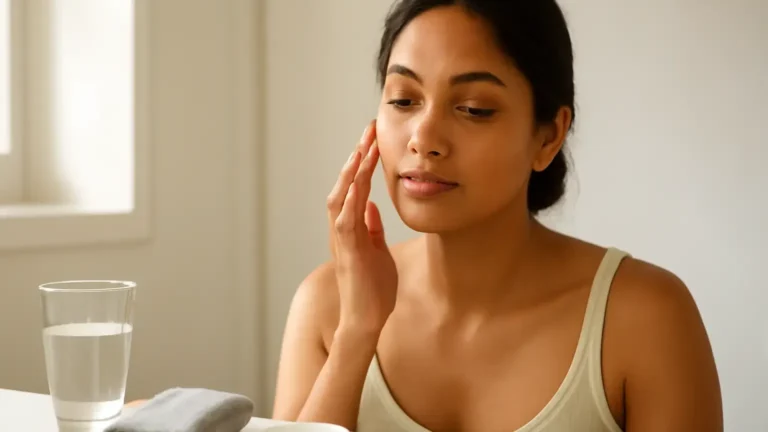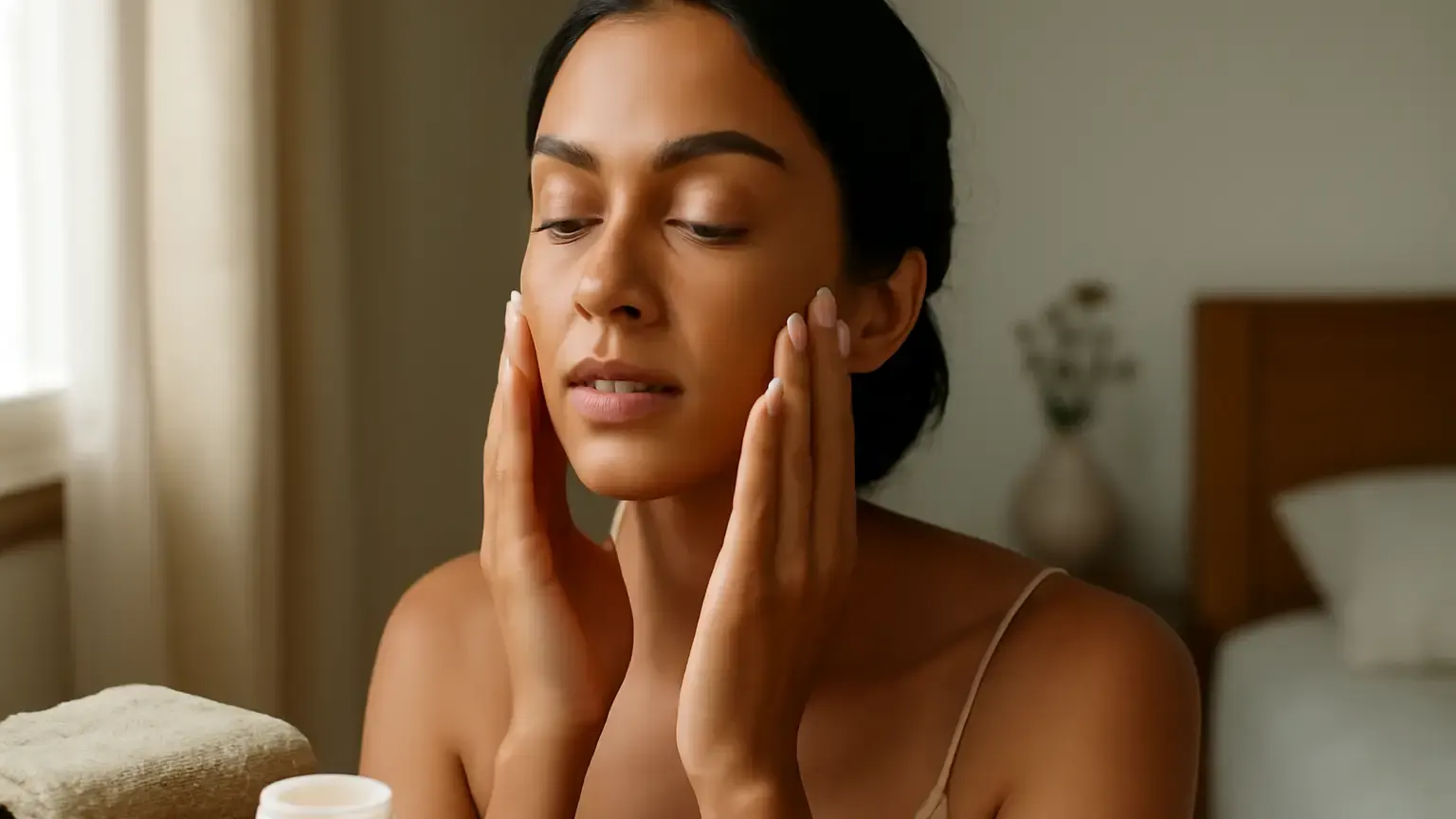
A glowing skin face massage can make a simple routine feel more relaxing and help temporarily refresh dull-looking, puffy skin. This guide is for adults with intact skin who want a gentle face massage for glowing skin at home—not a treatment for acne or irritation. Use clean hands, enough slip from a light moisturiser or suitable face oil, feather-light to light pressure, and slow outward strokes; skip massage over active, painful or broken areas.
Facial massage is a hands-on skincare step, not a replacement for cleansing, moisturising or daily sunscreen. Its immediate appeal is simple: rhythmic movement can warm the skin, spread a leave-on product evenly and relax facial muscles. Any visible glow is usually a temporary, healthy-looking effect rather than a permanent change in skin structure.
What a glowing skin face massage can and cannot do
A gentle massage may reduce the look of morning facial puffiness for a short time, ease jaw tension and give the complexion a fresher appearance. It can also make an evening or morning skincare routine feel more mindful. These are practical, modest benefits—not a cure for acne, pigmentation, rosacea or other skin concerns.
Think of the technique as controlled gliding rather than deep kneading. The skin should move slightly under your fingers without tugging, stinging or becoming hot and flushed. A face massage for glowing skin should never leave bruising, broken capillaries or lasting redness.
Prepare your skin before the massage
1. Clean hands and a clean face
Wash your hands with soap and water, including between the fingers and around the nails. Start with a clean face after using a gentle facial cleanser, especially if you have sunscreen, sweat or makeup on your skin. Keep hair away from the face and avoid massaging directly after a hot shower when the skin is already flushed.
2. Choose enough slip
Dry fingers create drag, which can cause unnecessary pulling. Apply a generous layer of a plain moisturiser, hydrating serum with a creamy finish, or a face massage oil that suits your skin. If you use oil, select a product labelled for facial use and patch-test it first. A non-comedogenic moisturiser may be a more comfortable choice if you are prone to clogged pores.
Do not massage over peeling skin, cuts, sunburn, cold sores, a rash or inflamed breakouts. If a product stings before you begin, remove it rather than trying to work through the discomfort.
Six gentle massage techniques to try
Use the pads of your index, middle and ring fingers. Keep your shoulders relaxed, breathe normally and use a light touch. Spend about 30–60 seconds on each movement, or shorten the routine if your skin feels warm or sensitive.
1. Neck-opening strokes
Place your hands at the sides of the neck, below the ears. Glide down towards the collarbones with very light pressure, then lift your hands and repeat five to eight times. This is a calming way to begin a lymphatic drainage face massage, but it is not medical lymphatic drainage. Avoid pressing over the front of the throat.
2. Jawline sweeps
Start at the centre of the chin and glide along the jawline towards the ears. Repeat slowly on both sides. For jaw tension, pause near the broad chewing muscle at the back of the cheek and make tiny, comfortable circles. Do not dig into the area or continue if you notice pain, clicking or tenderness.
3. Cheek-lifting glides
Begin beside the nose and move across the cheeks towards the temples. Follow the natural curve of the cheekbones, using three slow passes per side. Keep the movement upward and outward without stretching the skin. This can temporarily make facial puffiness look less prominent, but it does not permanently lift facial tissue.
4. Upper-lip and nose release
With your ring fingers, make small circles beside the nostrils and glide gently out across the upper lip. Use minimal product near the nose so it does not enter the nostrils or mouth. Skip this section if the area is cracked, sore or irritated.
5. Brow and forehead smoothing
Place your fingers above the brows and sweep from the centre of the forehead towards the temples. Then use tiny circles along the brow bone, staying on the bone rather than pressing the eyelid. Finish with broad horizontal strokes across the forehead. Light pressure is particularly important here because repeated tugging can aggravate delicate skin.
6. Finishing drainage strokes
Repeat the cheek, temple and neck movements in that order: cheeks towards the temples, temples down beside the ears, and sides of the neck towards the collarbones. This gives the routine a consistent finish. Remove excess product with a soft, clean cloth only if needed; rubbing is unnecessary.
How to adjust pressure, direction and timing
The safest face massage pressure is light enough that you could comfortably repeat the stroke for several minutes. Use a little more pressure over the forehead and jaw muscle only if it feels pleasant, and almost none around the eyes. If the skin becomes bright red, prickly, sore or unusually warm, stop and rinse away the product.
For a morning skincare routine, keep the massage brief—around three to five minutes—and use outward and upward glides to help your face look refreshed. For an evening skincare routine, take five to ten minutes and include the jaw, brow and neck to encourage relaxation. Massage after water-based products but before sunscreen in the morning; sunscreen should be the final skincare layer.
Who should skip or modify facial massage?
Do not massage over active, inflamed acne, open spots, infected-looking areas, eczema flares, sunburn or unexplained irritation. Friction may worsen discomfort and can spread product across areas that need to be left alone. If only one area is irritated, you can apply skincare gently around it while avoiding the affected skin.
People with sensitive skin should begin with one minute, one or two times a week, using a familiar fragrance-free moisturiser rather than a new face massage oil. Anyone with very reactive skin should patch-test the product and observe the skin for the rest of the day. If redness, swelling, pain or a rash persists or worsens, stop the routine and seek advice from a dermatologist or doctor.
If you have recently had a cosmetic procedure, dental procedure or facial treatment, follow the treating professional’s aftercare instructions instead of applying general massage advice. A gua sha alternative is simply using clean fingers; tools are not required and can add pressure or hygiene concerns.
Common mistakes that reduce the benefit
- Working on dry skin: Add enough moisturiser or another suitable slip product to prevent dragging.
- Using too much force: Deeper pressure is not automatically more effective. Comfort is the decision rule.
- Rubbing active breakouts: Leave inflamed spots alone instead of trying to flatten or “drain” them.
- Reusing unwashed tools: If you use a roller or other tool, clean it according to the manufacturer’s instructions and never share it.
- Ignoring product sensitivity: A massage can increase contact time with an irritating formula. Stop if there is burning or stinging.
- Expecting permanent results: Massage may temporarily refresh the appearance, but it cannot replace consistent sun protection or treatment recommended for a skin condition.
A simple three-minute routine
- Wash your hands and cleanse the face.
- Apply a familiar moisturiser or suitable face massage oil for slip.
- Glide down the sides of the neck five times.
- Move from chin to ears, nose to temples and brows to temples, using three passes each.
- Finish with temple-to-ear and ear-to-collarbone strokes.
- Apply sunscreen if it is daytime, and wash your hands after finishing.
For most people, two or three sessions a week are enough to enjoy the relaxing ritual. Daily massage is optional, not essential; if your skin feels drier, more sensitive or more congested, reduce the frequency or stop.
Takeaway
The best glowing skin face massage is gentle, brief and hygienic. Clean hands, generous slip, outward-and-upward direction and light pressure matter more than a specialised tool. Use it on calm, intact skin for a temporary refreshed look, and skip irritated or inflamed areas rather than trying to massage through them.
Products that may help with this routine
Choose only what fits your skin, hair or personal needs. Use the links below to view current options on Amazon India.
Frequently Asked Questions
How do you do a glowing skin face massage at home?
Clean your hands and face, apply enough moisturiser or a suitable facial oil for slip, then use slow outward and upward strokes from the chin, cheeks and brows towards the ears and temples. Finish by gliding down the sides of the neck to the collarbones. Use light pressure for three to five minutes and stop if the skin stings or becomes hot.
Is face massage good for glowing skin?
A gentle face massage may temporarily make skin look fresher by spreading product, relaxing facial muscles and reducing the appearance of mild puffiness. It does not permanently change skin texture or treat acne, pigmentation or other skin conditions.
What is the best oil for face massage at home?
The best option is a facial product that suits your skin, provides comfortable slip and does not cause irritation or congestion. A plain fragrance-free moisturiser can be a safer choice for sensitive or breakout-prone skin. Patch-test any new oil before using it on the whole face.
How often should you do a face massage?
Two or three times a week is a reasonable starting point. A short daily routine may suit some people, but reduce frequency if you notice dryness, redness, sensitivity or congestion. Massage is optional rather than necessary for healthy skin.
Can you massage your face with active acne?
Avoid massaging directly over active, painful or inflamed acne, open spots or broken skin. Friction can increase discomfort and spread product across irritated areas. You can massage calm areas only if doing so does not pull or disturb the affected skin.
What is a safe face massage for sensitive skin?
Use a familiar, fragrance-free moisturiser, clean hands and feather-light pressure for about one minute at first. Avoid exfoliants, strong fragrance and new products, and do not massage over redness, rash, peeling or burning skin. Stop if sensitivity increases.