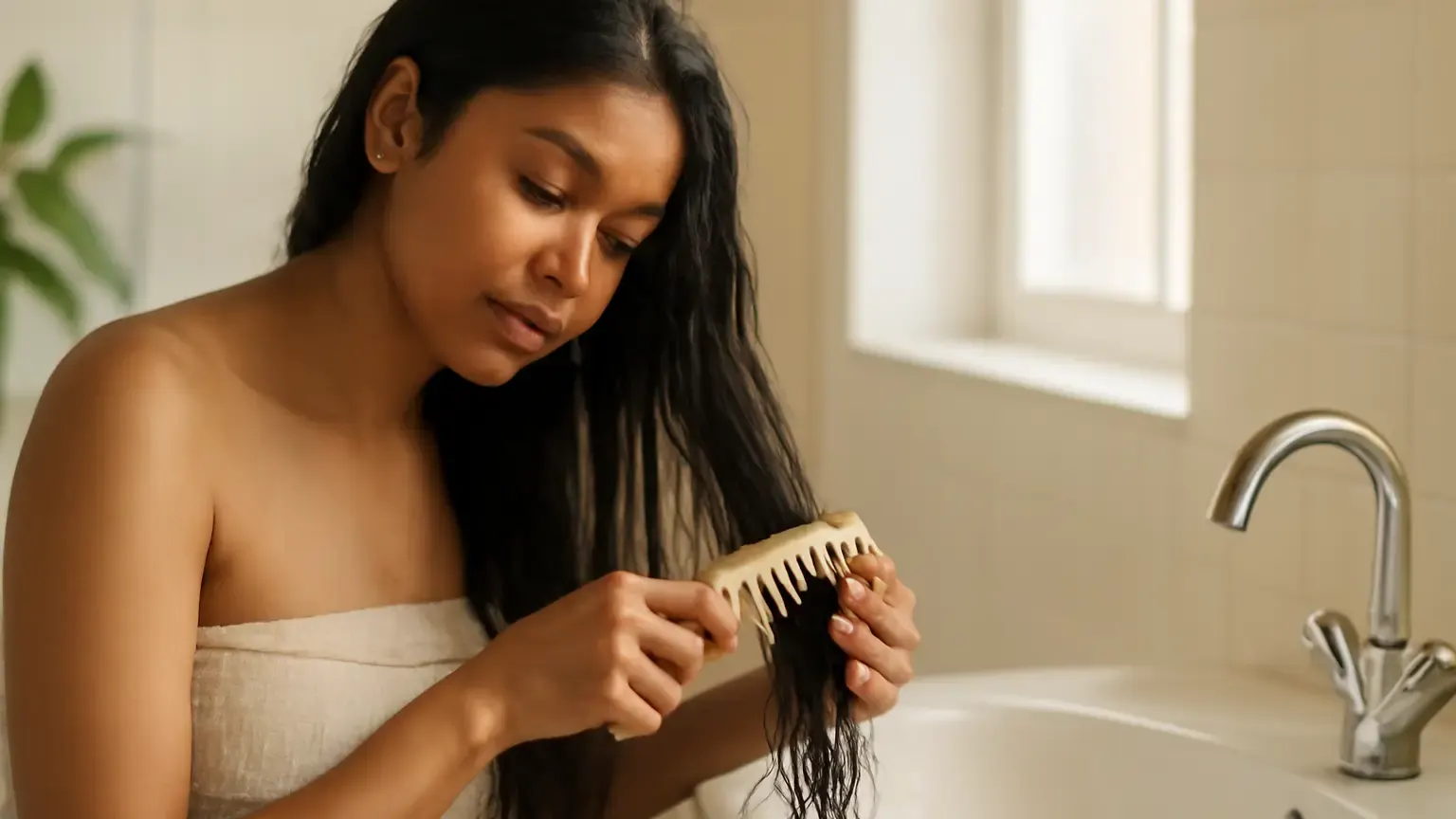
These hair care tips for hair fall during washing are for anyone who sees extra strands in the drain or notices snapping while shampooing. Detangle before wetting, use lukewarm water, cleanse the scalp with your fingertips, condition mid-lengths to ends, and dry without rubbing. That routine can reduce avoidable breakage, while persistent thinning, bald patches, scalp discomfort or a sudden increase in shedding deserves advice from a dermatologist rather than more vigorous washing.
Seeing hair in your hands or on the shower floor can be unsettling, but not every strand represents damage. Some loose hairs naturally release during washing because water and gentle handling dislodge them from the scalp. The more useful distinction is between shedding, which happens at the follicle, and breakage, where the hair shaft snaps along its length.
Washing does not usually create follicle-level hair loss by itself. However, rough detangling, very hot water, repeated pulling, aggressive towel drying and harsh cleansing can increase mechanical damage. The following six steps are designed to make wash day calmer for the scalp and kinder to fragile lengths.
1. Detangle before you wash
Pre-wash hair detangling is one of the simplest ways to reduce pulling in the shower. Hair is more vulnerable when it is saturated, especially if it is fine, curly, chemically treated, bleached or already tangled. Removing larger knots while the hair is dry or lightly damp means you need less force once shampoo and water have made the strands slippery.
A gentler detangling sequence
- Divide long or dense hair into two to four sections.
- Use your fingers first to loosen obvious knots.
- Follow with a wide-tooth comb, beginning at the ends and moving gradually towards the roots.
- Support the section above the knot with your other hand so the comb does not pull directly at the scalp.
- Never force the comb through a tight tangle; separate it with your fingers instead.
How to detangle hair before shampooing depends on texture. Straight, resilient hair may need only a quick finger-comb, while curls and coils often benefit from sectioning and a little slip from a leave-in product or lightweight oil that suits the routine. Avoid heavy oiling if it makes you scrub harder to remove the residue.
2. Choose lukewarm water, not a very hot shower
What water temperature is best for washing hair? Lukewarm water is the practical choice for most people. It feels comfortable, rinses away cleanser and conditioner, and is less likely than very hot water to leave the scalp feeling dry or irritated. Water temperature alone does not determine hair fall, but excessive heat combined with vigorous rubbing can make a fragile wash routine more uncomfortable and damaging to the hair surface.
Wet the hair thoroughly before applying shampoo so you do not need a large amount of product to spread it. If your scalp feels tight, itchy or unusually dry after washing, reduce the heat and consider whether your cleanser, washing frequency or styling products are contributing. Persistent scalp symptoms should not be managed solely by changing water temperature.
3. Use a gentle shampoo technique
A gentle shampoo technique focuses on the scalp rather than scrubbing every inch of the lengths. Place a small amount of shampoo in your palms, spread it, then use the pads of your fingertips to massage the scalp in small, light movements. Do not use your nails, twist the hair into a tight bundle or pile it on top of your head.
As the shampoo rinses through the lengths, it usually removes enough surface residue without direct scrubbing. If your scalp is oily, sweaty or coated with styling product, a second mild cleanse can be more comfortable than one aggressive wash. On the other hand, a dry or sensitive scalp may prefer less frequent washing or a simpler formula.
A sulphate-free shampoo can be worth considering if your hair feels stripped, coloured or especially dry, but “sulphate-free” is not automatically the right answer for everyone. Choose according to your scalp, hair texture, oiliness and styling routine. Hair fall during shampooing is not proof that a product is harmful; look for a consistent pattern of irritation, dryness or increased snapping instead.
4. Put conditioner where the hair needs it
Conditioner application tips are straightforward: apply conditioner mainly from the mid-lengths to the ends, where friction and dryness tend to be greater. Fine hair may need a smaller amount and a lower placement, while thick, curly or coarse hair may tolerate conditioner closer to the roots if the scalp does not become greasy or uncomfortable.
Use your fingers or a wide-tooth comb to distribute the product gently. Leave it on for the time stated on the label, then rinse without rough handling. Conditioner improves slip, which can make detangling easier and help limit wet hair breakage. It cannot repair a split end permanently, so regularly splitting ends may also call for a trim and gentler heat or chemical styling habits.
5. Dry without rubbing or twisting
Hair drying routine matters because wet strands can stretch and tangle easily. After rinsing, press or squeeze out excess water with your hands. Then wrap the hair loosely in a clean microfiber towel for hair or a soft, smooth cotton T-shirt. Blot rather than rub.
Leave the hair wrapped only long enough to remove excess moisture, then allow it to dry comfortably. If you use a hair dryer, choose a moderate heat and keep the airflow moving instead of holding it in one spot. A heat-protective product is useful when blow-drying or heat styling, but it does not make high heat risk-free. Do not sleep with very wet hair if it causes tangling, and avoid tight wet ponytails or buns that place traction on the roots.
6. Adjust the routine to your hair and monitor the pattern
There is no single cleansing schedule that suits every Indian climate, scalp or hair texture. Sweat, humidity, pollution, exercise and oiliness may make more frequent washing comfortable for one person, while dry, curly or chemically processed hair may need a less frequent schedule. The goal is a clean, comfortable scalp and manageable lengths—not a fixed number of washes.
Use these hair wash shedding tips to assess what you are seeing:
- Loose full-length strands with a small bulb-like end: these may be naturally shed hairs that became noticeable during washing.
- Short pieces of varying length or visibly frayed ends: these are more consistent with breakage from friction, heat, chemical processing or tension.
- A sudden, sustained increase: note when it began and whether it followed illness, major stress, dietary changes, medication changes or a new scalp concern. Share that history with a professional.
Common wash-day mistakes that increase pulling
Even a good routine can be undermined by small habits. Avoid brushing forcefully from roots to ends, detangling a large knot in one pass, scratching with fingernails, wringing hair like clothing, or using a rough towel. Do not keep shampooing repeatedly because you notice strands in the drain; that can add friction without addressing the reason for shedding.
Also check non-wash-day tension. Tight braids, sleek ponytails, extensions and heavy accessories can place repeated stress on the roots. Rotate styles, loosen them when possible and avoid tying hair tightly while it is wet. If you colour, chemically straighten or frequently heat-style your hair, build in conditioning and lower-friction styling days.
When should you seek professional advice?
Some hair in the drain can be normal, but a professional opinion is sensible when shedding is persistent, noticeably worsening or accompanied by visible thinning. Arrange a dermatologist consultation if you see bald patches, a widening part, receding areas, scalp pain, marked itching, scaling, redness, sores or broken hairs concentrated in one region. Seek medical guidance sooner for sudden heavy shedding or hair loss with other concerning health changes.
A dermatologist can assess the scalp and hair pattern and decide whether further evaluation is appropriate. Avoid starting supplements or stopping prescribed treatment based only on online hair-wash advice. Nutritional products are not automatically harmless or necessary, and the useful next step depends on the individual pattern and history.
Quick takeaway
The most practical hair care tips for hair fall during washing are to detangle gently before the shower, choose lukewarm water, massage shampoo onto the scalp with fingertips, condition the lengths, blot with a soft towel and avoid tight wet hairstyles. These steps target preventable breakage and friction. If the amount or pattern of shedding remains concerning, treat it as a reason for professional assessment—not a reason to scrub harder.
Products that may help with this routine
Choose only what fits your skin, hair or personal needs. Use the links below to view current options on Amazon India.
Frequently Asked Questions
How can I reduce hair fall while washing hair?
Reduce avoidable breakage by detangling before the shower, using lukewarm water, massaging shampoo gently with fingertips, conditioning the lengths, and blotting rather than rubbing with a towel. Persistent or sudden shedding needs professional assessment.
How do I detangle hair before shampooing?
Separate the hair into sections, loosen knots with your fingers, then use a wide-tooth comb from the ends upwards. Hold the hair above each knot to reduce pulling at the scalp.
What water temperature is best for washing hair?
Lukewarm water is generally the most comfortable choice. Very hot water may worsen dryness or scalp irritation, especially when combined with vigorous scrubbing, although water temperature alone does not determine hair loss.
How should conditioner be applied to reduce breakage?
Apply conditioner mainly from the mid-lengths to the ends, adjusting the placement for your texture and scalp needs. Use the product to add slip, distribute it gently and rinse without rubbing or twisting the hair.
Is hair fall during washing normal?
Some shedding during washing can be normal because loose hairs become visible when the hair is handled. A sudden, sustained increase, visible thinning, bald patches or scalp symptoms should be discussed with a dermatologist.
When should I see a dermatologist for hair shedding?
Seek advice for persistent or rapidly increasing shedding, bald patches, a widening part, receding areas, scalp pain, significant itching, scaling, redness or sores, or hair loss with other concerning symptoms.