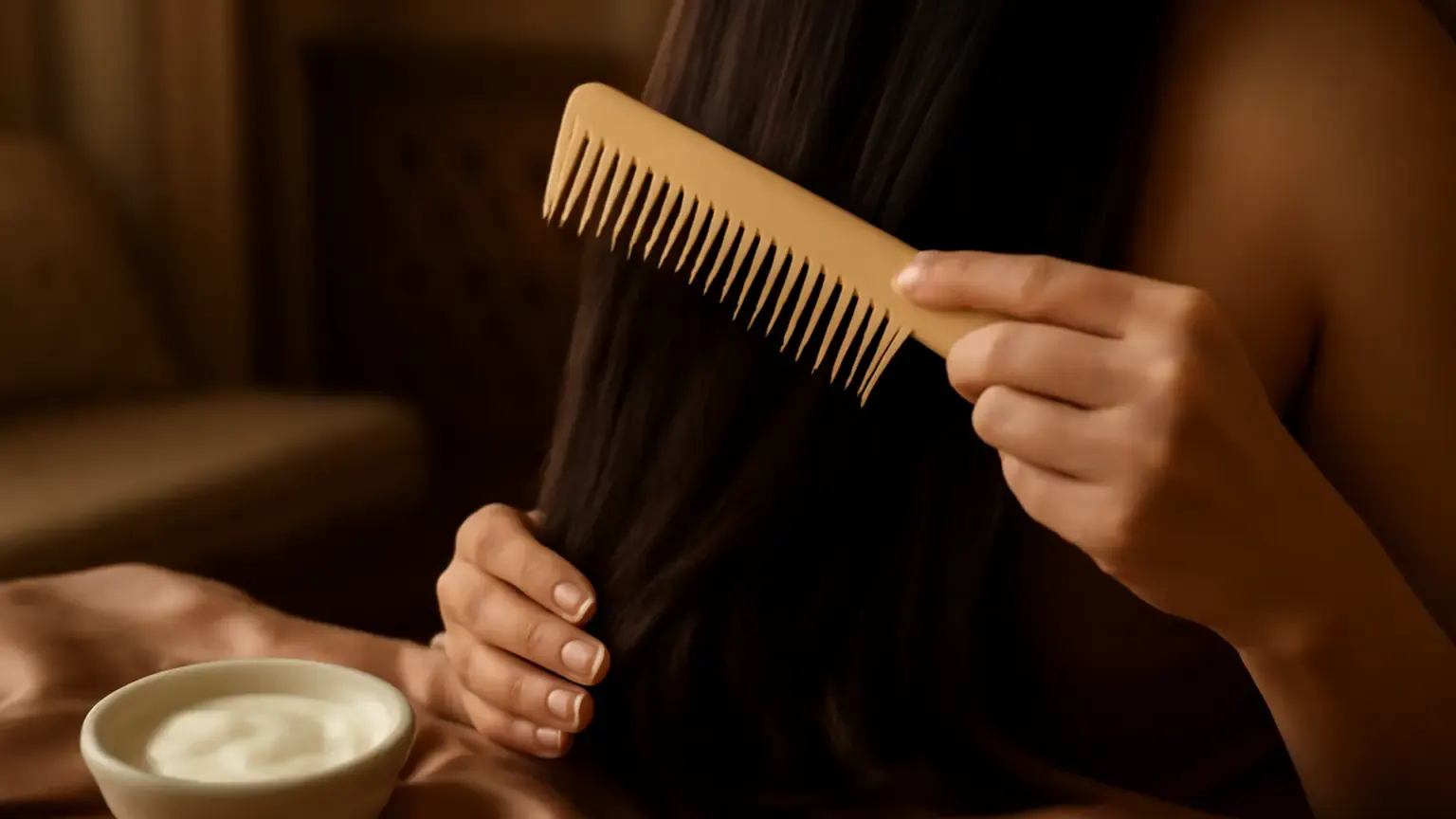
These hair care tips for split ends are for anyone dealing with rough ends, frequent tangles or breakage—especially if you use heat, colour your hair or keep it long. The practical answer is to trim existing splits, reduce friction and high heat, detangle gently, and condition consistently. Products can make ends look smoother for a while, but they cannot permanently fuse a split hair shaft back together. A simple routine can limit new damage and help you retain length.
Split ends form when the outer cuticle of a hair fibre wears away and the inner layers begin to separate. Once a strand has split, it cannot be permanently repaired with oil, conditioner or a serum. The realistic goal of split ends treatment is to remove or disguise existing damage while preventing more fibres from splitting.
That does not mean you need an elaborate routine. The most effective plan combines a sensible hair trimming schedule with gentler washing, careful detangling, heat protection and less friction. These steps are useful for straight, wavy, curly and coily hair, although the best products and frequency will depend on your hair porosity, density, length and styling habits.
1. Trim existing split ends before they travel
Trimming is the only reliable way to remove a split. If the damaged section is left in place, the split may move further up the strand, making the ends look thinner and increasing tangling. You do not need a dramatic haircut: a small, clean trim can preserve more length than waiting until the ends become severely frayed.
How often should you trim split ends? There is no universal date. People who use frequent heat, bleach or permanent colour may need a professional trim roughly every 8 to 12 weeks. Less processed hair may go longer. Check your ends in good light: repeated splitting, white dots, roughness and knots are more useful signals than a fixed calendar.
Avoid cutting individual split ends with household scissors, as blunt or unsuitable blades can create a rougher edge. If you want to dust the ends at home, use clean, sharp hair-cutting scissors and take only a small amount. A stylist is the safer choice for major damage, layered hair or a change in shape.
2. Make gentle detangling part of your routine
Wet hair is often more flexible but also more vulnerable to stretching, especially after shampooing. Aggressive combing can turn small knots into breakage. For gentle detangling, apply conditioner or a leave-in conditioner first, then separate the hair into manageable sections.
Best way to detangle hair without breakage
- Start at the ends and work upwards in short sections.
- Use your fingers first for large knots, then a wide-tooth comb or suitable detangling brush.
- Hold the hair above the knot to reduce pulling at the roots.
- Do not force a comb through a resistant tangle; add more slip and pause.
- For curls and coils, detangle when the hair is sufficiently conditioned and follow your usual curl pattern.
Detangling dry hair may work better for some tightly textured styles, while others benefit from wet, conditioned detangling. The decision should be based on which method causes less snapping and discomfort for your hair.
3. Reduce heat instead of relying on a product alone
Blow-dryers, straighteners and curling tools can weaken the cuticle when used at high temperatures or repeatedly on the same section. Heat is not automatically forbidden, but it should be controlled. Use the lowest setting that gives a workable result, keep the tool moving and avoid passing over already-dry ends several times.
How to protect hair from heat damage is a combination of technique and product. Apply a heat protectant spray or cream evenly to damp or dry hair according to its label, allow the product to distribute, and dry the hair thoroughly before using a hot iron. Do not use a straightener on wet hair unless the tool is specifically designed for that purpose. A cool or warm blow-dry finish is generally gentler than repeated high-heat passes.
If your ends already feel brittle, consider air-drying partially, choosing heatless styles or reserving hot tools for occasional occasions. Heat protection lowers risk; it does not make unlimited high heat harmless.
4. Condition for slip, softness and easier handling
Conditioner helps reduce friction between strands, making washing and combing less punishing. Apply it mainly from the mid-lengths to the ends if your roots become oily easily. Leave it on for the recommended time and rinse thoroughly enough that the hair does not feel coated or heavy.
A deep conditioning mask can be useful once a week or every fortnight for dry, coarse or chemically treated hair. Fine hair may need a lighter formula or shorter contact time. If your hair feels limp, sticky or difficult to style after masking, reduce the amount rather than adding more treatments. Good dry hair care is about balanced softness and manageability, not a permanently slippery coating.
After washing, a small amount of leave-in conditioner can provide additional slip during styling. Apply it to damp lengths and ends, avoiding excess near the scalp. Ingredients that create a light film may improve feel and reduce friction, but they do not rebuild a separated strand.
5. Limit friction from towels, clothes and bedding
Everyday rubbing can gradually roughen the cuticle. Vigorous towel drying, tight collars, backpack straps and rough pillowcases may be particularly noticeable on long or fragile hair. Instead of rubbing, gently squeeze water from the hair with a soft cotton T-shirt or smooth microfibre towel.
A satin pillowcase can reduce overnight friction for some people, especially if hair tangles while sleeping. It is not an essential purchase, and a loose braid, low ponytail or other non-tight protective hairstyle may help just as much. Avoid sleeping with wet hair if it leads to matting or pulling, and do not tie it tightly while damp.
Look at the areas that repeatedly break. If damage is concentrated around the nape, shoulders or hairline, change how the hair sits against clothing and reduce tight elastics. Choose snag-free ties and vary the position of ponytails.
6. Handle washing and styling with less pulling
Healthy split end hair care starts before the styling stage. Wash the scalp thoroughly, but let the lather run through the lengths rather than scrubbing the ends. Use lukewarm water if hot water leaves your hair dry, and condition after every wash if your lengths need regular lubrication.
Detangle before washing only if that method suits your texture. Otherwise, use conditioner in the shower and separate sections gently. Squeeze rather than twist the hair when removing water. If you colour, straighten or chemically process your hair, allow sensible intervals between services and tell your stylist about previous treatments so overlapping chemicals can be avoided.
Protective hairstyles can reduce daily manipulation, but they should not be tight. Pain, scalp tenderness or tension around the hairline means the style needs loosening or removing. A style that hides the ends while pulling them can increase breakage rather than prevent it.
7. Use split-end products with realistic expectations
Silicone-based conditioners, oils and split end serums can temporarily coat rough fibres, reduce the appearance of fraying and make ends feel smoother. This can be helpful before brushing, during humid weather or between trims. However, the effect is cosmetic and temporary: once the coating wears off or the hair is washed, the split remains.
Can split ends be repaired without cutting?
They cannot be permanently repaired without removing the damaged section. A product may bind or smooth the two sides for a short time, but it does not restore the original structure of the hair shaft. Use a serum as a finishing or friction-reducing step, not as a reason to delay a needed trim.
Choose products by the problem you are trying to solve. A lightweight leave-in may suit fine hair; a richer cream or oil may suit coarse, curly or very dry lengths. If your hair becomes greasy, stiff or coated, use less or select a lighter formula. Product buildup is not proof that the ends are healthier.
A simple split-end hair care routine
- Wash the scalp gently: avoid scrubbing the fragile ends.
- Condition the lengths: focus on areas that tangle or feel rough.
- Detangle with slip: use fingers and a wide-tooth comb, working from the ends upwards.
- Dry without rubbing: blot or squeeze with a soft, smooth fabric.
- Protect before heat: use a heat protectant and keep temperatures moderate.
- Reduce night-time friction: use a loose style or smooth pillow covering if helpful.
- Trim when the ends show damage: do not expect a serum to replace removal of a split.
Common mistakes that make split ends worse
- Brushing from the roots down through large knots.
- Using high heat because the hair is not fully dry.
- Rubbing wet hair with a textured towel.
- Pulling a brush through hair that has no conditioner or styling slip.
- Wearing the same tight ponytail or bun every day.
- Applying heavy oil and assuming it has repaired the fibre.
- Waiting for severe fraying before scheduling a trim.
Who may need a more cautious approach?
If your hair is bleached, frequently coloured, chemically straightened, very long or repeatedly heat-styled, it may need shorter styling sessions, more conditioning and more frequent checks of the ends. Curly and coily hair can lose moisture quickly, so detangling technique and adequate conditioning matter as much as the product label.
Persistent or sudden breakage, noticeable thinning, scalp pain, sores or marked changes in hair texture should be discussed with a dermatologist or doctor. General hair care can reduce mechanical damage, but it cannot identify or treat an underlying medical concern.
Takeaway
The most dependable hair care tips for split ends are simple: trim existing splits, detangle with slip, limit high heat, condition regularly and reduce friction. Choose serums and oils for temporary smoothness, not permanent repair. A consistent routine will not make damaged ends whole again, but it can help limit new breakage and support better length retention.
Products that may help with this routine
Choose only what fits your skin, hair or personal needs. Use the links below to view current options on Amazon India.
Frequently Asked Questions
How often should you trim split ends?
Many people benefit from checking or trimming their ends about every 8 to 12 weeks, but the right timing depends on heat, colour, chemical services, length and visible damage. Trim sooner if the ends are repeatedly splitting, knotting or becoming thin.
Can split ends be repaired without cutting?
No product can permanently repair a split hair fibre without removing the damaged section. Conditioners, oils and split end serums can temporarily smooth and coat the ends, making them look better until the next wash.
What is the best way to detangle hair without breakage?
Apply conditioner or a leave-in product for slip, divide the hair into sections, start at the ends and work upwards. Use your fingers first, then a wide-tooth comb, and hold the hair above a knot to reduce pulling.
How can I protect my hair from heat damage?
Use a heat protectant spray or cream, dry the hair fully before using a hot iron, choose the lowest effective temperature and keep the tool moving. Reduce repeated passes and use heatless styling when practical.
Is a split end serum worth using?
It can be worthwhile for temporary smoothness, less friction and a neater appearance between trims. It cannot fuse a split back together, so use it as a finishing product rather than a replacement for trimming.
How can I prevent split ends in long hair?
Keep a regular trimming schedule, condition the lengths, detangle gently, reduce high heat, avoid tight repeated hairstyles and limit friction from towels, clothing and bedding. These steps help reduce new damage while preserving length.