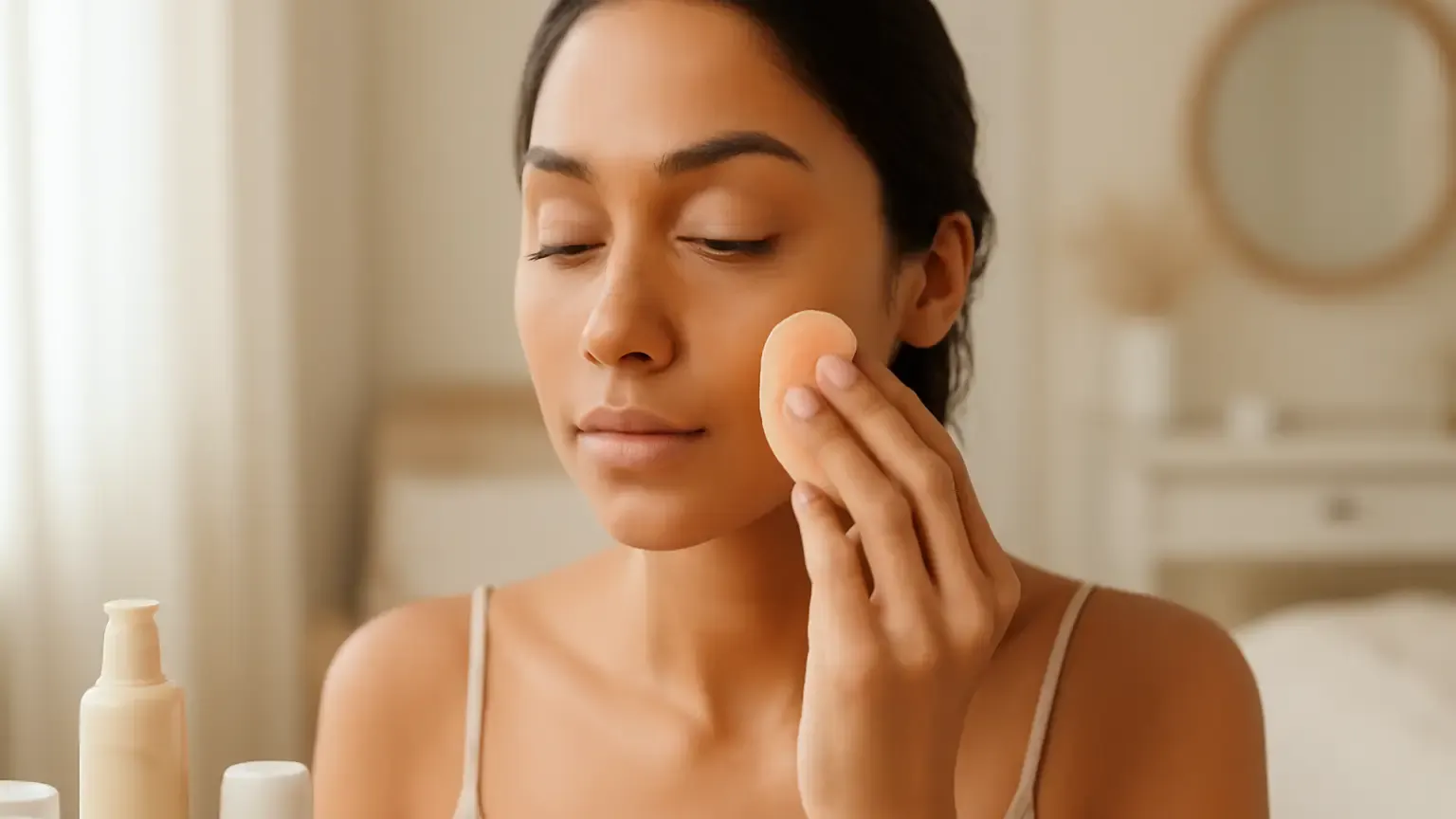
Dry skin makeup prep works best when you soften and hydrate the surface without piling on heavy layers. This six-step routine is for anyone whose foundation catches on dry patches, flakes around the nose or looks tight by midday. Cleanse gently, add light hydration, smooth only where needed, moisturise strategically, choose a compatible primer and allow enough wait time before foundation. The result is a more even, comfortable base—not an overloaded one.
A smooth foundation base begins before makeup reaches the skin. Dryness can make texture more visible, but the solution is not always more cream or more exfoliation. Good skin prep for makeup balances three needs: remove surface residue, add water and moisture, then give each layer time to settle.
This routine suits dry-feeling skin, seasonal dryness and skin that becomes tight in air-conditioned rooms. If your skin is persistently cracked, painful, intensely itchy, inflamed or suddenly changing, speak with a dermatologist rather than trying to solve the issue through makeup prep alone.
Step 1: Cleanse without stripping the skin
Start with a small amount of lukewarm water and a mild cleanser. A gentle cleanser for dry skin should remove overnight oil, sweat and leftover skincare without leaving a squeaky, tight feeling. Massage briefly with your fingertips, rinse thoroughly and pat—not rub—the face dry.
In the morning, a full cleanse may not be necessary if your skin feels comfortable and you cleansed the night before. A water rinse or a small amount of cleanser on oilier areas can be enough. This matters because an overly thorough cleanse may leave the surface more dehydrated before foundation is applied.
Step 2: Add light hydration
Apply a thin, water-based layer while the skin is slightly damp. A hydrating toner, essence or lightweight serum can provide slip and reduce the tight feeling that encourages foundation to catch on texture. Press it in gently rather than rubbing until the face feels wet.
Choose fragrance-free skincare if your skin is reactive or easily uncomfortable. Ingredients such as glycerin, panthenol and hyaluronic acid are commonly used in hydrating formulas, but the texture and your personal tolerance matter more than a long ingredient list. If you use a hydrating mist, follow it with moisturiser rather than allowing the water to evaporate from the skin.
Step 3: Smooth dry patches selectively
Look closely at areas around the nostrils, mouth, eyebrows and cheeks. If a loose flake is present, soften it with moisturiser and gently press it down with clean fingers. Do not pick, scrub or repeatedly buff the area. For isolated dry patches, targeted smoothing is usually safer and more effective than treating the entire face aggressively.
Should you exfoliate before makeup?
Usually, avoid exfoliating immediately before an important makeup application. Physical scrubs and strong acids can make the surface look temporarily smoother while increasing sensitivity, redness or tightness. To avoid over-exfoliating, keep exfoliation occasional and separate it from days when you need a reliable base. Never exfoliate over cracked or irritated skin.
If you regularly notice roughness, review your overall skincare routine instead of adding a stronger exfoliant at the last minute. Persistent flaking may need professional assessment, particularly when it is accompanied by discomfort or redness.
Step 4: Seal hydration with the right moisturiser
Use a thin, even layer of a ceramide moisturiser or another comfortable cream. Ceramides and similar barrier-supportive ingredients can help reduce the feeling of dryness, while a cream texture gives foundation a more flexible surface. Apply extra product only to genuinely dry zones; the centre of the face may need less.
Heavy application can create a different problem. Too much moisturiser may remain slippery, cause primer to roll into little pieces or make foundation separate around the nose. Start with a pea-sized amount for the face, spread it well and add a small second layer only where required.
A facial oil before makeup is optional, not essential. If you choose one, use one drop mixed into moisturiser or press a very small amount over the driest areas. Too much oil can weaken the grip of water-based primer and foundation, so test the combination before relying on it for an event.
Step 5: Choose a compatible primer
Once moisturiser has settled, apply a thin layer of makeup primer for dry skin only where it adds value. A comfortable hydrating or smoothing primer can help foundation glide over texture. You do not need to cover every inch of the face if only the cheeks or around the mouth feel dry.
Think about compatibility: water-based skincare generally pairs more predictably with a water-based complexion product, while silicone-rich formulas can offer a smoother feel over texture. This is a practical guide, not a strict rule—formula behaviour, application amount and skin type all matter. If products pill, reduce the number of layers and press each one in rather than rubbing.
Step 6: Wait, then apply foundation in thin layers
One of the most overlooked parts of a dry skin pre makeup routine is the pause between skincare and base makeup. As a useful starting point, wait about five to ten minutes after moisturiser, and a few minutes longer if the surface still feels wet or slippery. The answer to how long to wait before foundation depends on the formula, room temperature and how much product you used.
Before applying foundation, lightly touch the cheek or jaw. The skin should feel comfortable and moisturised, not slick. If there is visible excess, press gently with a clean tissue or dry sponge. Avoid wiping, which can remove the prep unevenly.
For a dewy foundation application, use a small amount and build coverage only where needed. A damp makeup sponge can press product into the skin with less dragging, while a soft brush can work well when used with light, short strokes. Start at the centre of the face and blend outward. Around flaky areas, pressing is usually better than repeated buffing.
How to prevent foundation from looking patchy
If you are wondering why does foundation look patchy on dry skin, check the routine rather than blaming the foundation immediately. Common causes include cleansing too aggressively, applying too many wet layers, using incompatible formulas, skipping moisturiser on dry zones or rubbing the base over loose flakes.
- Patchiness around the nose: use less moisturiser and primer there, allow extra wait time and press foundation on in a very thin layer.
- Flaking on the cheeks: focus on gentle hydration and cream moisturiser; avoid scrubbing immediately before makeup.
- Foundation separating: remove one skincare layer, reduce facial oil and check whether the primer and foundation feel compatible.
- Texture on the forehead: use less product and avoid repeatedly buffing the same area.
Quick routine by skin situation
For mildly dry skin: cleanse lightly, use a hydrating layer, apply moisturiser, wait five minutes and use a thin primer only where needed.
For very flaky-feeling skin: do not exfoliate on the morning of makeup. Gently cleanse, hydrate, soften individual flakes with cream, wait longer and choose light, buildable coverage. If foundation still emphasises cracking or discomfort, a lighter complexion product may look more natural than full coverage.
For humid Indian weather: keep each layer thin and let it settle. A rich cream applied across the whole face may feel heavy or increase separation, especially around the T-zone. In dry winter weather or strong air conditioning, use a little more moisturiser on the cheeks while keeping the nose and forehead lighter.
Key takeaway
Effective dry skin makeup prep is about controlled layering, not maximum layering. Cleanse gently, add light hydration, smooth only where necessary, moisturise strategically, use a compatible primer and wait until the surface feels settled. Avoid last-minute scrubs and heavy product piles. A thin, flexible base usually looks more even and remains more comfortable than a thick one.
Products that may help with this routine
Choose only what fits your skin, hair or personal needs. Use the links below to view current options on Amazon India.
Frequently Asked Questions
How do you prep dry skin before foundation?
Cleanse gently, apply a light hydrating layer, smooth loose flakes without scrubbing, use a thin moisturiser, add compatible primer if needed and wait about five to ten minutes before foundation.
What is the best makeup prep for dry flaky skin?
The best approach is gentle cleansing, targeted moisturising and minimal layering. Avoid exfoliating immediately before makeup, soften individual flakes instead and apply foundation in thin layers by pressing rather than dragging.
How long should you wait before foundation after moisturiser?
Start with five to ten minutes. Wait longer if the skin still feels wet or slippery. Foundation should go on when the moisturiser feels settled but the skin remains comfortable, not tight.
Should you exfoliate dry skin before makeup?
Usually not immediately before makeup. Scrubs or strong exfoliants can increase sensitivity and make flaking more noticeable. Use gentle, occasional exfoliation only when the skin is comfortable, and do not exfoliate cracked or irritated areas.
What should you use under foundation for dry skin?
Use a lightweight hydrating layer followed by a comfortable moisturiser. A hydrating or smoothing primer can be added selectively, but too many layers or too much facial oil may cause pilling or separation.
Why does foundation look patchy on dry skin?
Common reasons include a stripped skin surface, loose flakes, too little moisturiser, excessive product, incompatible layers or rubbing the foundation over texture. Reduce layers, allow more wait time and press on a thin amount of base.