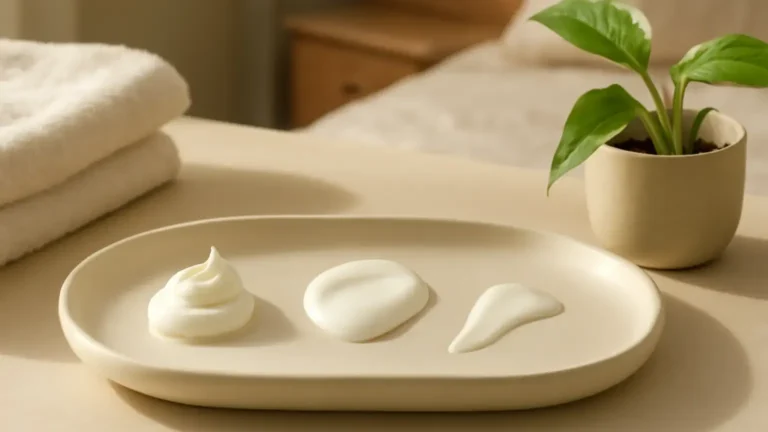
Dry Skin and Hyaluronic Acid work best as a team: apply the serum to slightly damp skin, then use a moisturiser to help retain that hydration. If your face still feels tight, rough or flaky soon afterwards, a rich cream may help more than adding another serum because it supplies more emollient and occlusive support.
Short answer: hyaluronic acid can add water-binding hydration, but it does not replace a moisturiser. Apply it to slightly damp skin, then follow with a cream or lotion. If your skin becomes tight again quickly, a richer cream may be more useful than another hydrating serum because it can help slow water loss and support a more comfortable surface.
What hyaluronic acid does for dry skin
Hyaluronic acid is a humectant used in serums, gels and moisturisers. Humectants attract and hold water near the skin’s surface, which can make the face feel softer and temporarily look plumper. This can be useful in a hydrating skincare routine, especially when skin feels tight after cleansing or exposed to dry indoor air.
However, dry skin and dehydrated skin are not exactly the same concern. Dehydrated skin lacks water and can occur alongside oiliness. Dry skin generally lacks enough surface oil or lipids to feel comfortable. A person can therefore have skin that is both dry and dehydrated. Hyaluronic acid may address the water-related part, but it does not provide every type of ingredient needed to support the skin surface.
- Humectants, including hyaluronic acid, glycerin and panthenol, attract water.
- Emollients, including squalane and some oils, soften rough areas and help smooth gaps between surface cells.
- Occlusives, including petrolatum and some richer lipid blends, form a more protective layer that helps reduce water loss.
This is why humectant skincare often works best when followed by a suitable moisturiser. A serum can make the skin feel hydrated initially, while a cream helps the feeling last longer.
How to use hyaluronic acid for dry skin
The most practical method is a simple damp skin application followed by moisturiser. Slightly damp means the skin has a little moisture left after cleansing; it does not mean the face should be dripping wet. Excess water can make the product run, while applying too much serum may leave a sticky or tight-feeling finish.
- Cleanse gently. Use lukewarm water and a non-stripping hydrating cleanser. If your face feels squeaky or stretched after washing, the cleanser or washing method may be too harsh.
- Leave the skin slightly damp. Pat rather than rubbing completely dry, or apply the serum soon after cleansing.
- Use a modest amount. One or two pumps is generally enough for the face, depending on the formula and directions.
- Spread gently. Press or smooth the product over the face and neck if it is intended for both areas. Avoid vigorous rubbing.
- Moisturise promptly. Apply a barrier-supporting moisturiser while the skin still feels lightly hydrated.
- Use sunscreen in the morning. Finish with broad-spectrum sunscreen appropriate for your skin and daily exposure.
So, should hyaluronic acid be applied on damp skin? It can be, and many people find this more comfortable. The important point is not to leave the humectant serum as the complete routine. The moisturiser applied afterwards helps limit transepidermal water loss and improves lasting comfort.
Why a rich cream may help more than another serum
If a dry skin hydrating serum gives a brief improvement but your face soon feels tight again, the problem may be insufficient sealing rather than insufficient water. A richer cream usually contains a greater proportion of emollient and occlusive ingredients than a lightweight gel. It can therefore help slow the rate at which moisture leaves the skin, particularly overnight, during winter dryness or in rooms with indoor air conditioning.
Consider a rich cream for dry skin when:
- your face feels tight again within an hour of applying a serum;
- you notice roughness or flaking around the cheeks, mouth or sides of the nose;
- your skin becomes uncomfortable after travel, air-conditioning or repeated cleansing;
- a light gel leaves a dry, stretched or unfinished feeling;
- you need more support during winter skincare for dry skin; or
- your routine contains several potentially drying steps and would benefit from being simpler.
A richer texture does not have to feel greasy. Ingredients commonly found in supportive formulas include ceramides, glycerin, squalane, fatty alcohols and petrolatum. Ceramides for dry skin can be useful as part of a well-formulated moisturiser, but the complete formula and your personal tolerance matter more than one ingredient claim.
Climate also affects the decision. A cream that feels comfortable at night may be too heavy beneath sunscreen in warm, humid weather. In India, some people may prefer a medium lotion during the day and a richer cream on dry areas or at night. The best option is the texture that keeps skin comfortable without encouraging congestion or excessive rubbing.
Moisturiser layering: a practical routine
Moisturiser layering means arranging products from lighter, water-based textures to heavier, more protective textures. The goal is not to use every available category. It is to use only the layers that improve comfort and can be applied consistently.
Morning
- Cleanse with water or a gentle cleanser, depending on sweat, oil and overnight product build-up.
- Apply hyaluronic acid or another hydrating serum to slightly damp skin if it feels beneficial.
- Use a lotion or cream. Apply a richer layer only where skin remains dry if your whole face does not need it.
- Apply sunscreen generously and reapply as appropriate for outdoor exposure.
Evening
- Remove sunscreen and makeup without scrubbing or using very hot water.
- Apply your humectant serum if it feels comfortable and adds value.
- Follow with your main facial moisturiser. Use a richer cream on dry zones rather than automatically covering the entire face.
This is a useful best moisturiser layering routine for dry skin, but there is no required waiting period between layers. Wait only long enough for each product to spread comfortably. Too many products can pill, feel sticky or lead to over-cleansing when you try to remove them.
Gel moisturiser versus cream: which should you choose?
The choice in a gel moisturiser versus cream comparison should be based on how your skin feels after several hours, not only on the first few minutes after application.
| Choose a gel or light lotion when | Choose a cream when |
|---|---|
| Your skin stays comfortable after cleansing and remains hydrated. | Your skin becomes tight, rough or flaky after lighter products. |
| You live in humid weather or dislike a heavier finish. | You spend time in air-conditioning or dry winter conditions. |
| You want a light layer under sunscreen or makeup. | You need more overnight comfort and protection from water loss. |
| Your skin becomes congested with richer textures. | Your cheeks or dry areas need additional cushioning. |
You can also combine textures strategically. For example, use a lighter lotion on the forehead and nose and a cream on the cheeks. This recognises that different areas of the face may have different needs.
Common mistakes when using hyaluronic acid for dry skin in India
Using serum without moisturiser
A humectant layer on its own may not be enough, particularly in dry weather or air-conditioned rooms. Follow it with a moisturiser rather than assuming the serum has completed the routine.
Applying too much product
Several sticky layers can make the skin feel coated without improving comfort. Start with a small amount and assess the skin after 10 to 15 minutes and again later in the day.
Confusing tightness with cleanliness
A squeaky or stretched feeling after cleansing is not proof that the cleanser is working better. A gentler cleanser and shorter washing time may support skin barrier care more effectively.
Changing several products at once
If you introduce a new serum, cream, exfoliant and cleanser together, it becomes difficult to know what your skin tolerates. Change one major product at a time and patch test when appropriate.
Ignoring fragrance and irritation clues
Fragrance-free skincare may be a sensible choice when skin is easily reactive, although fragrance-free does not guarantee that every formula will suit everyone. Stop using a product that causes persistent burning, swelling or worsening irritation and seek professional advice when needed.
Can hyaluronic acid make dry skin feel tighter?
Some people notice increased tightness after using hyaluronic acid. This does not necessarily mean the ingredient is universally unsuitable. Possible explanations include applying too much product, leaving the serum without a moisturiser, using it in a particularly dry environment or combining it with an irritating routine.
Try using less serum on slightly damp skin and applying a comfortable cream promptly afterwards. If the tightness continues, simplify the routine and compare your skin with and without the serum. Burning, swelling, persistent redness or a worsening rash should not be dismissed as ordinary dryness.
Is a richer cream always better?
No. A richer formula is not automatically more effective, and too much occlusion may feel uncomfortable or contribute to congestion for some people. The best moisturiser is one you can apply consistently, that leaves your skin comfortable and that works with your climate, sunscreen and makeup.
For a simple comparison, use your usual serum followed by a light lotion on one evening and the same serum followed by a richer cream on another. Compare comfort the next morning, visible flaking, tightness and how your skin behaves after cleansing. Do not judge only by the first few minutes of glow.
When evaluating a product, check the full formula rather than only the word “hyaluronic” on the front label. A moisturiser containing glycerin, ceramides, emollients and occlusives may be more useful for dry skin than a concentrated serum followed by an insufficiently protective gel.
When to simplify or seek professional advice
Dryness after a change in weather, cleansing habits or indoor air can often be managed with a gentle routine, adequate moisturiser and sun protection. However, persistent cracking, intense itching, significant redness, oozing, swelling, pain or a rash that does not settle deserves advice from a dermatologist or doctor. General skincare guidance cannot identify the cause of ongoing or severe symptoms, and a richer cream should not be used to mask a concerning reaction.
Takeaway
Dry Skin and Hyaluronic Acid are compatible, but the serum is only one part of the routine. Apply a humectant to slightly damp skin, then use a moisturiser that matches your needs. If hydration disappears quickly, your face feels rough or the climate is drying, a richer cream may do more for comfort and moisture retention than adding another serum. Start simply, adjust texture by area and judge results over several days rather than by instant shine.
Products that may help with this routine
Choose only what fits your skin, hair or personal needs. Use the links below to view current options on Amazon India.
Frequently Asked Questions
How to use hyaluronic acid for dry skin?
Apply a small amount of hyaluronic acid serum to slightly damp, freshly cleansed skin, then follow promptly with a moisturiser. Use sunscreen in the morning. The moisturiser helps reduce water loss, so the serum should not be treated as a complete routine by itself.
Should hyaluronic acid be applied on damp skin?
It can be applied to slightly damp skin, and many people find this more comfortable. The face should not be dripping wet. After applying the serum, seal it with a lotion or cream rather than leaving the humectant layer alone.
Is a rich cream better than a hydrating serum for dry skin?
They serve different purposes. A serum mainly adds water-binding ingredients, while a rich cream can provide emollients and occlusives that slow water loss. If skin stays tight after serum, a richer cream may be the more useful next step.
What should I apply after hyaluronic acid serum?
Apply a moisturiser after hyaluronic acid serum. Choose a light lotion in humid conditions or a richer, barrier-supporting cream when skin feels rough, tight or flaky. In the morning, finish with sunscreen.
Can hyaluronic acid make dry skin feel tighter?
Some people notice increased tightness when they use a humectant serum without moisturiser, apply too much product or use it alongside an irritating routine. Try using less on slightly damp skin and sealing it with a comfortable cream. Stop if burning or a persistent reaction develops.