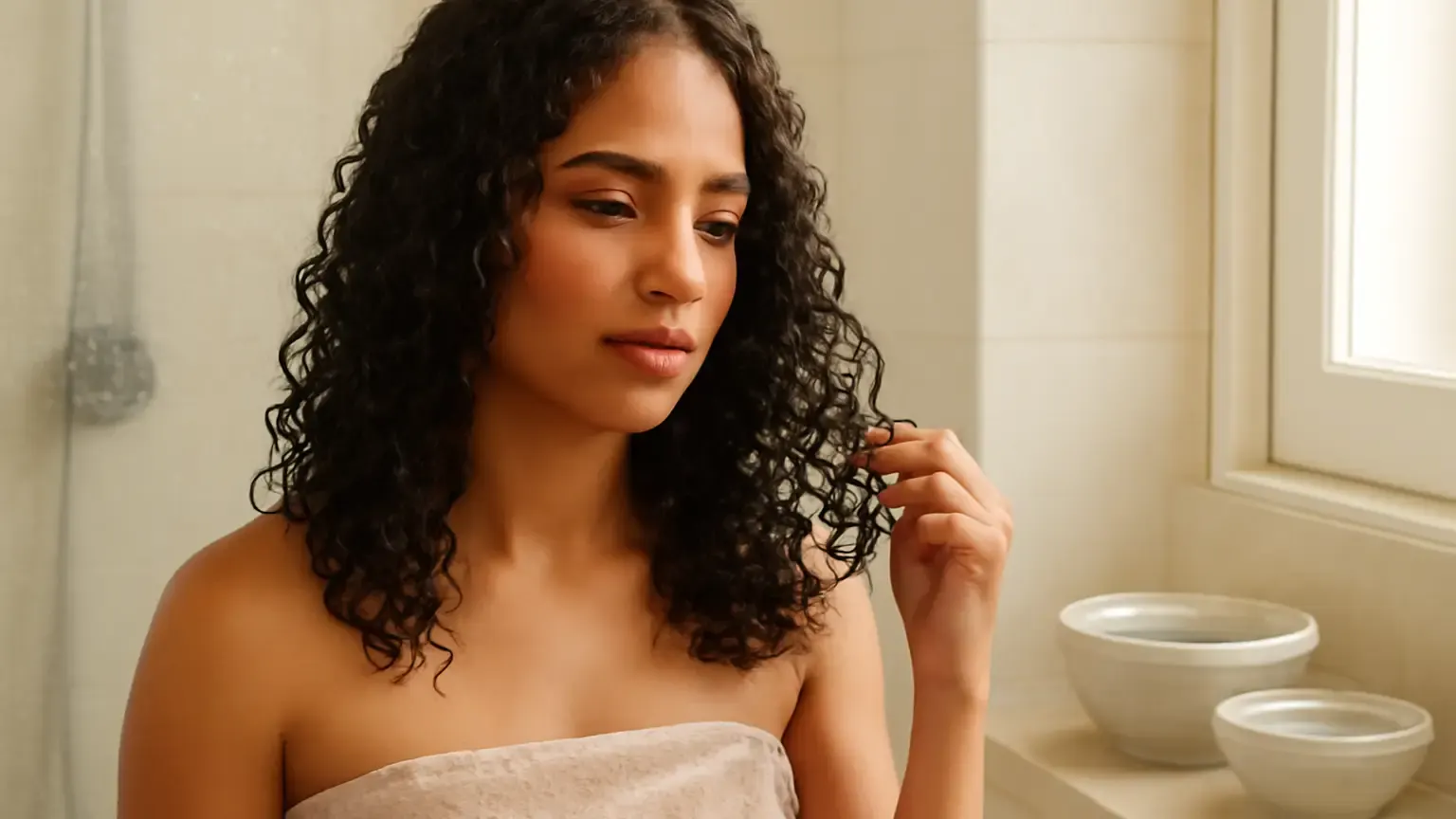
A curly hair wash routine works best when each stage protects moisture: pre-wash only if your lengths need it, cleanse the scalp rather than scrubbing the curls, condition generously, detangle with slip, style on very wet hair and dry with minimal disturbance. This guide is for wavy to coily hair, including curls dealing with Indian heat, hard water or humidity. The goal is cleaner roots, fewer broken strands and defined curl clumps without a heavy, greasy finish.
Curly hair needs a different wash-day strategy from straight hair because its bends make it harder for natural scalp oils to travel down the length. That can leave the roots oily while the ends feel dry. A good routine therefore balances two jobs: cleansing the scalp properly and keeping enough water and conditioning on the lengths for curl definition.
Before you start: choose the right wash-day approach
Your ideal routine depends on curl density, scalp oiliness, porosity, styling habits and the climate you live in. Fine waves may become flat with rich masks and oils, while dense coils can need more conditioning time. In India, sweat, dust, mineral-heavy water and monsoon humidity may also change how often you need to cleanse.
Most people can begin with a wash every two to four days, then adjust. Wash sooner after heavy exercise or when the scalp feels sweaty, uncomfortable or coated. If your hair remains fresh for longer, extend the interval without forcing a fixed schedule.
- Use a pre-poo for curly hair if shampoo leaves your ends rough or your hair tangles easily. Apply a light conditioner or a small amount of oil to the lengths for 10–20 minutes before washing, not as a thick overnight layer by default.
- Skip pre-wash oils if your hair is fine, low porosity or easily weighed down. A rich oil can make cleansing harder and reduce volume.
- Consider clarifying occasionally if gels, oils, dry shampoo, sweat or hard water leave a stubborn film. Follow with conditioner, and do not use a strong clarifier at every wash unless a professional has advised it.
Six curly hair washing steps for a smoother wash day
1. Saturate and prepare the hair
Rinse with lukewarm water for at least a minute so the hair is fully wet before cleanser touches it. Dense or tightly coiled hair may need sectioning to allow water through the roots. Gently loosen obvious knots with your fingers, starting at the ends, but do not force a dry brush through the hair.
This stage is also the best time to divide very dense hair into two to four sections. Sectioning helps you reach the scalp evenly and prevents vigorous rubbing later.
2. Cleanse the scalp without stripping the curls
Apply a small amount of shampoo to the scalp, add water, and massage with the pads of your fingers. Focus on the hairline, crown, nape and areas that become sweaty. Let the lather run through the lengths as you rinse; scrubbing the ends directly can increase dryness and frizz.
A sulfate-free shampoo for curls can be a comfortable starting point for dry or colour-treated hair, but “sulfate-free” does not automatically mean suitable for everyone. If your scalp is oily or you use substantial styling products, a more thorough cleanser may be useful from time to time. Two gentle washes are often better than one aggressive scrub.
For people exploring co-washing curly hair, a cleansing conditioner may work when the scalp is not especially oily and the hair becomes dry with shampoo. It may not remove heavy buildup effectively. Alternate it with a proper cleanser if the roots feel coated, limp or itchy.
3. Condition for softness and curl clumps
Squeeze out excess water, then apply conditioner from mid-length to ends. Use enough product for the hair to feel slippery rather than merely coated. Rake it through with your fingers and gently press the curls upward. Leave it on for the time stated on the label, then rinse thoroughly or leave a small amount behind if the product is designed for that use.
Deep conditioning curly hair is not automatically better at every wash. Try it once every one to four weeks when the hair feels unusually dry, rough or difficult to style. Fine, low-porosity hair may prefer a lightweight mask for a shorter time, while porous, bleached or very dense hair may benefit from a richer formula. If curls become limp, sticky or overly soft, reduce the frequency and review the amount.
4. Detangle with less breakage
The safest time for most people to detangle curly hair is while conditioner is present and the hair is wet. Work in sections from the ends upwards, using fingers or a wide-tooth comb. Keep the section close to the roots to reduce pulling on the scalp, and add more water if the comb catches.
Whether you should detangle before or after shampoo depends on your hair. Coily or very knot-prone hair may benefit from gentle pre-detangling with conditioner before cleansing. Looser waves may prefer detangling after shampoo, when conditioner gives maximum slip. Avoid repeatedly combing after styling, because that separates curl clumps and creates a fuzzy surface.
5. Apply definition products on very wet hair
After rinsing, keep the hair wetter than you think you need. Water helps distribute product and encourages curls to group together. Start with a small amount of leave-in conditioner if your lengths need softness, then add a curl defining cream for shape and a gel or mousse for hold. Not everyone needs all three.
- Fine waves or low-porosity hair: choose a lightweight leave-in, mousse or soft gel and use modest quantities.
- Dry, dense or high-porosity curls: a leave-in followed by cream and gel may provide better moisture and hold.
- Hair that loses shape quickly: prioritise a hold product rather than adding more oil or cream.
Use praying-hands smoothing, gentle raking or scrunching, depending on the finish you like. Scrunch upward to encourage curl formation, but avoid aggressive squeezing that roughens the cuticle. A firm gel cast for curls can feel crisp while drying; once fully dry, soften it with clean, dry hands.
6. Dry with low friction and limited disturbance
To dry curly hair without frizz, first press out excess water with your hands. A soft microfibre towel or smooth cotton T-shirt is preferable to rough terry cloth, which can disturb the curl surface. You can try plopping curly hair for a short period if it helps form clumps, but very long plopping may flatten roots or create uneven bends.
Air-drying is simple but can take a long time in humid weather. If you diffuse, use low or medium heat and low airflow. Hold the diffuser near the ends first, then move towards the roots as the cast forms. Keep the dryer moving and stop touching the hair until it is completely dry. Finish by scrunching out stiffness, not by brushing through the curls.
How to adjust the routine for porosity and humidity
Low porosity curly hair often resists water and product, so use lighter layers, plenty of water and a thorough rinse. Avoid piling on oils, heavy butters and multiple leave-in products. Gentle warmth from a shower can help conditioner spread, but it should not feel hot or uncomfortable.
High porosity curly hair may absorb water quickly but lose moisture just as fast. It often responds better to richer conditioning, careful detangling and a reliable gel layer. If the hair has been chemically treated or heat-styled, keep the routine gentle and consider alternating moisturising products with a balanced strengthening product rather than adding more and more cream.
For humidity frizz control, use enough hold product, dry the hair fully before going outdoors and avoid touching it repeatedly. Frizz is not always a sign of damage: some halo frizz can be normal, especially in monsoon conditions. A satin pillowcase or bonnet may reduce overnight friction, but it cannot replace appropriate cleansing and styling.
Common wash-day mistakes to avoid
- Scrubbing the lengths as though they are the scalp.
- Using very hot water because it feels cleansing, then adding heavy oils to compensate for dryness.
- Detangling dry curls without slip or starting at the roots.
- Applying styling products to almost-dry hair and expecting even curl clumps.
- Using a strong clarifying shampoo every wash to chase a squeaky feeling.
- Touching, separating or towel-rubbing curls while they are drying.
- Copying a routine designed for thick coils when your fine waves need much lighter products, or vice versa.
How to know whether your routine needs changing
Make one change at a time and observe the result over two or three washes. Greasy roots, dullness or curls that will not spring back can suggest excess product or insufficient cleansing. Rough ends, tangling and a tight-feeling scalp may point to over-cleansing, too much friction or insufficient conditioning. Flat roots can result from applying rich products too close to the scalp, while a weak curl pattern may simply need more water or hold.
Persistent scalp itching, burning, sores, marked flaking or sudden hair shedding is not a styling problem to manage with more products. Seek advice from a dermatologist or doctor, particularly if symptoms continue or worsen.
Quick takeaway
The most reliable curly hair wash routine is flexible: protect dry lengths when needed, cleanse the scalp thoroughly but gently, condition with slip, detangle in sections, style on wet hair and dry without friction. Start with fewer products, adjust for porosity and climate, and judge success by comfortable roots, manageable detangling and curl definition that lasts into the next day.
Products that may help with this routine
Choose only what fits your skin, hair or personal needs. Use the links below to view current options on Amazon India.
Frequently Asked Questions
What is the best curly hair wash routine for beginners?
Start by fully wetting the hair, shampooing the scalp, conditioning the lengths, detangling while the conditioner provides slip, applying a small amount of styling product to very wet hair and drying with low friction. Add a pre-wash treatment or deep conditioner only if your hair shows a clear need.
How often should you wash curly hair in India?
Many people with curly hair wash every two to four days, but the right frequency depends on scalp oil, sweat, product buildup, curl density and climate. Wash after heavy sweating or when the scalp feels coated; do not delay cleansing just to follow a fixed curl schedule.
Should you detangle curly hair before or after shampoo?
Most curls are easiest to detangle after shampoo while conditioner is on and the hair is wet. Very knot-prone or tightly coiled hair may benefit from gentle pre-detangling with conditioner before shampooing. Always work from the ends upward and avoid pulling through dry knots.
How do you dry curly hair without frizz?
Press out water with your hands, use a smooth microfibre towel or cotton T-shirt, apply styling products while the hair is wet and avoid touching it as it dries. If using a diffuser, choose low airflow and moderate heat, then soften any dry gel cast with clean hands.
Is co-washing suitable for curly hair?
Co-washing can suit dry, curly hair and a scalp that is not very oily, but it may not remove heavy styling buildup, sweat or mineral residue. If the roots feel coated or limp, alternate with a suitable shampoo or occasional clarifying wash.