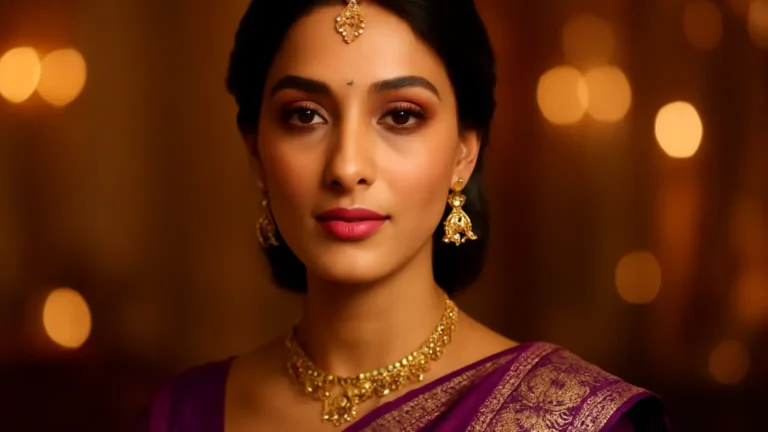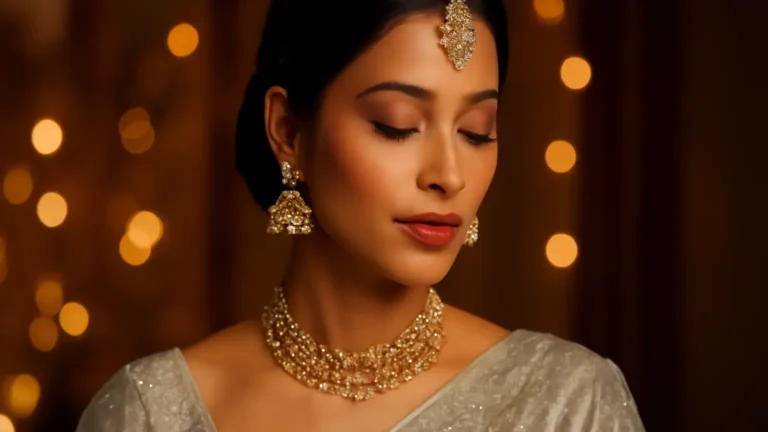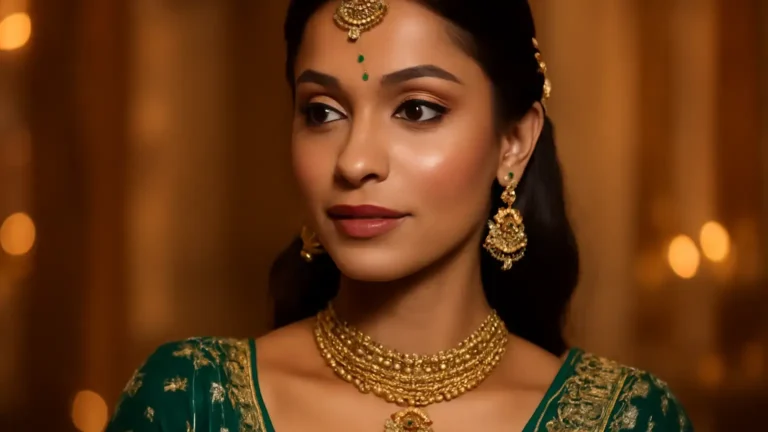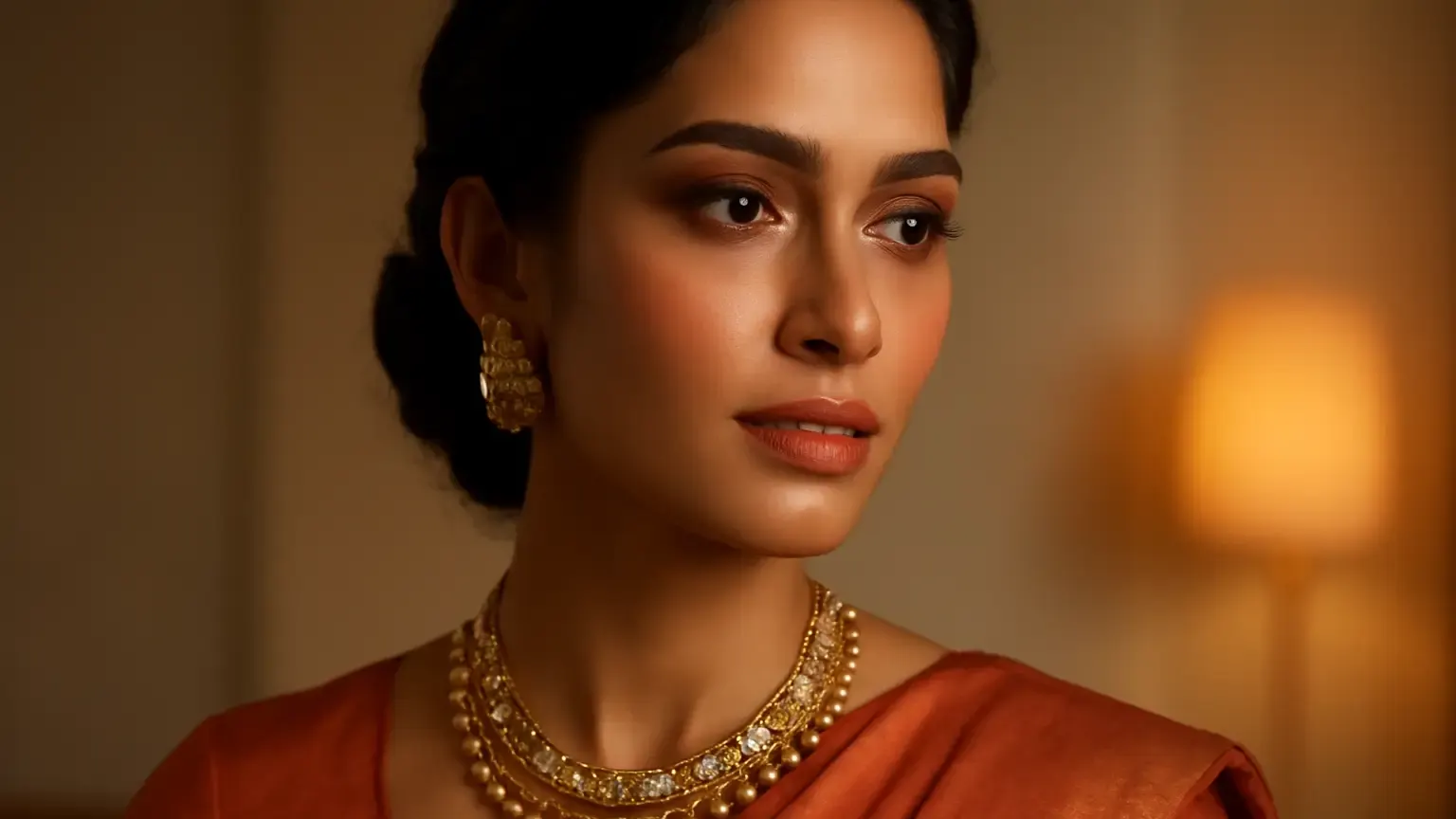
The quickest answer: choose bronze for coordinated warmth, berry for contrast, terracotta for an earthy finish, or soft neutral for polished daytime balance. This guide to festive makeup for orange outfits helps you decide between all four palettes, then place eye, cheek and lip colour according to your outfit’s undertone, jewellery and event lighting. It is designed for Indian wedding guests and festive hosts wearing an orange lehenga, saree or kurta set.
Orange is a lively festive colour, but it is not one single colour story. A marigold outfit, burnt-orange silk, coral georgette and rust brocade each reflect light differently. The most flattering makeup depends on whether the orange leans yellow, red or pink, as well as the metal in your jewellery and whether you will be photographed in daylight or under warm venue lights.
How to choose festive makeup for orange outfits
Begin with the outfit’s temperature. Yellow-orange shades usually harmonise with warm gold, caramel, bronze and peach. Red-orange clothing can handle rose, berry and neutral brown accents. If the outfit is bright or heavily embellished, a quieter face often looks more intentional; if the fabric is matte and simple, a little sheen on the eyes or cheeks can add occasion-appropriate polish.
Your skin’s undertone is another useful guide. Warm undertones often suit golden bronze, apricot and terracotta. Cool undertones may prefer neutral brown, plum-berry or rose rather than strongly yellow gold. Neutral undertones can move between the four palettes, but should still consider the garment’s undertone.
These principles also make it easier to compare orange dress makeup ideas. For Indian festive makeup or wedding guest makeup, the most wearable approach is usually one defined feature rather than intense colour on the eyes, cheeks and lips at the same time. A warm-toned makeup look can be beautiful, but it should still have contrast and variation in texture.
- For yellow-orange clothing: try bronze or terracotta, with brown liner instead of very harsh black.
- For red-orange clothing: berry or soft neutral can prevent the look from becoming too monochromatic.
- For neon or very bright orange: keep the eyes and cheeks restrained and let one lip shade provide definition.
- For rust, paprika or burnt orange: terracotta and bronze create a rich, cohesive finish.
Palette 1: bronze for a coordinated glow
Bronze is the easiest choice when you want an orange and gold makeup effect. It looks especially suitable with gold embroidery, kundan jewellery, temple jewellery and evening celebrations. The risk is excessive warmth: orange clothing, orange-toned bronzer and copper shimmer can blur together and make the face look flat.
Placement guide
- Eyes: Sweep a matte caramel or medium brown through the crease, press bronze shimmer onto the centre of the lid, and deepen only the outer corner. A thin brown wing or softly smudged kohl keeps the look defined.
- Cheeks: Apply a muted peach-bronze blush high on the cheek, then place a restrained golden highlighter on the tops rather than across the entire cheek.
- Lips: Choose peach-brown, caramel nude or warm rose. For a formal evening, a deeper cinnamon lip can replace shimmer on the eyes.
Bronze is most reliable for medium-to-deep orange outfits and warm undertones. In direct sunlight, reduce the metallic finish because strong shimmer can look more reflective than intended in photographs.
Palette 2: berry for polished contrast
Berry is the strongest contrast option and a thoughtful answer to the question, “what makeup goes with an orange lehenga?” Plum, raspberry, cranberry and wine shades bring a cooler counterpoint to warm fabric. This combination suits red-orange outfits, evening functions and jewellery that includes silver, white gold or mixed metals.
Placement guide
- Eyes: Use a taupe or soft brown transition shade, then add a small amount of muted berry at the outer corner or along the lower lash line. Keep the berry diffused rather than extending it all around the eye.
- Cheeks: Pick a sheer rose or raspberry blush and blend it towards the temples. A neutral champagne highlighter prevents the cheeks from becoming too red.
- Lips: A berry lipstick with orange outfit styling can be the focal point. Choose a stain for a daytime ceremony, satin for a reception, or a deeper wine tone for night. Keep the lip edges neat and the rest of the complexion fresh.
Berry is particularly useful when orange clothing makes your complexion appear overly yellow. If the outfit has bright pink or red embroidery, select a berry shade that echoes one small detail instead of introducing a competing colour.
Palette 3: terracotta for earthy warmth
Terracotta creates an editorial, grounded result. It is less shiny than bronze and more tonal than berry, making it a good choice for handloom sarees, cotton-silk outfits, rust lehengas and daytime mehendi or puja events. This is also a natural fit for makeup for warm undertones, provided the terracotta is not too close to the exact orange of the outfit.
Placement guide
- Eyes: Blend a matte terracotta or warm cinnamon shade into the crease, place a soft copper on the lid if desired, and finish with dark brown mascara. A short flick keeps the eyes lifted without making the look heavy.
- Cheeks: Tap terracotta blush slightly back from the apples of the cheeks and blend upwards. This placement adds structure while avoiding a broad red-orange patch in the centre of the face.
- Lips: Rust, cinnamon, brick rose or terracotta nude all work. Use a lip liner close to the lipstick colour if the formula is bold, especially for long ceremonies and meals.
Because this palette repeats warm pigment in three areas, vary the intensity: matte eyes, softly flushed cheeks and a defined lip usually look more modern than equally strong terracotta everywhere.
Palette 4: soft neutral for an elegant daytime finish
Soft neutral makeup is the safest route when the outfit is highly embellished, the orange is very saturated, or the event takes place in bright daylight. It also works well for guests who prefer a soft glam makeup look without strong colour on the eyes or lips.
Placement guide
- Eyes: Use ivory or beige on the lid, taupe in the crease and medium brown close to the lash line. Add a small champagne highlight at the inner corner rather than a full metallic lid.
- Cheeks: Choose a neutral peach, soft rose or beige-pink blush. Apply in thin layers so the skin retains a natural finish.
- Lips: Rose nude, pink-brown, muted peach or a sheer caramel balm keeps the face balanced. If the neutral lip washes you out, deepen it by one shade rather than adding more bronzer.
Soft neutral is usually more forgiving for daylight makeup, where overly warm products can appear orange. It is also a useful choice with statement jhumkas or a heavily detailed dupatta because the accessories remain the visual focus.
Match the palette to jewellery and lighting
Jewellery makeup pairing should support both the outfit and the light around you. Gold jewellery naturally reinforces bronze and terracotta, but it does not rule out berry; a warm gold necklace with a berry lip can create a deliberate, high-contrast finish. Silver or white-gold pieces make berry and soft neutral feel especially natural. With mixed metals, choose neutral eyes and allow either the cheeks or lips—not both—to carry colour.
Lighting changes how much product you need for an evening event makeup look or a daytime ceremony:
- Daylight: Use less highlighter, blend blush carefully and check the face near a window before leaving. Daylight exposes unblended edges.
- Warm indoor lighting: Avoid building too much orange or yellow pigment. A neutral brown eye and rose lip can restore balance.
- Flash photography: Keep base products thin and set the centre of the face lightly. Avoid untested reflective products that may appear stark in photographs.
- Stage or very dim lighting: Add definition at the lash line and slightly deepen the lip, because subtle daytime colour may disappear from a distance.
A practical routine for an orange outfit makeup look in India
- Prepare moisturised skin and allow skincare to settle before applying base makeup.
- Use a light, even base and spot-conceal only where needed. A full, thick layer can compete with festive fabric.
- Choose one hero feature: metallic bronze eyes, berry lips, terracotta cheeks or softly defined neutral eyes.
- Apply eyeshadow before complexion if using loose shimmer or deep pigment; otherwise complete the base first and protect the under-eye area with a tissue while blending.
- Place blush after checking the garment in the same light in which you will attend the event.
- Line and fill the lips if you need longer wear, then blot once and add a second thin layer.
- Take a quick photograph with and without flash. This reveals excess shine, uneven blush and a lip colour that looks different from the mirror view.
Common mistakes to avoid
The most common mistake is matching every product to the outfit. Orange eyeshadow, orange blush and orange lipstick may look attractive in separate swatches but become visually crowded when worn together. Another mistake is choosing a foundation or concealer that is too warm to “match” the clothing; base makeup should match the skin, not the lehenga.
Do not skip blending around the hairline and jaw, particularly when wearing a bright colour that draws attention to the face. Finally, test the complete combination before the event. Lipstick, jewellery and lighting can change the perceived undertone more than a single product does.
Quick comparison and takeaway
| Palette | Best for | Jewellery | Lighting |
|---|---|---|---|
| Bronze | Warm, coordinated glamour | Gold, kundan | Evening |
| Berry | Cool contrast and statement lips | Silver or mixed metal | Evening and photography |
| Terracotta | Earthy, tonal sophistication | Gold, antique metal | Day to evening |
| Soft neutral | Balanced daytime polish | Statement or mixed jewellery | Bright daylight |
For the most dependable festive makeup for orange outfits, first identify whether the garment is yellow-orange, red-orange or rust. Then choose bronze, berry, terracotta or soft neutral according to the undertone, jewellery and light. Keep one feature prominent, place colour deliberately on the eyes, cheeks and lips, and let the outfit remain part of the finished composition.
Products that may help with this routine
Choose only what fits your skin, hair or personal needs. Use the links below to view current options on Amazon India.
Frequently Asked Questions
What makeup goes with an orange lehenga?
Bronze suits a warm orange lehenga with gold work, berry creates contrast with red-orange fabric, terracotta complements rust and earthy shades, and soft neutral makeup works best when the lehenga is bright or heavily embellished. Match the intensity of the makeup to the event lighting rather than copying the outfit colour across the whole face.
What is the best lipstick for an orange outfit?
The best lipstick depends on the orange. Choose peach-brown or caramel nude for a bronze look, berry or wine for cool contrast, terracotta or brick rose for an earthy combination, and rose nude or pink-brown for soft neutrals. Test the shade beside the outfit in natural light before committing.
How do I do festive makeup for orange clothes?
Prepare and even the skin lightly, select one of four palettes, define the eyes without overloading them, add blush high on the cheeks, and finish with a lip that matches the palette. For daytime, reduce metallic shine; for evening, add lash-line definition and slightly deepen the lip.
Which eyeshadow suits an orange dress?
Bronze, caramel, taupe, terracotta, soft brown and muted berry can all suit an orange dress. Bronze and terracotta harmonise with yellow-orange or rust clothing, while taupe and berry provide balance when the dress is bright or red-orange. Use a matte transition shade to keep shimmer controlled.
Should I wear berry or bronze makeup with orange?
Choose bronze for a coordinated warm-glamorous result, especially with gold jewellery and evening lighting. Choose berry when you want contrast, wear silver or mixed metals, or feel that the orange makes your complexion look too yellow. Both can work; the garment’s undertone and the event light should decide.