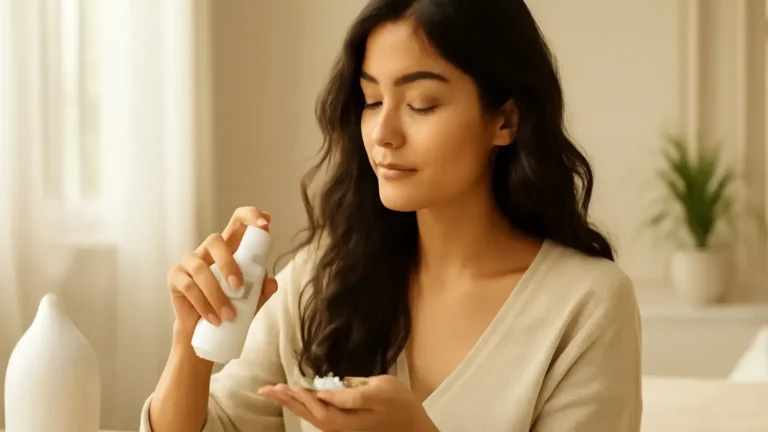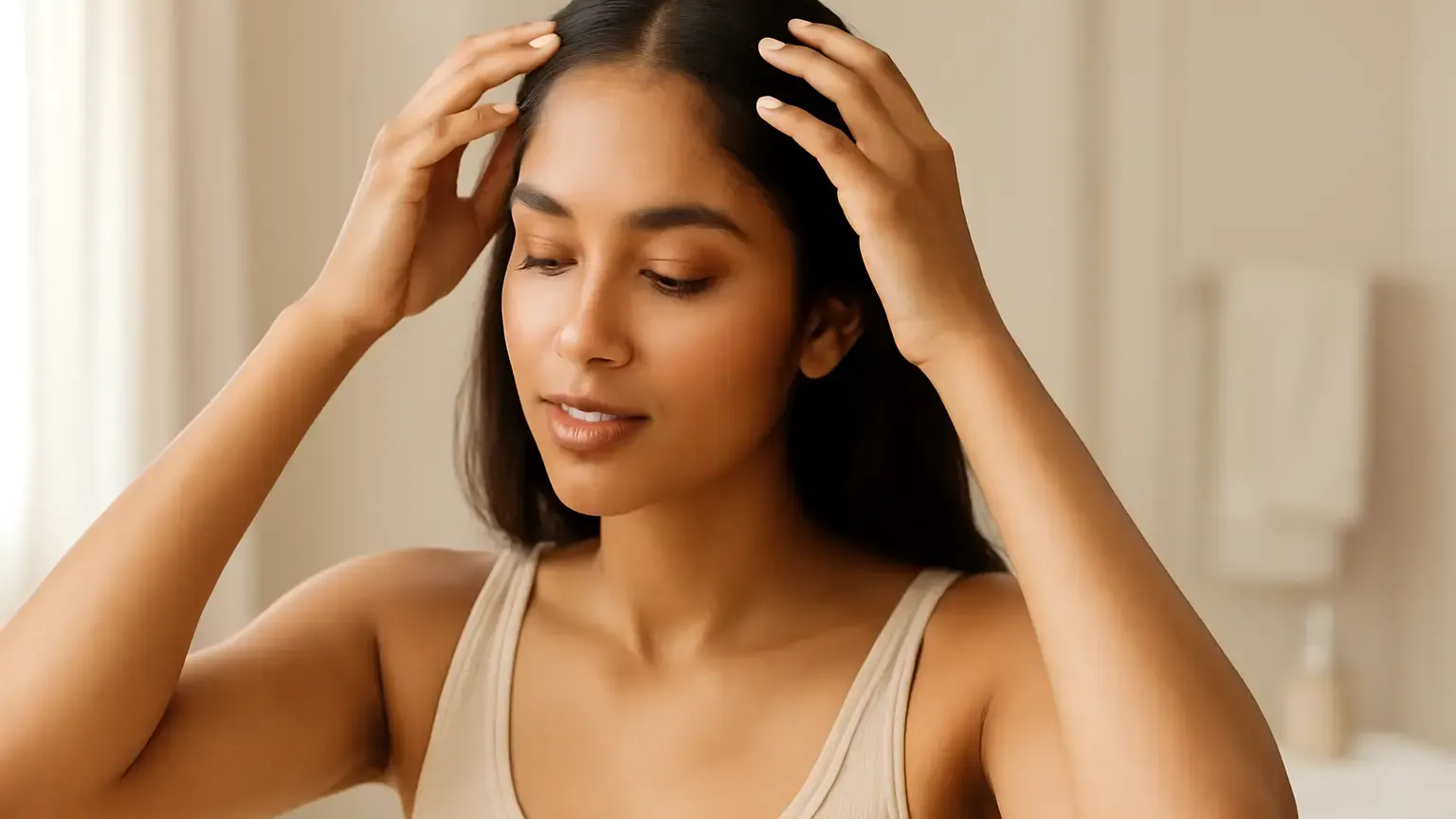
These hair care tips for scalp massage are for anyone who wants a calmer, more comfortable routine without tugging at the roots. Use the soft pads of your fingers, not your nails; begin with light pressure; and keep the session to a few minutes. You can massage a dry scalp or use a small amount of oil before washing, but pain, burning, marked redness or worsening irritation is a clear signal to stop rather than continue.
Scalp massage is a simple self-care step, but more force does not make it more effective. The aim is to move the skin gently over the skull, encourage relaxation and distribute a small amount of pre-wash product when needed. It should not feel like scratching, scrubbing or pulling the hair.
What a scalp massage should feel like
A comfortable massage feels warm, light and controlled. You may notice mild movement in the scalp and a sense of scalp tension relief, but you should not feel sharp pain, stinging, burning or persistent tenderness afterwards. If your scalp feels sore before you begin, treat that as a reason to use extra caution—or skip the massage.
The most useful scalp massage benefits are practical: relaxation, a pleasant pre-wash ritual and easier spreading of a small amount of oil or cleanser. Massage is not a guaranteed hair-growth treatment, and it should not be used to push through a scalp problem that needs professional attention.
Hair care tips for scalp massage: the right finger placement
Good finger placement reduces friction and prevents accidental scratching. Follow these steps:
- Wash and dry your hands. Clean hands help keep excess dirt and product away from the scalp.
- Use the pads of your fingers. Place the soft pads of your index, middle and ring fingers on the scalp. Keep your nails short and lifted away from the skin.
- Work in small sections. Start at the hairline, move to the temples, then cover the crown, sides and back of the head.
- Move the skin, not the hair. Make small, slow circles while keeping your fingers in contact with the same area. Avoid dragging strands from the roots.
- Use both hands where comfortable. This helps distribute pressure instead of concentrating force in one small spot.
For a simple scalp massage technique, imagine drawing circles about the size of a coin. Keep the movement slow enough that you can notice any discomfort immediately.
How much pressure should you use?
The best scalp massage pressure is light to moderate: enough to move the scalp slightly, never enough to create pain or leave the skin feeling scraped. Begin with the pressure you would use to gently wash your face. If the area feels comfortable after several seconds, you may increase pressure only a little.
Pressure should be reduced around the hairline, behind the ears and anywhere that feels tender. Do not use vigorous rubbing to lift flakes, remove buildup or “wake up” the roots. That approach can increase friction and may contribute to hair breakage, especially when hair is wet or already fragile.
A quick pressure check
- Can you speak normally and relax your jaw while massaging?
- Does the skin feel comfortable rather than hot or raw?
- Is there no pulling at the roots?
- Does the area look unchanged after you stop?
If the answer to any of these is no, lighten the touch or end the session.
How long should you massage your scalp?
For most people, scalp massage duration can be three to five minutes. A shorter one- to two-minute session is enough if your scalp is sensitive or you are trying the routine for the first time. Extending the massage does not automatically improve the result; long sessions can simply add friction and leave the scalp uncomfortable.
Try a few minutes two or three times a week, or include a brief massage in your hair wash routine. Consistency and comfort matter more than intensity. Stop as soon as the area feels irritated, even if your planned time is not complete.
Oil-free and pre-wash options
You do not need oil for an effective massage. A clean, dry scalp is the simplest oil-free option and suits people who dislike residue, wash their hair frequently or find oils heavy. Massage for a few minutes with clean fingertips, then continue with your usual routine.
For a pre-wash scalp massage, apply only a small amount of a product you already know your scalp tolerates. Warm a few drops between your fingertips rather than pouring oil directly onto the head. Part the hair loosely, touch the product to the scalp in small areas and massage gently. Leave it on only as long as your normal pre-wash routine allows, then cleanse thoroughly.
A hair oil massage may feel soothing for some people, while others find oil increases heaviness, itching or buildup. It is optional, not a requirement. Avoid adding several new products at once because it becomes difficult to identify what caused a reaction.
Dry scalp, sensitive scalp or oily roots: adjust the method
For dry scalp care
Keep the massage brief and gentle. Do not scratch flakes loose with your nails or use rough tools. Choose a mild cleansing routine and avoid assuming that every flake needs an oil treatment. If dryness is persistent or uncomfortable, consider asking a dermatologist for personalised guidance.
For scalp sensitivity
Start on a small, comfortable area using no product. Use very light pressure for one minute, then check how the skin feels. Skip essential oils, fragranced blends or strong exfoliating products if your scalp reacts easily. Scalp exfoliation is not necessary for everyone, and vigorous exfoliation can make sensitivity worse.
For oily roots
An oil-free massage may be the better choice. Keep your hands clean, avoid repeatedly touching the scalp throughout the day and wash according to your hair’s needs. A massage should not be used to compensate for a cleanser that does not suit you.
When should you stop massaging your scalp?
Stop immediately if you notice pain, burning, strong itching, bleeding, increasing redness, swelling, oozing or a sudden worsening of irritation. Also stop if the scalp feels noticeably sore after the session. Do not continue simply because you have not reached the planned duration.
Do not massage over broken skin, a fresh sunburn, a tender bump or an area that appears inflamed. Avoid vigorous massage when there is unexplained hair shedding or significant scalp discomfort. Persistent, severe or recurring symptoms deserve advice from a dermatologist or doctor, particularly if they affect sleep or daily activities. General self-care should complement—not replace—professional care or prescribed treatment.
Common mistakes that make massage less comfortable
- Using the nails: Nails can scratch the skin and create unnecessary friction.
- Pulling the hair: Sliding fingers through tightly held sections can tug at the roots.
- Pressing hard immediately: Begin softly and adjust only if the scalp remains comfortable.
- Massaging for too long: More time is not a substitute for a better technique.
- Applying too much oil: Excess product can make washing difficult and may not suit every scalp.
- Ignoring warning signs: Pain and worsening redness are stop signals, not signs that the massage is working.
A practical scalp massage hair care routine
Use this five-minute framework when your scalp feels comfortable:
- Clean your hands and detangle only the lengths if needed; do not pull at knots near the roots.
- Choose dry massage or a few drops of a familiar pre-wash product.
- Place your finger pads at the front hairline and make slow circles for about 30 seconds.
- Move across the temples, crown, sides and back, using light-to-moderate pressure.
- Finish with a gentle sweep of the hands, then stop. If using oil, wash according to your normal schedule.
This routine is suitable for adults who want a relaxing self-care step and can comfortably touch their scalp. It may need modification for very sensitive skin, recent scalp procedures or any area that is painful or damaged.
Concise takeaway
The safest how to massage scalp for hair care approach is simple: use clean finger pads, keep nails away, move the skin gently, massage for around three to five minutes and choose oil-free or pre-wash care according to your scalp. Pain, burning, marked redness or inflammation means stop—not press harder. These hair care tips for scalp massage are most useful when comfort remains the priority.
FAQs
How do you massage your scalp for hair care without hurting it?
Use the soft pads of clean fingers, keep your nails off the skin and make small, slow circles. Start with light pressure and avoid pulling the hair. Stop if you feel pain, burning, strong itching or increasing redness.
How long should you massage your scalp?
Three to five minutes is generally enough for a comfortable routine. Begin with one or two minutes if your scalp is sensitive. Longer sessions are not automatically better and may add friction.
Can you massage your scalp without oil?
Yes. An oil-free massage on a clean, dry scalp is a practical option for people who dislike residue, have oily roots or wash their hair often. Oil is optional, not essential.
Should you massage an irritated scalp?
No. Avoid massaging areas that are painful, inflamed, broken, swollen or increasingly red. Persistent or severe symptoms should be discussed with a dermatologist or doctor rather than managed through stronger massage.
Is scalp massage good for dry scalp?
It may feel relaxing when done gently, but scratching or vigorous rubbing can worsen discomfort. Keep the session brief, avoid rough exfoliation and choose products that your scalp already tolerates.
Products that may help with this routine
Choose only what fits your skin, hair or personal needs. Use the links below to view current options on Amazon India.
Frequently Asked Questions
How do you massage your scalp for hair care without hurting it?
Use the soft pads of clean fingers, keep your nails off the skin and make small, slow circles. Start with light pressure and avoid pulling the hair. Stop if you feel pain, burning, strong itching or increasing redness.
How long should you massage your scalp?
Three to five minutes is generally enough for a comfortable routine. Begin with one or two minutes if your scalp is sensitive. Longer sessions are not automatically better and may add friction.
Can you massage your scalp without oil?
Yes. An oil-free massage on a clean, dry scalp is a practical option for people who dislike residue, have oily roots or wash their hair often. Oil is optional, not essential.
Should you massage an irritated scalp?
No. Avoid massaging areas that are painful, inflamed, broken, swollen or increasingly red. Persistent or severe symptoms should be discussed with a dermatologist or doctor rather than managed through stronger massage.
Is scalp massage good for dry scalp?
It may feel relaxing when done gently, but scratching or vigorous rubbing can worsen discomfort. Keep the session brief, avoid rough exfoliation and choose products that your scalp already tolerates.