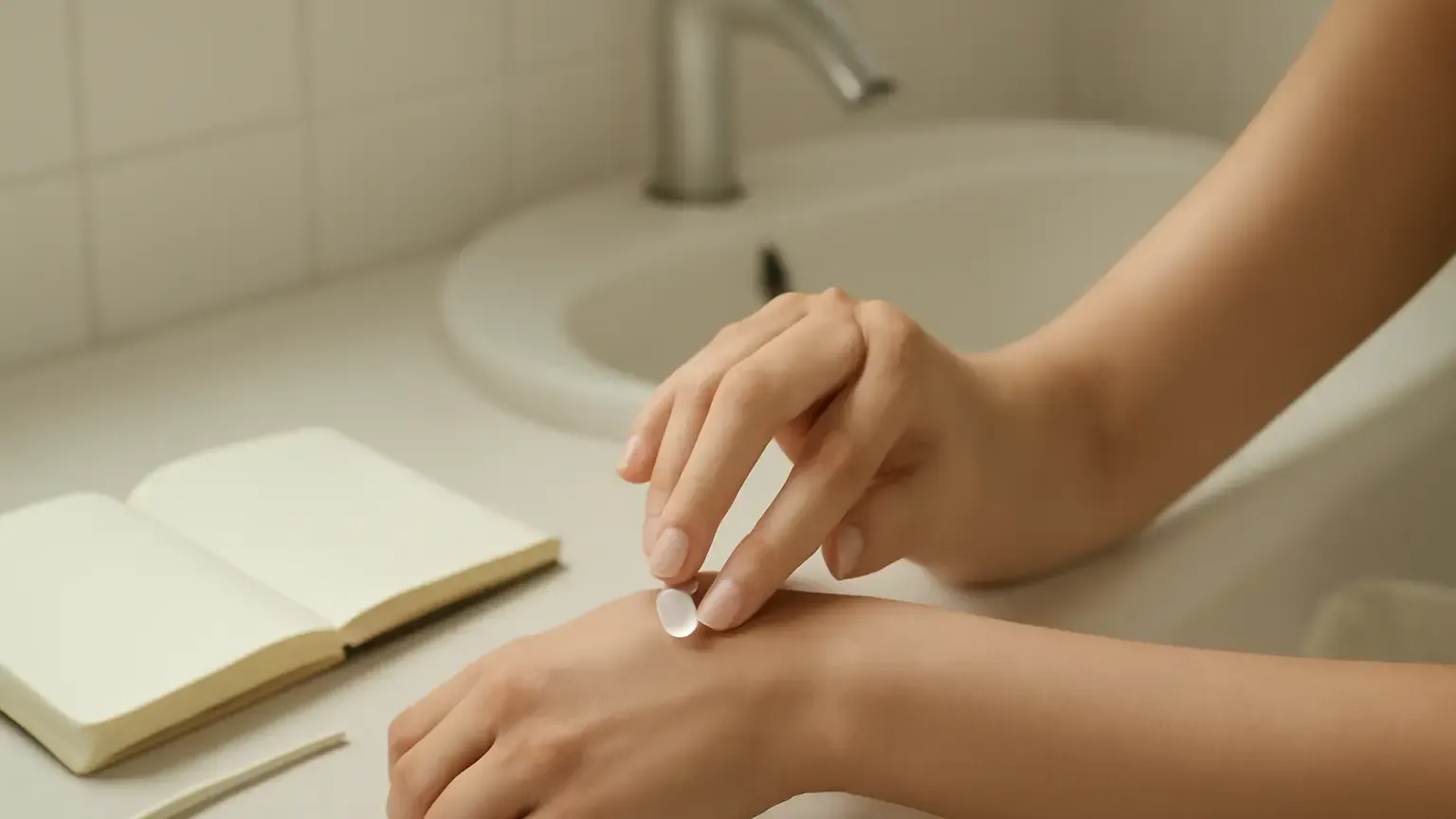
These skin care tips for patch testing are for anyone adding a new cleanser, serum, moisturiser, sunscreen or treatment—especially people with sensitive or reactive skin. Apply a small amount to one controlled area, introduce only one new product at a time, and observe for at least 24–48 hours, longer for leave-on formulas when practical. Stop if you develop marked burning, swelling, hives, blistering or worsening discomfort, and seek medical advice for severe or persistent symptoms.
What a skincare patch test can—and cannot—tell you
A patch test is a cautious, small-area trial of a cosmetic product before you apply it more widely. It can help you notice early irritation or a possible sensitivity to a formula while limiting the amount of skin exposed. It is particularly useful when trying products containing active ingredients, fragrance, essential oils, exfoliants or stronger treatment formulas.
However, a home test is not a medical allergy test and cannot guarantee that your face will never react. Facial skin may be more delicate than the test area, and a product used repeatedly can cause a delayed product reaction. A patch test also does not predict whether a product will clog pores or suit your personal skincare goals.
Think of it as a risk-reduction step, not a pass certificate. Read the product label first, follow its directions and keep the rest of your routine familiar while you test.
Where to patch test skincare products
The best area is small, easy to observe and reasonably similar to the skin where you plan to use the product. These are practical options:
- Inner forearm patch test: This is convenient, discreet and easy to monitor. It works well for most creams, lotions and serums.
- Behind the ear test: The skin behind the ear is a useful discreet area for a small amount of a leave-on product. Avoid applying into the ear canal.
- Along the jawline: This is closer to facial skin, but it is less discreet. It may be a sensible choice for facial products if you can observe the area without makeup covering it.
Use clean, dry skin and select one area rather than several. Apply a thin amount over a small patch, roughly the size of a coin, unless the label gives different instructions. Keep the product away from broken, freshly shaved, sunburned or already irritated skin, because that can make the result harder to interpret.
How to patch test skin care step by step
1. Check the formula and your routine
Look at the ingredient list and instructions before applying anything. If you are testing a serum with retinol, an exfoliating acid or concentrated vitamin C serum, note the recommended frequency and any warnings. Do not begin several new active ingredients during the same week; if irritation appears, you will not know which product caused it.
2. Apply a small amount
Clean the chosen test area with your usual gentle cleanser, let it dry, then apply a small amount of the product. Do not rub vigorously or cover the patch with a dressing unless the manufacturer specifically instructs you to do so. For a rinse-off product, leave it on only for the stated time and rinse. For a leave-on product, leave it as directed.
3. Record what you notice
Write down the product name, date and test location. Check the area after several minutes, later the same day and the following day. Note sensations such as stinging, warmth, tightness, itching or burning, as well as visible redness, bumps or swelling. A brief mild tingle is not automatically proof that a product is working; discomfort is a reason to pay attention.
4. Introduce the product slowly
If the small-area test remains comfortable, use the product on a limited facial area before making it part of your full routine. With a potent treatment, begin less often than the maximum frequency if the label permits. Keep other routine steps simple: a gentle cleanser, a plain moisturiser and daytime sun protection can make changes easier to track.
How long should you observe a patch test?
For many cosmetic products, observe the test area for at least 24–48 hours. A leave-on product can be monitored for several days, and some people prefer repeating a small application over up to a week when the product is important to their routine. This is not a guarantee against a delayed reaction, but it gives you more information than checking after only five minutes.
Timing also depends on the formula:
- Cleanser: Test as directed, because it is removed quickly. Watch for immediate stinging and later dryness or redness.
- Moisturiser or sunscreen: Use a small patch and observe for immediate discomfort and changes over the next couple of days.
- Retinol or exfoliating acids: Give the product extra caution. Irritation may build with repeated use rather than appearing after the first application.
- Makeup: Test foundation, concealer or eye products separately, particularly if you have previously reacted to cosmetics.
There is no universal home-testing schedule for every ingredient. The product directions take priority, and a dermatologist can advise you if you have a history of significant reactions.
When to stop using a product
Remove the product and do not continue the test if you notice persistent or increasing burning, itching, redness, rash-like bumps, marked dryness, swelling or tenderness. A strong reaction is not something to “push through” in the hope that your skin will adjust.
Seek prompt medical advice for facial or eye swelling, widespread hives, blistering, significant pain, breathing difficulty or symptoms that are severe or rapidly worsening. If a less severe reaction does not settle after you stop the product, a doctor or dermatologist can help assess it. Terms such as contact dermatitis are medical descriptions, not a diagnosis you should make from an online checklist.
For a mild cosmetic reaction, gently remove the product, avoid adding other new products and keep your routine uncomplicated. Do not apply the same formula again to “confirm” the result if the first response was pronounced.
Patch testing for sensitive skin and active ingredients
A sensitive skin routine benefits from fewer changes at once. Choose simple, well-labelled products and avoid testing a new exfoliant, retinoid, fragranced mask and sunscreen all together. A fragrance-free skincare option may reduce exposure to one common source of irritation, but “fragrance-free” does not mean every person will tolerate the product.
For retinol beginners, patch testing is only one part of a cautious introduction. Use a small quantity at the recommended frequency, avoid applying it to the corners of the nose and eyes, and watch for cumulative dryness or peeling. Do not combine it immediately with several exfoliating acids.
With a vitamin C serum, check the label for usage instructions and test the formula on its own. Some vitamin C products are acidic and may sting, particularly when the skin barrier is already dry or irritated. A product that causes significant discomfort is not necessarily unsuitable forever, but it is not appropriate to keep using without professional guidance.
When testing exfoliating acids, never apply them to sunburned, cracked or recently waxed skin. Keep sun protection in your daytime routine and follow the stated use instructions. More frequent application does not mean faster or better results.
Common patch-testing mistakes
- Testing too many products together: This makes it difficult to identify the cause of a reaction.
- Using a large amount: A small, controlled application is enough for an initial check.
- Testing on damaged skin: Irritated skin can react to products it might otherwise tolerate.
- Checking only for immediate redness: Dryness, itching or bumps can appear later.
- Assuming natural means risk-free: Botanical extracts and essential oils can still irritate some users.
- Ignoring the rest of the routine: A new cleanser, scrub or active used at the same time can confuse the result.
- Using a passed test as permission to overuse: Tolerance depends on amount, frequency and the condition of your skin barrier.
A simple decision guide before full use
Proceed gradually when the test area remains comfortable, the product directions are clear and you have not added another new formula.
Pause and reassess when there is mild but persistent tightness, dryness, stinging or a few new bumps. Simplify your routine and do not increase frequency until the skin feels settled.
Stop and seek advice when there is swelling, blistering, widespread hives, severe burning, eye involvement or symptoms that continue after discontinuation.
These skin care tips for patch testing are most useful when paired with patience: one product, one test area, enough observation time and a clear stopping point. A small test can reduce unnecessary exposure, but it cannot replace medical assessment for repeated or serious reactions.
Key takeaway
Apply a small amount to the inner forearm, behind the ear or along the jawline, observe for at least 24–48 hours, and introduce only one new product at a time. Stop for meaningful discomfort or visible inflammation, and contact a dermatologist or doctor when symptoms are severe, persistent or concerning. Good patch testing protects your routine without pretending to predict every possible response.
Products that may help with this routine
Choose only what fits your skin, hair or personal needs. Use the links below to view current options on Amazon India.
Frequently Asked Questions
Where to patch test skincare products?
Use a small area on the inner forearm, behind the ear or along the jawline. Choose clean, intact skin that is easy to observe, and avoid broken, sunburned or already irritated areas.
How long to patch test a new skincare product?
Observe the area for at least 24–48 hours. Leave-on products, especially active treatments, may be monitored for several days or tested repeatedly for up to a week when practical and consistent with the label.
How to patch test retinol for sensitive skin?
Apply a small amount to clean skin on the inner forearm or behind the ear, observe it for at least 24–48 hours, then introduce retinol gradually and infrequently if there is no reaction. Do not test it on irritated or damaged skin.
Can I patch test multiple skincare products at once?
It is better not to. Test one new product at a time so you can identify the likely cause if redness, itching, dryness or another reaction appears.
What to do if a skincare patch test causes redness?
Remove the product and stop the test. Keep your routine simple and avoid reapplying the formula to confirm the reaction. Seek medical advice if redness is severe, spreading, persistent or accompanied by swelling, blistering or breathing difficulty.
How to patch test exfoliating acids safely?
Test a small amount on intact skin, follow the product directions and observe for delayed irritation. Do not use the acid on sunburned, cracked or recently waxed skin, and avoid introducing other strong actives at the same time.



