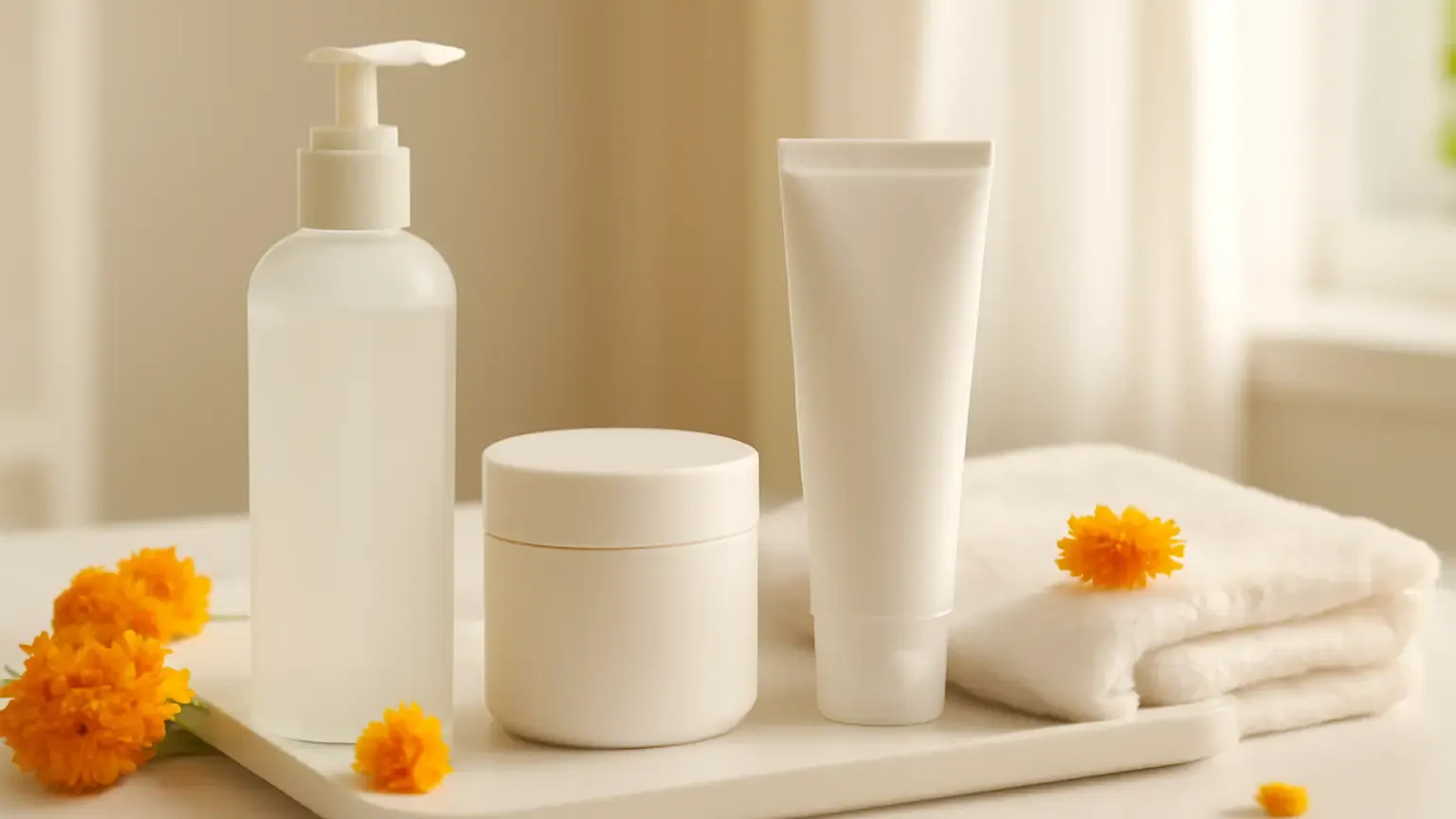
A skin care routine for sensitive skin should begin with three dependable steps: a gentle cleanser, a plain moisturiser and daily sunscreen. This approach suits people who notice stinging, tightness or occasional redness, including those preparing for festive makeup in India. Keep the base steady for two weeks, then introduce only one optional product at a time so you can identify what your skin accepts and avoid turning event preparation into an irritation experiment.
Sensitive skin usually benefits from fewer variables, not a longer shelf of products. The aim is to cleanse away sweat, sunscreen and everyday grime without leaving the face tight; moisturise to support the skin barrier; and protect exposed skin from ultraviolet (UV) light. This three-step foundation is practical in India, where heat, humidity, dust, air-conditioning and strong sunlight can all affect comfort.
The three reliable steps in a skin care routine for sensitive skin
1. Cleanse without a tight, squeaky finish
Use a sensitive skin cleanser that is mild, fragrance-free where possible, and easy to rinse. A low-lather cream, lotion or gentle gel texture can work well; the best choice depends on how much sunscreen, makeup and oil you need to remove. Apply it with clean fingertips, use lukewarm water and pat dry rather than rubbing.
In the morning, some people may need only a water rinse if their skin feels comfortable and they cleansed thoroughly at night. In the evening, cleanse to remove sunscreen, pollution and makeup. If heavy or water-resistant makeup is involved, remove it gently first and then cleanse, rather than scrubbing the same area repeatedly.
2. Moisturise while skin is slightly damp
A fragrance-free moisturiser helps reduce moisture loss and supports a more comfortable skin barrier. Look for a simple formula containing familiar humectants or emollients such as glycerin, squalane, ceramides or colloidal oatmeal. You do not need every ingredient in one product; a short ingredient list can make it easier to work out what suits you.
Choose a light lotion or gel-cream if your skin feels oily in humid weather, and a richer cream if it feels rough, tight or dry, especially during cooler months or in air-conditioned rooms. “Non-comedogenic skincare” may be a useful preference for people prone to clogged pores, but the label is not a guarantee that every formula will suit every face.
3. Finish with broad-spectrum sunscreen
Apply a broad-spectrum sunscreen every morning to exposed skin, including the face, ears and neck. Choose a texture you can apply generously and reapply when outdoors, sweating or wiping your face. A sunscreen that feels comfortable is more useful than one you avoid because it pills, stings or leaves you reluctant to use enough.
If chemical sunscreen filters feel uncomfortable, a mineral sunscreen for sensitive skin containing zinc oxide or titanium dioxide may be worth comparing. However, “mineral” does not automatically mean irritation-free, so patch test the actual product. Tinted options can help reduce a visible white cast, but shade and finish are personal decisions.
How to build a minimal skincare routine before a festival
Festive skincare preparation should begin at least a few weeks before an important event, not the night before. Keep the morning routine simple:
- Rinse or cleanse gently, depending on how your skin feels.
- Apply moisturiser, using a thinner layer if makeup tends to slide in humid weather.
- Use sunscreen and allow it to settle before makeup.
At night, remove makeup carefully, cleanse, moisturise and stop there unless you are already confident with another product. This minimal skincare routine gives you a stable baseline. It also makes it easier to distinguish a reaction to new makeup from a reaction to a new serum, mask or exfoliant.
How to introduce optional products one at a time
Optional products can include a hydrating toner, serum, face mask, exfoliant or a new makeup primer. Add only one new leave-on product at a time, preferably when you do not have a major event immediately ahead. Use it according to its label and keep the rest of your routine unchanged for several days before deciding whether to continue.
Hydrating toner
A hydrating toner is not essential if your cleanser and moisturiser already leave skin comfortable. If you want to try one, select a simple, alcohol-free formula without a heavy fragrance profile. Apply a small amount with your hands rather than rubbing with cotton, then moisturise.
Vitamin C and other active serums
People often ask, “Can sensitive skin use vitamin C?” Sometimes it can, but tolerance depends on the formula, concentration and the individual. Start with one product, use it infrequently if its instructions allow, and do not introduce it alongside an exfoliant or retinoid. Stop using the new product if persistent burning, swelling or worsening discomfort occurs, and do not experiment immediately before a celebration.
Exfoliants and masks
Exfoliation for sensitive skin should be conservative. Physical scrubs, cleansing brushes and frequent acid use can be too much for easily irritated skin. If you decide to try an exfoliating product, choose one designed for gentle use, follow its directions and leave several days between new additions. A soothing-looking clay, peel or “glow” mask can still be drying or irritating, so treat masks as optional rather than necessary.
How to patch test skincare products
Patch testing skincare is a practical screening step, though it cannot predict every facial reaction. Apply a small amount of the product to a discreet area such as the side of the neck, behind the ear or along the jaw, following the product’s directions. Observe the area over the stated testing period and do not proceed if you notice marked itching, swelling, burning or a rash.
If the product passes a small-area test, introduce it to the face cautiously. A product can still react differently on facial skin, particularly near the eyes or around the corners of the nose. Never test several new products at once, because you will not know which one caused a problem.
Choosing products for Indian weather and festive makeup
For hot and humid conditions, lighter layers may feel more comfortable: a gentle cleanser, a light moisturiser and a non-greasy sunscreen. In dry or cool weather, or in heavily air-conditioned spaces, a richer moisturiser may reduce tightness. Reapply sunscreen when practical if you are outdoors for long periods, and use shade, sunglasses or a hat as additional sun-protection measures.
Before makeup, let moisturiser and sunscreen settle. If foundation pills, try reducing the amount of skincare layered underneath, allow more time between steps or review whether the formulas work together. Do not repeatedly rub the face to fix pilling; that friction can make sensitive skin feel worse.
For makeup removal for sensitive skin, use a gentle remover suitable for the makeup type, especially around the eyes, and avoid pulling at lashes or rubbing the cheeks. Follow with a mild cleanser if needed. A clean, soft cloth can help remove residue, but it should not be used as a scrubbing tool.
Common mistakes to avoid
- Changing everything at once: New cleanser, serum, mask and makeup together make troubleshooting difficult.
- Chasing instant brightness: Strong acids, scrubs and frequent masks are not required for healthy-looking skin.
- Using hot water: Lukewarm water is generally a more comfortable choice for easily irritated skin.
- Skipping moisturiser because of oiliness: Try a lighter texture rather than removing moisturising altogether.
- Applying sunscreen too thinly: Select a wearable formula so you can apply enough and reapply when needed.
- Testing a new product just before an event: Keep festive preparation predictable and introduce changes early.
Who this routine suits—and when to seek advice
This foundation can suit adults who experience occasional tightness, mild sensitivity or discomfort with strongly fragranced products. It is not a diagnosis or a substitute for personalised medical care. If you have persistent redness, significant swelling, painful cracking, severe itching, oozing, eye involvement or repeated reactions, consult a dermatologist or doctor. Do not stop prescribed treatment without speaking with the clinician who recommended it.
Concise takeaway
A dependable skin care routine for sensitive skin is built on a gentle cleanser, a comfortable moisturiser and daily broad-spectrum sunscreen. Keep those three steps consistent, patch test optional additions and add only one product at a time—especially before festive makeup. The best routine is the one your skin can tolerate consistently in your climate and schedule.
Products that may help with this routine
Choose only what fits your skin, hair or personal needs. Use the links below to view current options on Amazon India.
Frequently Asked Questions
How to start a skin care routine for sensitive skin?
Start with a gentle cleanser, a fragrance-free moisturiser and broad-spectrum sunscreen. Use the basic routine consistently before adding optional products, and introduce each new product separately.
What is the best cleanser for sensitive skin in India?
There is no single best cleanser for everyone. Look for a mild, fragrance-free cream, lotion or gentle gel cleanser that removes your sunscreen and grime without leaving tightness, stinging or a squeaky finish.
How often should sensitive skin use sunscreen?
Apply broad-spectrum sunscreen every morning to exposed skin. Reapply when you are outdoors for extended periods, sweating or wiping your face, following the product’s instructions.
Can sensitive skin use vitamin C?
Some people with sensitive skin can use vitamin C, but tolerance varies by formula and concentration. Patch test it, introduce it alone and avoid starting it immediately before an important event.
How to patch test skincare products?
Apply a small amount to a discreet area such as the jaw, neck or behind the ear and observe it according to the product’s directions. Do not use it on the full face if you notice marked itching, swelling, burning or a rash.
What to use before makeup for sensitive skin?
Use a gentle moisturiser followed by sunscreen, allowing each layer to settle before makeup. Keep the layers simple and test any new primer or complexion product well before the event.



