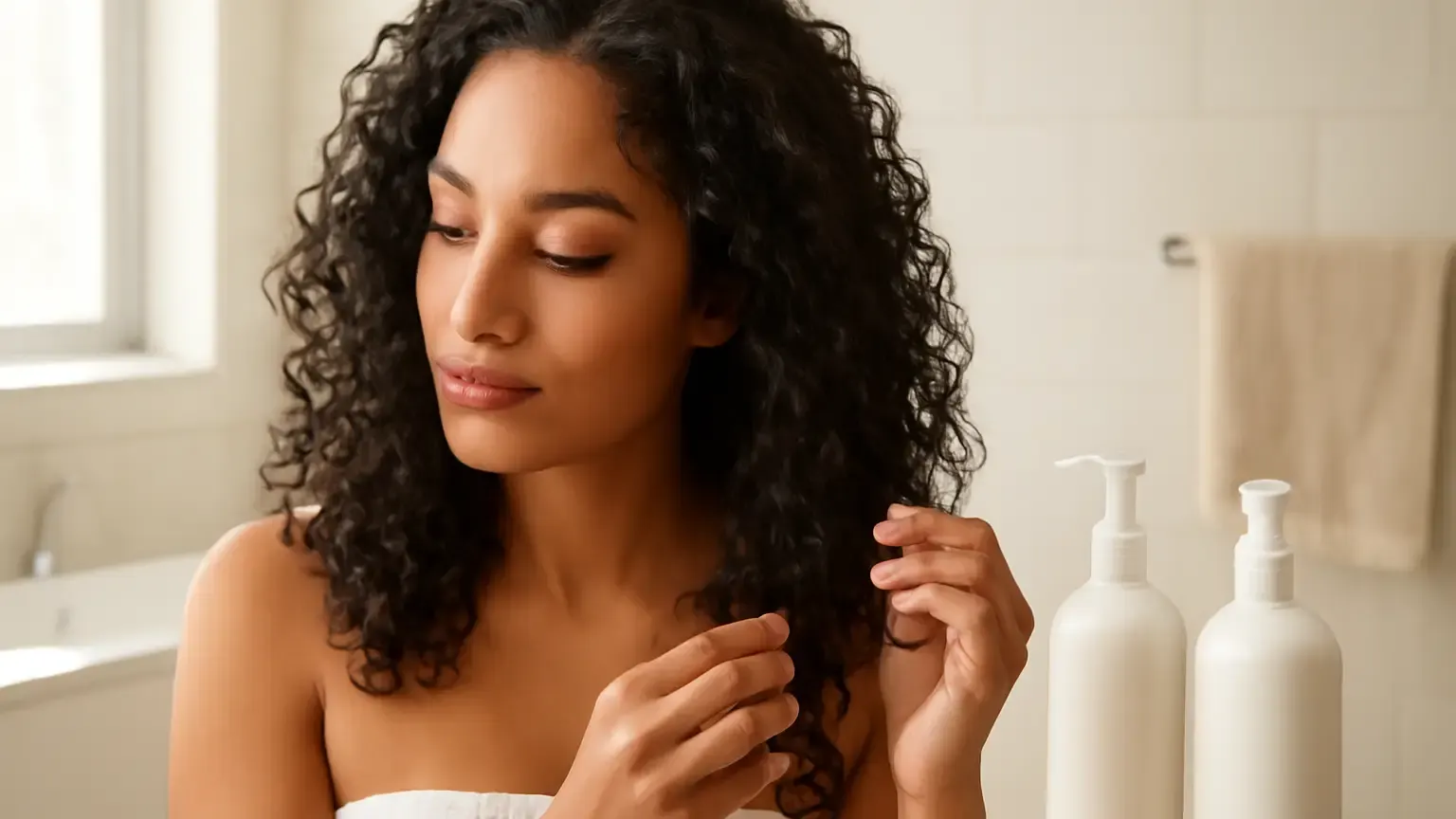
Hair porosity and co-washing are closely linked: low-porosity hair often needs regular shampoo because it can collect residue, while high-porosity curls may enjoy co-washing between deeper cleanses. Medium-porosity hair usually sits between these needs. This guide is for anyone comparing conditioner-led and shampoo-led routines, especially in India’s humid, dusty or hard-water conditions. The practical goal is simple: cleaner scalp, better manageability and enough moisture without leaving hair coated or limp.
Porosity describes how readily the hair cuticle allows water and conditioning ingredients to enter and leave the fibre. It is not the same as curl pattern, thickness or whether hair is naturally dry. A person with straight hair can have high porosity, and tightly curled hair can be low porosity.
Co-washing means cleansing mainly with a cleansing conditioner or co-wash conditioner rather than a traditional shampoo. These formulas generally contain mild cleansing agents, conditioning ingredients and fewer strong detergents than many shampoos. They can make hair feel softer, but they are not automatically the best choice for every scalp or porosity level.
Hair porosity and co-washing: the short answer
Low-porosity hair often benefits from a shampoo-led routine with occasional co-washing, because its tightly compact cuticle can allow conditioners and styling products to sit on the surface. High-porosity hair may benefit from co-washing between shampoo days if it feels rough, tangled or easily dried out. Medium-porosity hair is usually the most flexible and can alternate based on scalp oil, exercise, weather and styling products.
Porosity is only one decision factor. Scalp oiliness, dandruff-like flaking, sweat, pollution, oiling habits and product use also determine how often cleansing is needed. If a routine leaves the scalp itchy, greasy or uncomfortable, a more thorough cleanse may be appropriate regardless of porosity.
How co-washing differs across porosity levels
Low-porosity hair
Low porosity hair has a relatively resistant cuticle, so water and conditioning products may take longer to absorb. It can feel smooth but still seem dry, particularly when heavy creams or oils create a film. Co-washing too frequently may increase buildup on hair, causing dullness, flat roots, stringy curls or a waxy feel.
For this hair type, use a lightweight co-wash only when the scalp is not oily and the lengths need gentle refreshing. Follow it with a light conditioner if necessary rather than layering several rich products. A regular shampoo wash is important, and a clarifying shampoo can be useful occasionally when residue remains after normal washing. Clarifying should not be treated as a daily step, as excessive cleansing may make the lengths feel rough.
Medium-porosity hair
Medium porosity hair generally absorbs and retains water without extreme difficulty. It can often handle a flexible routine: co-wash after a low-sweat week, then use shampoo after heavy styling, oiling or outdoor exposure. This is a suitable starting point for people who are unsure of their porosity, provided they judge the result by scalp comfort and hair behaviour rather than a single porosity test.
If hair feels manageable, bouncy and clean after co-washing, the method may suit part of the routine. If roots become oily or the hair loses volume, alternate with a gentle shampoo. Medium porosity does not mean hair is immune to residue; leave-ins, gels, silicone-rich products and hard water can still affect feel.
High-porosity hair
High porosity hair tends to absorb water quickly but may lose moisture just as quickly. Chemical processing, frequent heat styling, sun exposure and mechanical damage can contribute to a more raised or uneven cuticle. Co-washing may improve slip, reduce friction and make detangling easier between shampoo washes.
However, co-washing is not a substitute for scalp cleansing. If high-porosity hair is oily at the roots, heavily styled or exposed to sweat and dust, use a gentle shampoo. A conditioner-led wash can support moisture retention, but it cannot repair damaged cuticles. A balanced routine may combine shampoo, conditioner, a leave-in product and occasional protein depending on how the hair responds.
Signs your co-wash routine is helping
A well-matched routine should produce observable improvements rather than simply feel moisturising on wash day. Look for:
- Less tugging during detangling and better slip through the lengths.
- Softness without greasy roots or a coated surface.
- More consistent curl definition or smoother ends.
- A comfortable scalp without tightness, excess oil or persistent residue.
- Hair that remains manageable until the next planned wash.
For a curly hair routine, apply the co-wash mainly to the scalp and massage gently with the fingertips. Let the product move through the lengths while rinsing rather than scrubbing the ends. Rinse thoroughly, then use a small amount of conditioner if the lengths still need extra slip. Avoid piling the hair on top of the head, which can increase tangling.
Signs shampoo should take priority
Choose shampoo over co-washing when the scalp feels greasy, there is visible residue, or the hair becomes dull and limp soon after washing. Other signals include a waxy coating, reduced curl formation, frequent scalp sweating, heavy oiling, dry shampoo use or several layers of styling product.
Scalp cleansing should be treated separately from conditioning the lengths. A cleansing conditioner may help remove light sweat and everyday residue, but it may not remove all oils, mineral deposits or styling polymers. In areas with mineral-heavy water, hard water hair care may also require a periodic shampoo designed to address mineral residue. Follow the product directions and avoid overusing strong cleansing formulas.
A mild, sulfate-free shampoo can be a useful middle option for people who find traditional shampoo drying but need more cleansing than a co-wash provides. “Sulfate-free” does not automatically mean perfect for every scalp, so assess the complete formula and the result after rinsing.
How often should you co-wash?
There is no universal schedule based on porosity alone. A practical starting point is to co-wash once between shampoo washes if the hair feels dry but the scalp is comfortable. People with high-porosity, textured or frequently detangled hair may use it more often, while low-porosity hair may need it less often because residue can accumulate quickly.
Wash after activities that create significant sweat or exposure to dust. If you oil the scalp, use styling gels or live in a humid city, a shampoo wash may be more appropriate than extending the interval. In India, heat, monsoon humidity, pollution and hard water can all change how quickly hair feels coated, so seasonal adjustments are sensible.
A simple decision guide for your wash day
- Check the scalp first: if it is oily, sweaty, itchy or visibly coated, start with shampoo.
- Check the lengths: if they are dry or tangled but the scalp is clean, co-washing may provide useful slip.
- Consider recent products: oils, waxes, heavy creams and strong-hold stylers usually call for more thorough cleansing.
- Match the cleanser: choose a lightweight co-wash for gentle refreshment or a mild shampoo when you need clearer removal.
- Review the next day: note softness, volume, scalp comfort and how quickly residue returns.
Keep the rest of the routine simple while testing. Changing the cleanser, mask, oil, leave-in and styling product at the same time makes it difficult to identify what caused heaviness or dryness. The ideal protein moisture balance also depends on the condition of the hair: excessive protein can feel stiff, while too many rich moisturising products can make some hair limp. Introduce one change at a time.
Common co-washing mistakes
- Skipping scalp massage: gently work the cleanser over the scalp instead of applying it only to the ends.
- Using too much product: excess conditioner can be difficult to rinse and may contribute to buildup.
- Assuming co-wash means no shampoo: most routines still need periodic thorough cleansing.
- Ignoring the water: mineral-heavy water can leave a film even when the product is suitable.
- Judging only by immediate softness: hair can feel soft while the roots become increasingly coated over time.
Who should be cautious with co-washing?
Be cautious if you have a very oily scalp, persistent flakes, significant product buildup or irritation after using a particular formula. Fragrance, botanical extracts and preservatives can bother some people, so discontinue a product that causes burning or a new rash. Co-washing is a cosmetic routine, not a treatment for a scalp disorder.
If persistent itching, painful spots, heavy scaling, sudden shedding or concerning scalp changes continue, consult a dermatologist. A professional can assess the issue rather than relying on porosity labels or changing products repeatedly.
Takeaway
The best routine is not determined by porosity alone. Low-porosity hair commonly needs more regular shampoo to prevent coating, high-porosity hair may gain softness and manageability from co-washing between cleanses, and medium-porosity hair can usually alternate. In every case, observe scalp comfort, buildup, softness and styling response. Hair porosity and co-washing work best as a flexible framework—not a rigid rule—for deciding when to condition-cleanse and when to shampoo.
Products that may help with this routine
Choose only what fits your skin, hair or personal needs. Use the links below to view current options on Amazon India.
Frequently Asked Questions
Is co washing good for low porosity hair?
It can be useful occasionally, but low-porosity hair often needs regular shampoo because heavy conditioners and styling products may sit on the surface and cause buildup. Choose a lightweight co-wash and monitor volume, residue and scalp comfort.
Can high porosity hair co wash?
Yes. High-porosity hair may benefit from co-washing between shampoo days because it can improve slip and reduce dryness during detangling. Shampoo is still needed when the scalp is oily or the hair has heavy oil or styling residue.
How often should you co wash by hair porosity?
There is no fixed schedule. Start with occasional co-washing when the lengths feel dry but the scalp is clean. High-porosity hair may tolerate it more often, while low-porosity hair may need less frequent use and more regular shampooing.
Co wash or shampoo for low porosity hair: which is better?
Shampoo is usually the more reliable main cleanser for low-porosity hair because it removes residue more thoroughly. A lightweight co-wash can be used between shampoo washes when the scalp is comfortable and the lengths need extra softness.
Does co washing cause buildup?
It can, especially when the product is rich, the hair is low porosity, or styling products and oils are layered regularly. Flat roots, dullness, waxiness and reduced curl definition are common signs that a more thorough cleanse may be needed.
What is the best co wash for high porosity hair?
Look for a co-wash that provides slip without leaving a heavy film, and choose according to your scalp and styling routine rather than porosity alone. A lightweight formula may suit fine hair, while thicker, drier lengths may prefer more conditioning support.