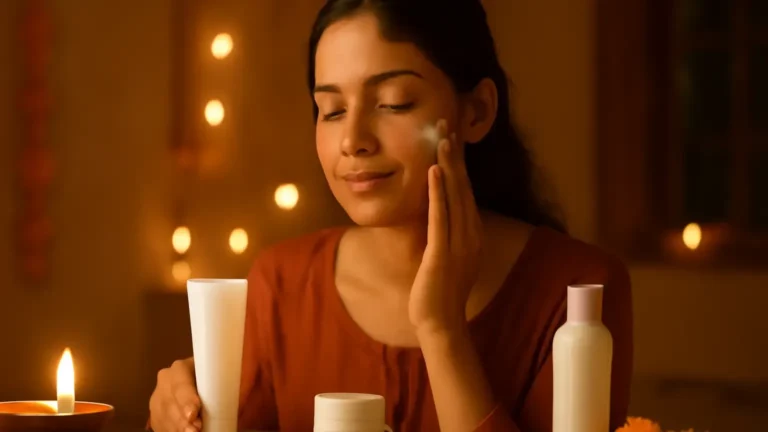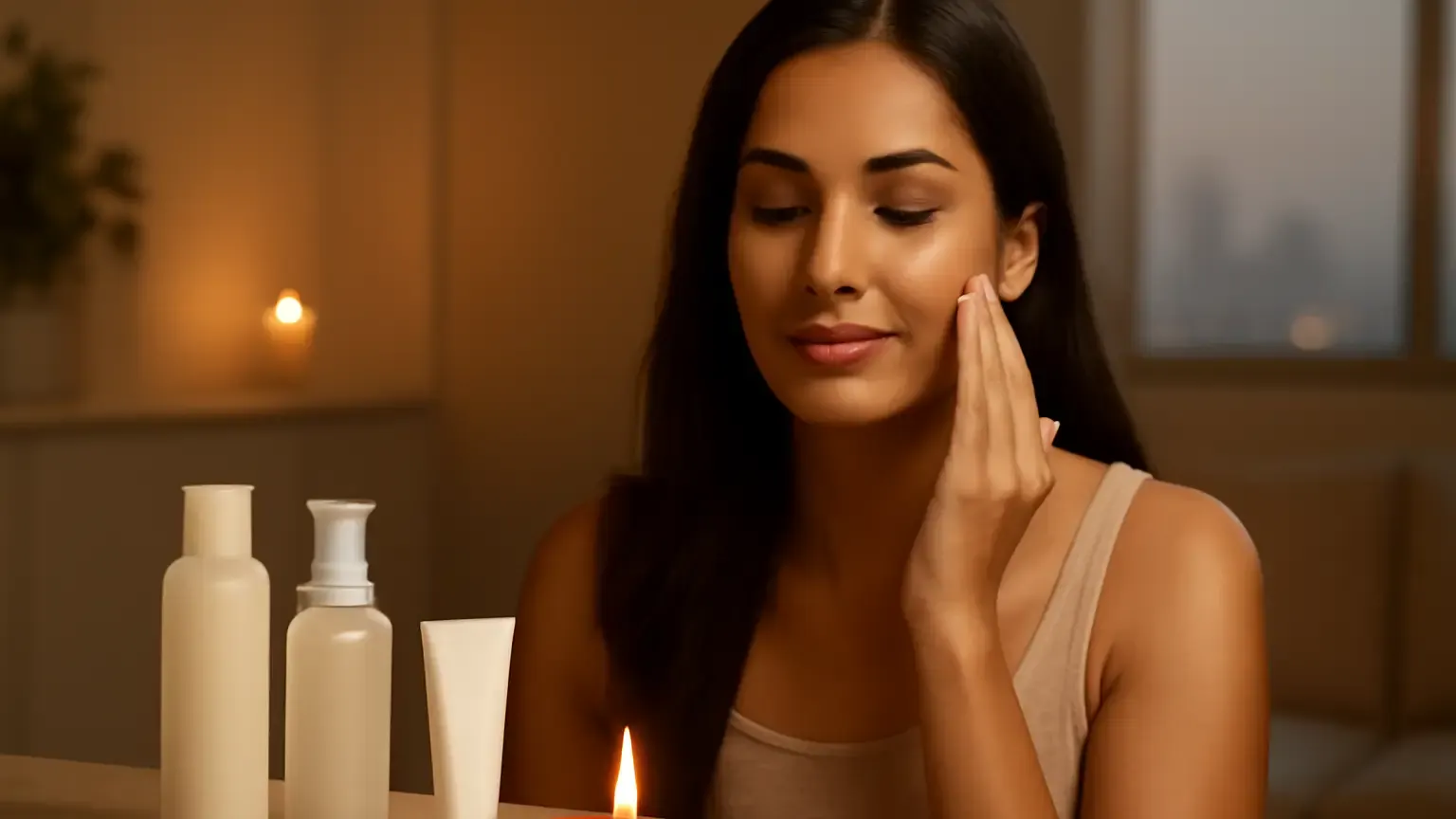
Seasonal skin care for Diwali pollution can be simple: use a familiar moisturiser and broad-spectrum sunscreen before a daytime event, reduce time around smoke, remove makeup gently at night and keep the next two or three days focused on barrier-friendly basics. This before-and-after event routine helps you manage smoke, sweat and makeup without harsh scrubbing, unnecessary actives or over-cleansing.
Seasonal skin care for Diwali pollution works best as a before-and-after event plan rather than a harsh detox. Before leaving home, cleanse or rinse according to your skin type, apply a familiar moisturiser and use broad-spectrum sunscreen for daylight exposure. During the celebration, reduce time near dense smoke. Afterwards, remove makeup and sunscreen without rubbing, then keep the next two or three days simple.
Why Diwali can leave skin uncomfortable
Diwali can bring together several skin stressors: smoke, dust, dry indoor air, long hours outdoors, sweat, makeup and repeated cleansing. Firecracker particles may settle on exposed skin, while heat and occlusive makeup can make some people feel congested. An effective air pollution skincare plan therefore focuses on reducing exposure, preserving moisture and removing products thoroughly without leaving the face tight.
This practical Diwali pollution skin care routine suits many normal, dry, combination and mildly oily skin types. Sensitive skin may need fewer products and more time between changes. If you already use prescribed skincare, keep following that plan unless your dermatologist advises otherwise.
Before the event: morning protection
- Cleanse according to your skin type. Use lukewarm water and a gentle cleanser if you feel oily or sweaty. Dry or sensitive skin may need only a water rinse in the morning if that is already comfortable for you.
- Apply a moisturiser. Choose a non-comedogenic moisturiser if you are prone to clogged pores, or a richer cream if your skin becomes flaky. Glycerin and ceramides can support hydration and the skin barrier. If you need skin barrier repair, prioritise a familiar, uncomplicated formula instead of adding several new products.
- Finish with sunscreen. Apply a broad-spectrum sunscreen to exposed areas, including the face, ears and neck. Sunscreen does not filter firecracker smoke, but it remains important for daylight ultraviolet exposure.
- Reduce direct exposure. Stay away from dense smoke, avoid leaning over fireworks and consider sunglasses or a mask where appropriate. Do not apply fragranced oils or unknown products as a supposed pollution shield.
For daytime events, consider sunscreen reapplication when you remain outdoors for extended periods, sweat heavily or wipe your face. Reapplication is useful if the celebration continues through the afternoon, although sunscreen cannot replace shade, ventilation and avoiding smoky areas.
Pre-event preparation for makeup and long hours
About 30 to 60 minutes before makeup, keep the routine predictable. Apply a hydrating layer to slightly damp skin, follow with moisturiser and allow it to settle. A few drops of a familiar hydrating serum can be useful, but the evening is not the time to test a new acid, retinoid, peel or strong brightening product.
Choose comfort over a heavy product stack
If your skin is dry, a cream with ceramides or another familiar barrier-supporting formula may sit better under makeup than several watery layers. If your skin is oily or combination, use a smaller amount of moisturiser on the T-zone and do not skip hydration completely. Dehydrated skin can feel tight even when it looks shiny.
A hydrating face mask can be used before the event only if you have used it safely before. Leave-on masks are not automatically gentler, and a product with fragrance or multiple exfoliating ingredients may cause discomfort under makeup. Patch test unfamiliar products on a small area well before the celebration rather than on the afternoon of the event.
For sensitive skin Diwali care, fewer familiar products are usually easier to manage than a new festive skincare routine. Choose fragrance-free products if they are already comfortable for you, and avoid layering an occlusive moisturiser under heavy makeup unless you know your skin tolerates it.
During the event: reduce smoke, sweat and buildup
The most useful firecracker smoke skincare step is exposure reduction. Choose a well-ventilated area away from active fireworks, keep your hands off your face and blot sweat rather than rubbing it across the skin. If your eyes or face begin to sting, move indoors to cleaner air and rinse with plain water when practical. Improving indoor air quality by closing windows while outdoor air is smoky may also help.
Makeup does not need to be repeatedly scrubbed away during an event. Touching up with additional layers can increase buildup, so blotting papers or a clean tissue may be more comfortable. Avoid mixing sunscreen, setting products and powders repeatedly without a clear need. Keep lip products and eye makeup personal, and remove contact lenses according to their care instructions if your eyes feel irritated.
After the event: a gentle cleansing routine
Night-time makeup removal skincare should be thorough but not aggressive. Start with a cleansing balm, cleansing oil or micellar water suited to your skin and the makeup you wore. If using micellar water, gently wipe without repeated rubbing and rinse if the product instructions recommend it.
When double cleansing makes sense
Double cleansing for makeup is useful when you have worn long-lasting makeup, water-resistant sunscreen or several layers of complexion products. The first cleanse loosens makeup and sunscreen; the second uses a mild water-based cleanser to remove remaining residue. It is not compulsory every night, especially if you wore little or no makeup.
Use lukewarm water, clean fingertips and a short massage. Pat dry with a soft towel, then apply moisturiser while the skin still feels comfortable. Do not use a rough scrub, cleansing brush or very hot water to remove imagined pollution particles. If your face feels squeaky, burning or unusually tight afterwards, the routine was probably too strong. A gentle cleansing routine is more useful than trying to scrub away soot or particulate matter.
Recovery days after Diwali
For the next two or three days, make post-Diwali skin recovery deliberately boring: gentle cleansing, moisturiser and daytime sunscreen. Add a familiar product containing soothing skincare ingredients such as glycerin, panthenol or ceramides if your skin tolerates it. Avoid introducing several brightening, exfoliating or anti-ageing products at once.
Dry or sensitive skin may benefit from a slightly richer moisturiser at night. Oily skin can still use a light lotion or gel-cream; skipping moisturiser entirely may increase the feeling of tightness. An occlusive moisturiser may be comfortable on dry patches, but use only a product you already know suits you.
Change pillowcases if makeup or smoke residue has transferred, wash makeup tools according to their care instructions and keep water intake and sleep reasonably consistent. These habits support comfort, but they do not instantly reverse exposure.
There is no universal answer to how many days skin needs to recover after pollution exposure. Mild temporary tightness may settle with basic care, while persistent redness, swelling, blistering, significant itching, painful breakouts or eye symptoms require advice from a dermatologist or doctor. Seek prompt medical care for breathing difficulty or severe eye discomfort.
Common mistakes to avoid
- Scrubbing to remove pollution: Particles are better handled with gentle cleansing and reduced exposure, not abrasive rubbing.
- Trying a new facial before the event: Even a product marketed as soothing can irritate unfamiliar skin.
- Layering too many actives: Acids, retinoids and strong exfoliants can be harder to tolerate when skin is already dry or sensitised.
- Sleeping in makeup: A late night is not a reason to skip makeup removal; keep a simple, familiar routine ready.
- Using sunscreen as smoke protection: Sunscreen protects against ultraviolet exposure, not firecracker pollution. Distance, ventilation and shorter exposure are more relevant.
- Assuming every mask is restorative: A mask with fragrance or exfoliating ingredients can be uncomfortable on sensitised skin.
A simple before-and-after Diwali checklist
Morning before leaving: gentle cleanse or rinse, moisturiser, broad-spectrum sunscreen and exposure planning.
Before makeup: familiar hydration, a comfortable moisturiser and enough time for products to settle. Do not experiment with a peel, retinoid or unfamiliar fragrance.
During the event: stay away from dense smoke, choose cleaner air where possible, blot sweat and avoid repeatedly rubbing or touching your face.
Afterwards: remove makeup and sunscreen with a suitable first cleanser, use a second mild cleanser if needed, moisturise and sleep.
Recovery days: repeat the basics, avoid aggressive treatments and return to stronger products only when your skin feels normal again.
Takeaway: The most dependable skin care during Diwali pollution is a repeatable routine that protects in the morning, hydrates before the event, cleanses without stripping at night and gives the skin time to settle afterwards.
Products that may help with this routine
Choose only what fits your skin, hair or personal needs. Use the links below to view current options on Amazon India.
Frequently Asked Questions
How can I protect my skin from Diwali pollution?
To protect your skin from Diwali pollution, limit time near fireworks and dense smoke, choose cleaner indoor or well-ventilated spaces, avoid touching your face, cleanse gently at night and use moisturiser and daytime sunscreen. Sunscreen helps with ultraviolet exposure but does not block smoke.
What should I apply before going out in Diwali pollution?
Apply a familiar moisturiser first and broad-spectrum sunscreen during the day. If wearing makeup, let the moisturiser settle before applying it. Avoid testing new exfoliants, retinoids or fragranced products immediately before an event.
What is the best skincare routine after Diwali fireworks?
The best skincare routine after Diwali fireworks is to remove makeup and sunscreen with a suitable first cleanser, follow with a gentle cleanser if needed, then apply moisturiser. For the next two or three days, keep the routine simple and avoid aggressive scrubs or multiple active ingredients.
Is double cleansing necessary after Diwali?
Double cleansing is useful after long-wear makeup, water-resistant sunscreen or several product layers, but it is not essential after every low-product day. If your skin feels tight or irritated, use a gentler, shorter cleansing routine.
How do I remove Diwali makeup without irritating my skin?
Use a cleansing balm, cleansing oil or suitable micellar water to loosen makeup, avoid rubbing, rinse as directed and follow with a mild cleanser when needed. Finish with moisturiser and lukewarm rather than hot water.
How many days does skin need to recover after pollution exposure?
There is no fixed recovery time because it depends on exposure and individual sensitivity. Many people can use a basic cleanse-moisturise-sunscreen routine for two or three days, but persistent or severe symptoms should be assessed by a dermatologist or doctor.